
The Problem
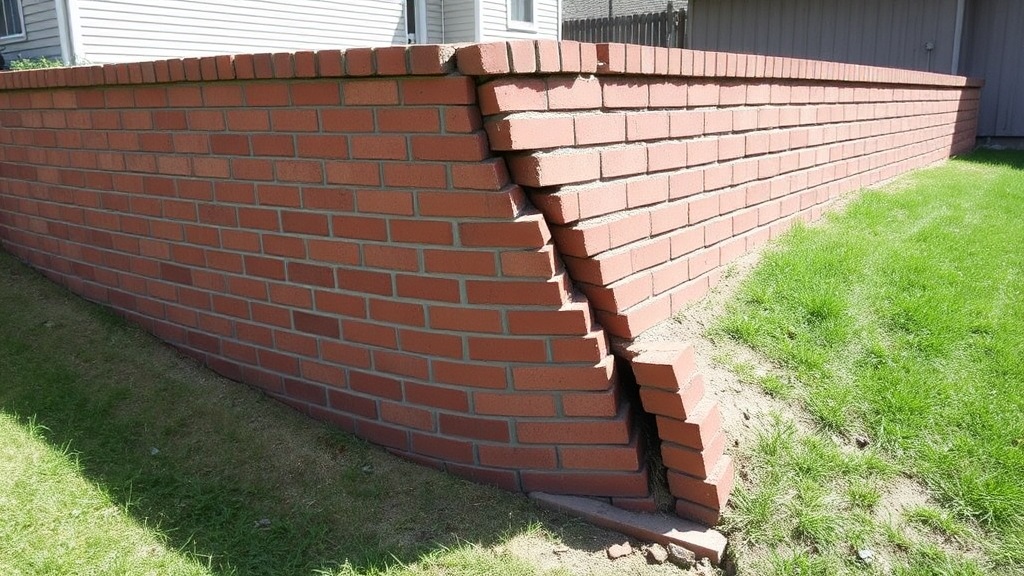
A 32-foot brick retaining wall along the side yard had bowed outward approximately 3 inches at the center. The wall was leaning visibly, and several vertical cracks had opened from top to bottom. The homeowner was concerned about collapse - justifiably, since the wall was holding back roughly 3 feet of grade change and a heavy rain event could have pushed it past its tipping point.
The root cause was straightforward: the original wall had no drainage behind it. Decades of water pressure from saturated soil had pushed the wall forward. The original footing was undersized for the soil load, and there were no weep holes to relieve hydrostatic pressure.
Our Solution
The existing wall was demolished completely. Attempting to straighten a bowed retaining wall is a temporary fix - the structural integrity is compromised once the brick-mortar bond has cracked.
We poured a new reinforced concrete footing sized for the actual soil load (18 inches wide by 12 inches deep, with #4 rebar). Behind the new wall location, we installed a French drain system - 4-inch perforated pipe in a gravel bed, daylit to the side yard swale - to eliminate the hydrostatic pressure that destroyed the original wall.
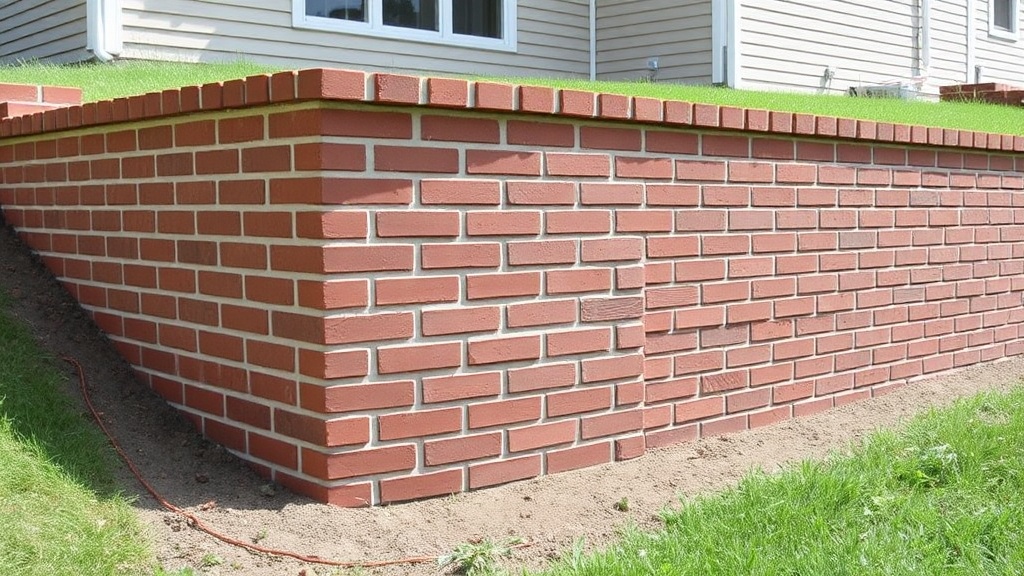
The new wall was built with matching brick sourced to complement the home’s existing masonry. Type S mortar was used - the correct choice for a retaining wall that must resist lateral soil pressure (Type S provides ~1,800 PSI compressive strength vs. Type N’s ~750 PSI). Weep holes were installed every 4 feet along the base course.
The Result
The rebuilt wall is plumb, properly drained, and engineered for the actual load it carries. The French drain system handles water that previously had no escape path, eliminating the pressure that caused the original failure.
All work carries our 25-year structural warranty. The drainage system carries a 10-year warranty.
Related: Masonry Repair Services | Highland Park Service Area