
Expert Tuckpointing in Chicagoland
Correct mortar matching, proper joint depth, 25-year results. We restore deteriorating mortar joints to protect your brick. 39+ years of North Shore experience. Licensed, insured, ASTM-compliant. Free estimates.
What Is Tuckpointing?
Tuckpointing is the process of removing deteriorated mortar from brick joints and replacing it with fresh mortar that matches the original in color, composition, and profile. Done correctly, tuckpointing restores the structural bond between bricks, stops water infiltration, and extends the life of your masonry by 25 to 50 years. It is not cosmetic patching. It is a precision repair that requires correct mortar chemistry, proper joint depth (minimum 3/4 inch removal), and tooling that matches the original joint profile.
Six Signs You Need Tuckpointing
Sign 1
Mortar joints cracked wider than 1/4 inch
Sign 2
White powdery deposits (efflorescence) on brick faces
Sign 3
Brick edges chipping or spalling at the joint line
Sign 4
Interior damp spots or water stains on walls near exterior brick
Sign 5
Mortar crumbles when scratched with a key or screwdriver
Sign 6
Stair-step cracking along mortar joints (diagonal pattern)
Need tuckpointing? Call (847) 713-1648 or
Get Free EstimateWhat Happens When You Delay Tuckpointing
Mortar deterioration accelerates. What starts as a cosmetic issue becomes a structural emergency. Here is the typical cost escalation when tuckpointing is delayed on a Chicago-area brick home.
Cost Escalation Timeline
| Timeline | Condition | Typical Cost |
|---|---|---|
| Year 0-2 | Surface mortar erosion, hairline cracks | $8-$12 / lin ft |
| Year 2-4 | Deep joint failure, water entering wall cavity | $15-$22 / lin ft |
| Year 4-6 | Brick spalling, face pop-outs, efflorescence | $40-$80 / brick replacement |
| Year 6+ | Structural movement, wall bulging, full rebuild needed | Unpredictable - $10K+ |
Featured Tuckpointing Projects
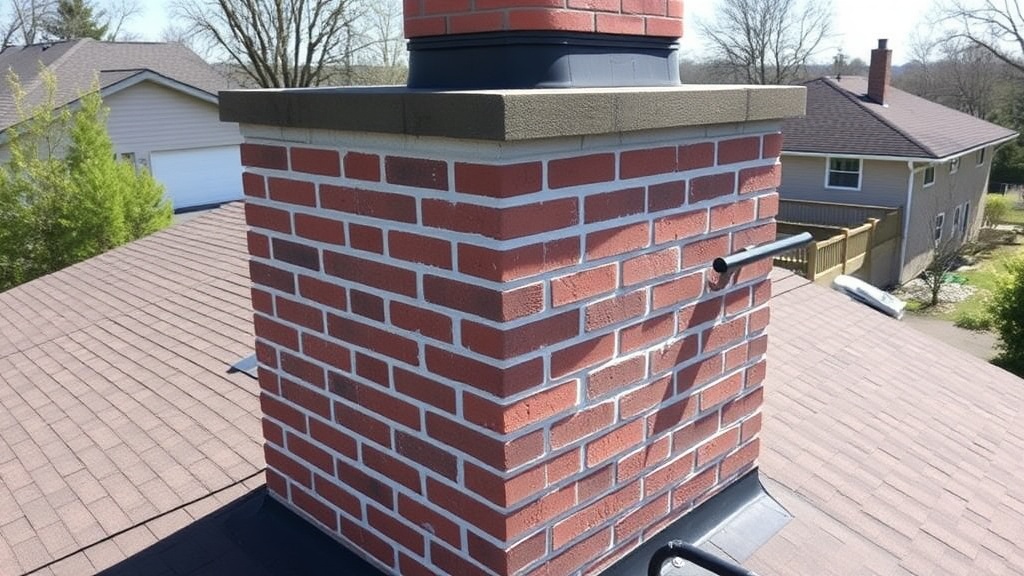
Glenview - 1962 Ranch
- Scope: Full chimney repointing, 4 faces
- Mortar: Type N
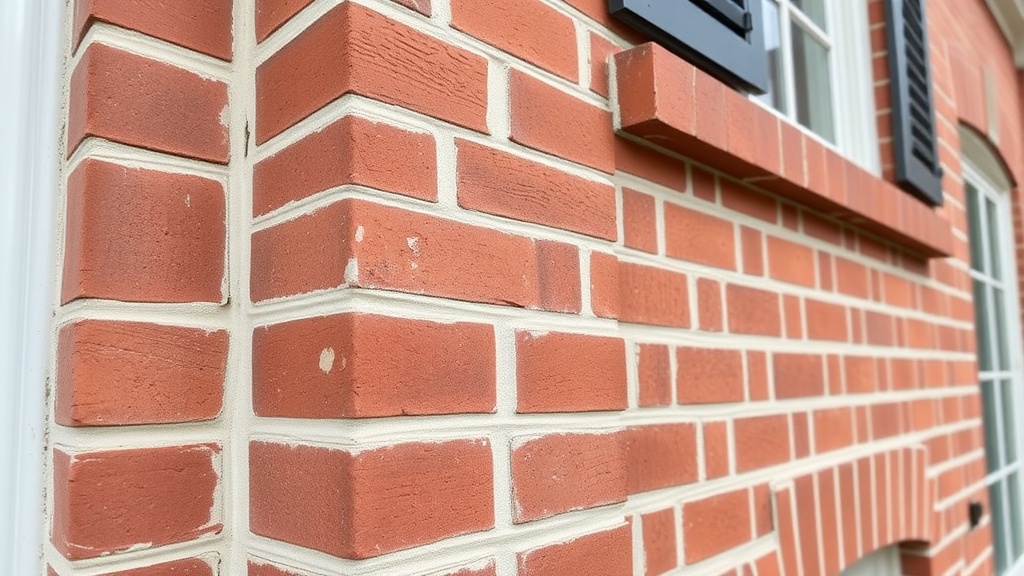
Winnetka - 1938 Georgian Colonial
- Scope: 280 linear feet, full facade
- Mortar: Type N lime-based
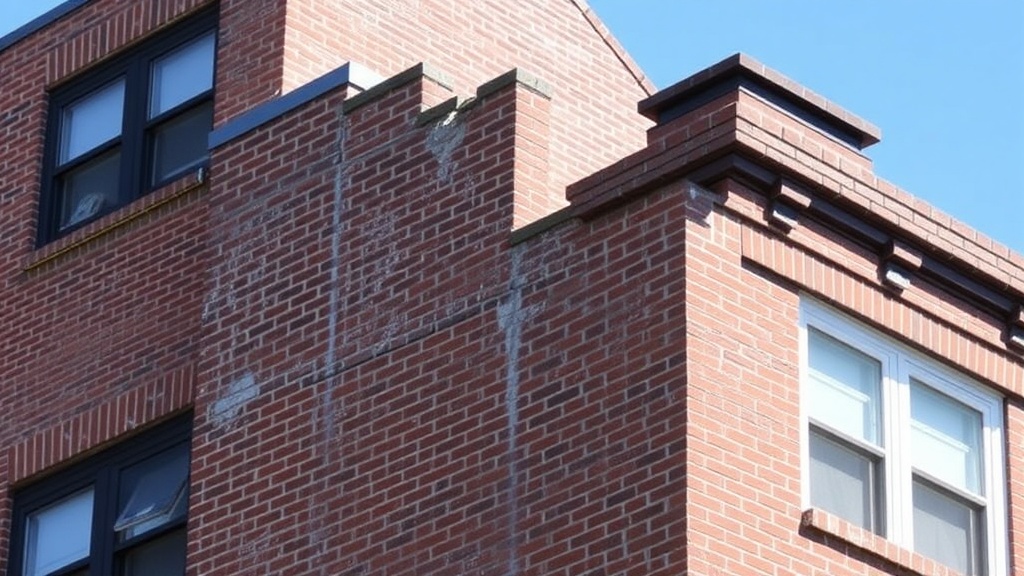
Evanston - 1952 Three-Flat
- Scope: Chimney + parapet walls, 3 stories
- Mortar: Type N
Our Tuckpointing Process
On-Site Inspection
We examine every joint, test mortar hardness, check for water damage behind the surface, and photograph all problem areas. No charge, no obligation.
Mortar Analysis
We identify the original mortar type (lime, Portland, or hybrid) and match the replacement mortar for compressive strength, color, and texture. Wrong mortar damages brick.
Joint Removal to 3/4" Depth
Using angle grinders with diamond blades and hand chisels, we remove deteriorated mortar to a minimum depth of 3/4 inch. Shallow removal is the number one cause of tuckpointing failure.
Surface Preparation
Joints are cleaned of dust and debris, then dampened to ensure proper mortar adhesion. Dry joints cause bond failure within 2-3 years.
Mortar Application & Tooling
Fresh mortar is packed in thin layers (not one thick fill) and tooled to match the original joint profile - concave, V-joint, flush, or weathered. Proper tooling compresses the surface for water resistance.
Final Walkthrough & Guarantee
We walk every foot of completed work with you, check for consistency, and provide your 25-year written warranty on workmanship and materials.
Ready to get started? Call (847) 713-1648 or
Request EstimateTechnical Standards & Mortar Types
Using the wrong mortar type is the most common tuckpointing mistake. Mortar that is too hard for your brick will crack the brick faces. Mortar that is too soft will erode within a few years. All Delta work follows ASTM C270 standards.
| Mortar Type | Compressive Strength | Correct Use | Risk if Misused |
|---|---|---|---|
| Type N | 750 PSI | Most residential brick, pre-1970 homes, soft brick | Safe for most applications. Preferred for older brick. |
| Type S | 1,800 PSI | Foundations, retaining walls, below-grade masonry | Too hard for soft residential brick. Can cause spalling. |
| Type M | 2,500 PSI | Heavy load-bearing, commercial foundations | Almost never appropriate for above-grade residential tuckpointing. |
All Delta work follows ASTM C270 Standard Specification for Mortar for Unit Masonry.
Tuckpointing Pricing
Pricing depends on joint depth, mortar type, access (scaffolding vs ladder), and brick condition. Every project gets a free written estimate before work begins. No surprises.
What Our Customers Say
"Delta replaced all the mortar joints on our 1930s brick home. Matched the original mortar color perfectly. Three years later, still looks brand new."
"Our chimney was crumbling and three companies gave us quotes. Delta was the only one who explained what was actually wrong and what needed to be fixed. Professional from start to finish."
"The tuckpointing on our brick two-flat looks incredible. Free inspection, written estimate, showed up on time, cleaned up after. 38 years in business shows."
Related Articles
Historic Masonry Restoration: Preserving Chicagoland's Architectural Heritage
Learn why historic homes need specialized masonry care, lime mortar vs Portland, North Shore architecture, and preservation standards.
Read ArticleHow Illinois Weather Destroys Brick: Understanding Freeze-Thaw Damage
Learn how Chicago's freeze-thaw cycles, lake effect moisture, and temperature extremes damage brick masonry and what you can do about it.
Read ArticleThe Importance of Mortar Color Matching in Tuckpointing
Why mortar color matching matters for your home's appearance and value, how professionals match mortar, and common mistakes to avoid.
Read ArticleQuestions about tuckpointing? We have answers. Call (847) 713-1648 or
Get Free EstimateTuckpointing Service Areas
We provide professional tuckpointing services across Chicago's North Shore, Lake County, and northwest suburbs. 39+ years serving these communities.
Neighborhood Expertise
Every neighborhood on the North Shore has different brick, mortar, and construction eras. We know what your home is made of and how to repair it correctly.
Evanston
Lake Forest
Winnetka
Highland Park
Glenview & Northbrook
Chicago North Side
Tuckpointing FAQ
Common questions about tuckpointing answered by our licensed masonry experts.