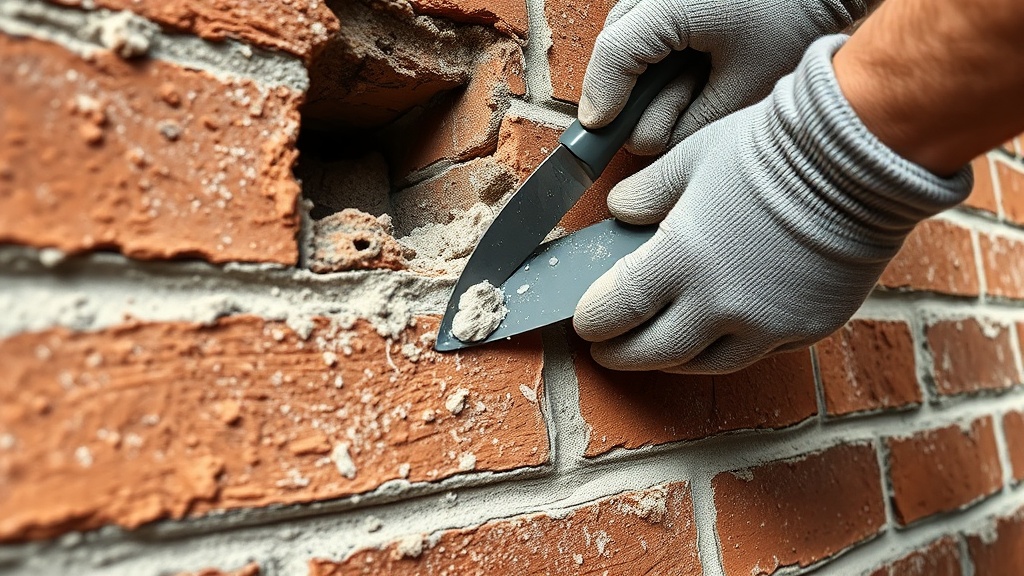

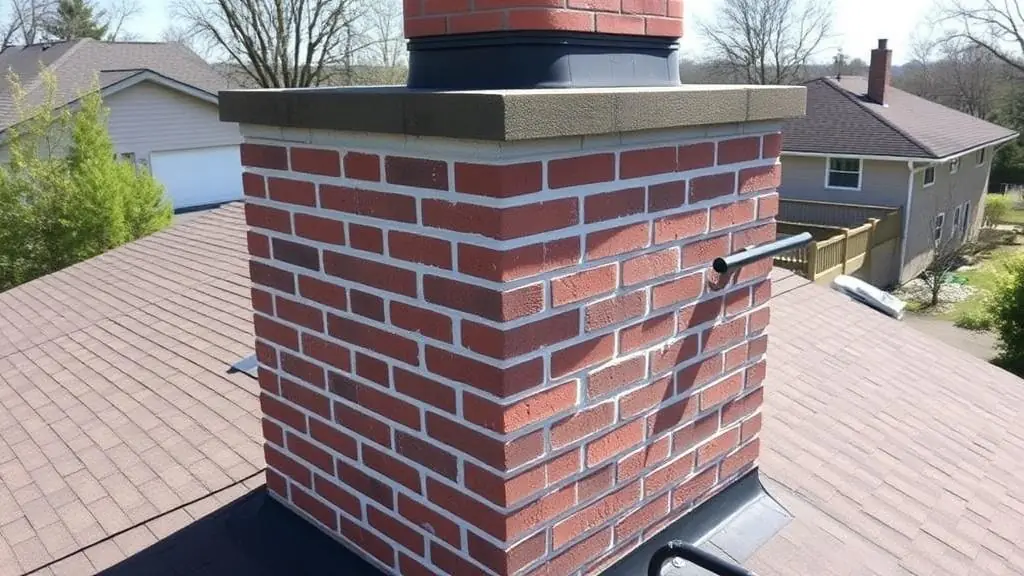
This Glenview chimney had deteriorated mortar joints on all four sides, with the deepest recession and several open gaps visible on the south and west faces.
Because the deterioration extended around the entire chimney, isolated patching would not have addressed the full condition. Delta removed the failed mortar, repointed all four faces with color-matched Type N mortar and recreated the chimney’s original concave joint profile.
The chimney tuckpointing was completed in two working days.
Tuckpointing or repointing? Replacing deteriorated mortar joints is technically called repointing. In the Chicago area, the service is commonly called tuckpointing, so both terms may be used.
Before and After
Before: Deeply recessed mortar and open joints were visible across the chimney, particularly on the south and west faces.
After: All four faces were repointed with warm-gray Type N mortar and tooled to match the chimney’s original concave joints.
The Problem
The homeowner’s annual roof inspection identified deteriorated mortar on the exterior chimney.
A closer inspection found damage on all four faces. The south and west sides showed the most advanced deterioration, including mortar recessed by more than half an inch and several joints with open voids.
Those openings were allowing moisture to enter through the chimney’s exterior mortar joints. If left unrepaired, continued exposure to rain, snow and freeze-thaw conditions could have caused additional mortar loss and damage to the surrounding brick.
The chimney crown was still intact, but several hairline cracks were also documented.
Why Full Repointing Was Recommended
Spot repairs are most appropriate when deterioration is limited to a small number of joints and the surrounding mortar remains sound.
That was not the condition of this chimney.
Although the most visible damage appeared on the south and west faces, deteriorated mortar was present around the entire exterior stack. Repairing only the largest gaps would have left weakened joints in place on the remaining faces.
Full chimney repointing was selected to:
- Remove deteriorated mortar from all four sides
- Close visible gaps and open joints
- Create consistent joint depth throughout the chimney
- Match the mortar color across the completed repair
- Avoid leaving isolated sections of weakened mortar
This allowed the chimney to be repaired as one complete masonry assembly rather than as a series of unrelated patches.
The Repair
Mortar-Joint Preparation
The crew accessed the chimney from the roof using appropriate fall-protection equipment.
Deteriorated mortar was removed from the bed and head joints on all four faces. The joints were prepared to an approximate minimum depth of three-quarters of an inch where the existing conditions allowed.
Loose material and dust were cleared from the prepared joints before the replacement mortar was installed.
Mortar Selection and Color Matching
A Type N replacement mortar was selected for the project based on the existing masonry and the condition of the chimney.
Because decades of sunlight and weather can alter the appearance of exterior mortar, the replacement color was compared with a protected mortar sample from inside the flue cleanout area.
This provided a better reference for the chimney’s original warm-gray mortar color than the heavily weathered exterior joints alone.
Mortar Installation and Joint Tooling
The new mortar was packed into the prepared joints in controlled lifts.
After the mortar reached the appropriate consistency, each joint was finished with a concave profile matching the chimney’s existing joint style. This gave the repair a consistent appearance rather than making the new work look disconnected from the original masonry.
Crown Maintenance
The chimney crown did not require rebuilding as part of this project.
The existing hairline cracks received a limited application of flexible crown sealant. The homeowner was informed that this was a maintenance measure—not a replacement for future crown repair—and that the crown should continue to be monitored for widening cracks or renewed moisture entry.
Work Completed
The project included:
- Inspection of all four chimney faces
- Removal of deteriorated exterior mortar
- Cleaning and preparation of the joints
- Installation of color-matched Type N mortar
- Controlled mortar packing
- Concave joint tooling
- Limited sealing of existing crown hairline cracks
- Final cleanup
- Before-and-after documentation
The project did not include a complete crown rebuild, flashing replacement, flue work or structural chimney rebuilding.
The Result
The completed repointing closed the visible gaps and restored the deteriorated mortar joints on all four sides of the chimney.
The warm-gray replacement mortar blends with the existing brick, while the concave joint profile maintains the chimney’s original appearance.
Most importantly, the work addressed the open mortar joints that had been allowing moisture into the exterior masonry. The homeowner also received documentation of the crown condition so it can be monitored during future roof or chimney inspections.
Warranty coverage for this project is governed by the terms stated in the homeowner’s written estimate and project agreement.
What This Glenview Project Shows
The side of a chimney visible from the ground may not show its complete condition.
On this home, the south and west faces had the deepest recession, but deterioration was present on all four sides. A roof-level inspection was necessary to determine that complete repointing—not isolated patching—was the appropriate repair.
Homeowners should consider having their chimney inspected when they notice:
- Mortar recessed behind the edges of the brick
- Loose, powdery or crumbling joints
- Visible gaps between bricks
- Pieces of mortar collecting on the roof
- Cracks in the chimney crown
- Moisture staining near the chimney
Not every chimney with these symptoms requires complete repointing. The correct repair depends on how widespread the deterioration is and whether the surrounding brick remains sound.
Chimney and Masonry Inspections in Glenview
Delta provides chimney and masonry inspections for homeowners in Glenview and surrounding Chicagoland communities.
We inspect the visible condition of the mortar, brick, crown and exterior chimney before recommending spot tuckpointing, full repointing, brick replacement, crown repair or more extensive chimney work.
Related Services
Project Location
This project was completed at a residential property near Harlem Avenue in Glenview, Illinois.
The exact address is not displayed to protect the homeowner’s privacy.