The Problem
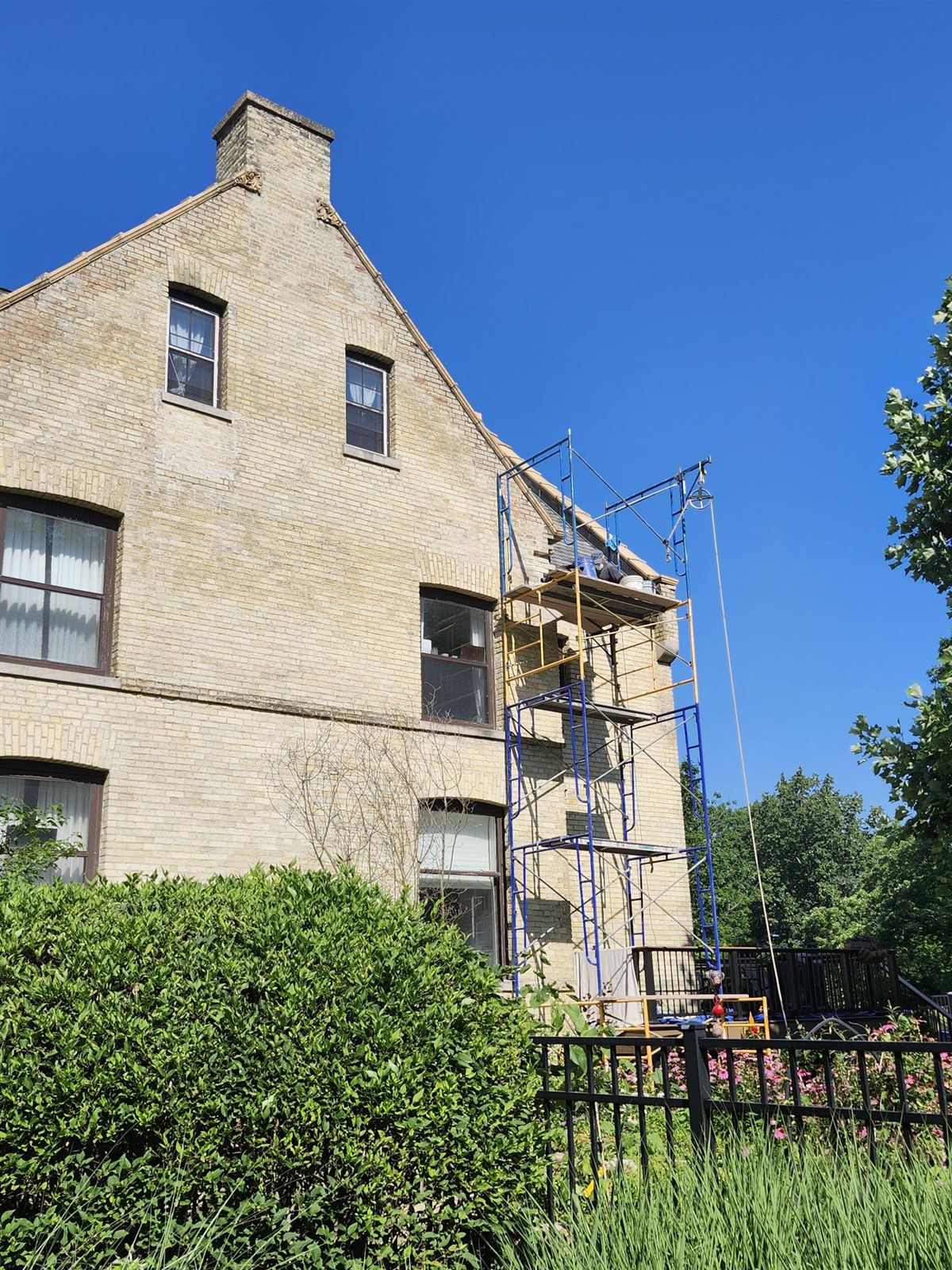
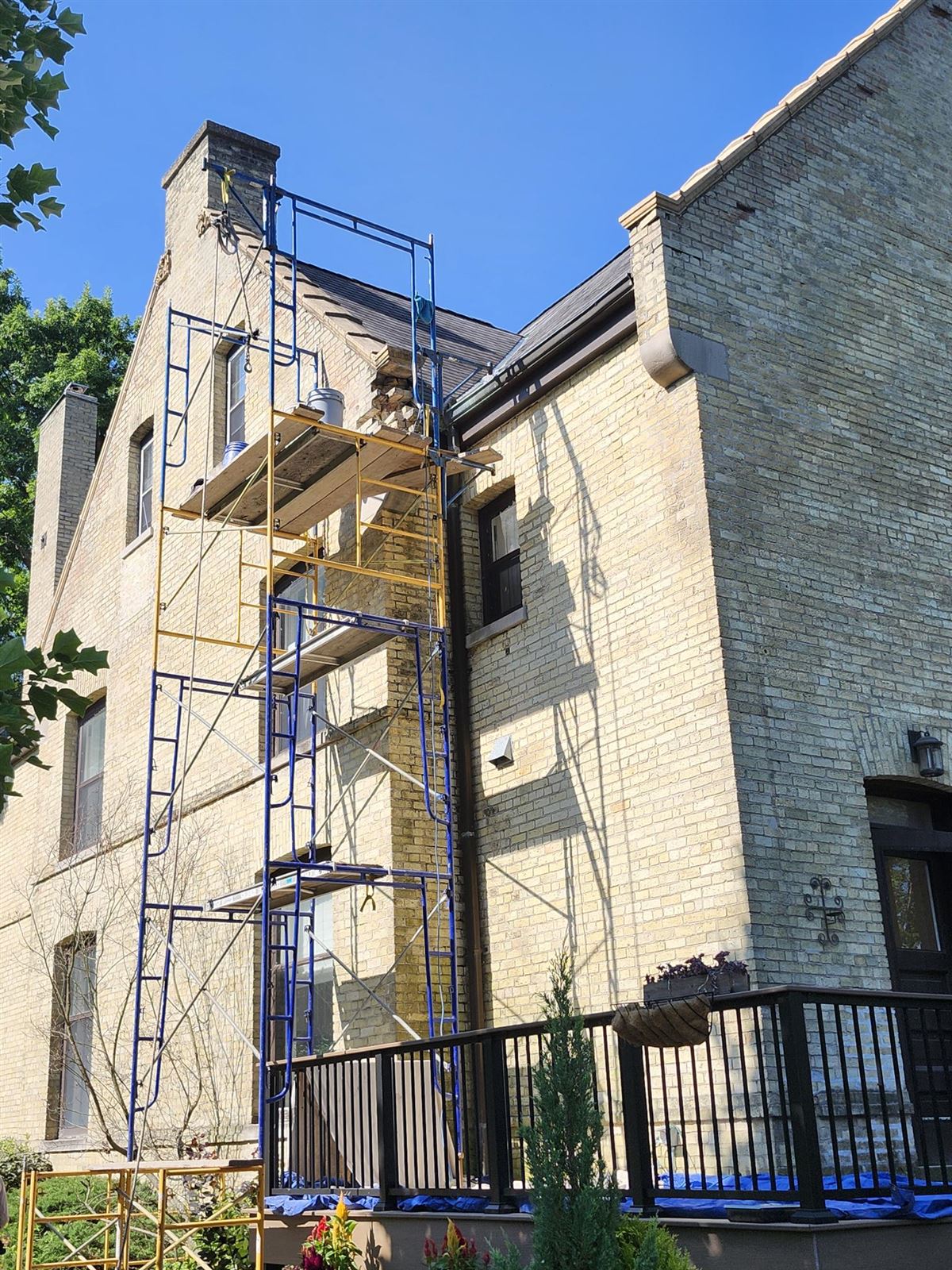
This historic tuckpointing project was at Fort Sheridan in Highland Park, on one of the cream brick buildings that give the former Army post its look. The walls are a pale cream brick with steep gables capped in stone, carved stone kneelers at the eaves, and arched window openings. Cream brick of this period is softer than modern brick, and it was laid in a softer mortar, which is how masonry of that era was meant to work.
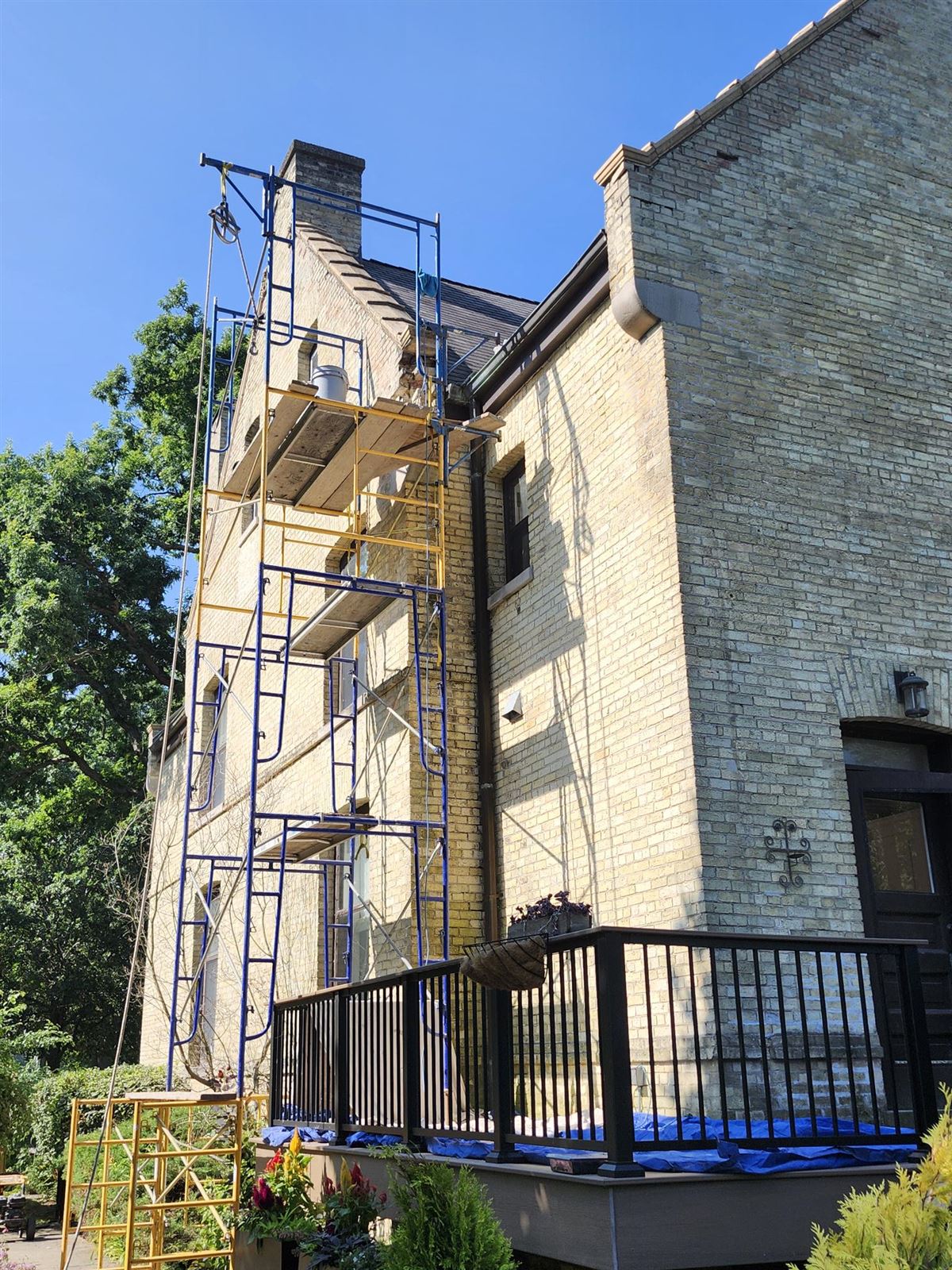
The trouble spot was at the end of a coped gable, where the parapet meets the eave and gutter line. That junction collects water from the roof, the gutter and the coping above it, and over many winters the brick and mortar there had broken down to the point that a section needed to be taken apart and relaid. Worn joints on a wall like this let water into brick that is very sensitive to freeze-thaw damage.
Our Solution
The crew built frame scaffolding up the gable wall with a gin wheel at the top for hoisting material, and laid tarps over the deck and plantings below. At the gable end, the deteriorated brick was removed by hand and stacked on the scaffold deck. Where original units are sound, cleaning and reusing them is the best way to keep a repair on a historic wall from standing out, and we explain why in our post on preserving Chicagoland’s historic masonry.
Mortar choice matters more on a building like this than almost anywhere else. New mortar on soft historic brick has to be weaker and more breathable than the brick, so moisture and movement work through the joint and not the face of the brick. A hard modern mix can trap water and make the brick edges spall. Our article on lime vs. portland cement mortar goes into the details. The joints were then repointed and tooled to blend with the original work, following the approach on our historic restoration page.
The Result
The gable end is rebuilt and the joints are closed, so water coming off the roof and coping no longer has an easy path into the wall. Just as important on a Fort Sheridan building, the cream brick tuckpointing keeps the original brick and stone details in place instead of replacing them. See more of our tuckpointing in Highland Park, browse our work across Highland Park, or look at another older facade in our Chicago parapet and facade restoration.