
Through-Wall Flashing Above Windows and Doors: Signs of Failure and How It's Repaired
A water stain above a window in a brick house usually gets blamed on the window. Often the window is fine. The problem sits a few inches higher, inside the wall, where a strip of through-wall flashing is supposed to catch water that soaks past the brick and send it back outside.
When that flashing is missing, torn, cut short or sitting behind blocked weep holes, the water has nowhere to go. It collects above the opening, rusts the steel lintel, stains the brick and eventually shows up indoors. This guide explains how the system works, the signs that it's failing, and what a proper repair involves for brick homes in Chicago and across the North Shore.
What Is Through-Wall Flashing?
Through-wall flashing is an impervious membrane or metal sheet built into a masonry wall to catch water that gets past the brick and direct it back outside, as defined in the Brick Industry Association's Technical Note 7. Most of it is hidden. From the street you might see only a thin edge or a small metal drip just below the brick course above your window.
Brick walls aren't waterproof, and they were never meant to be. According to BIA, water rarely passes straight through the brick or the mortar. It gets in through tiny separations where the two meet, and a heavy wind-driven rain will get through a single layer of brick no matter how well it was laid.
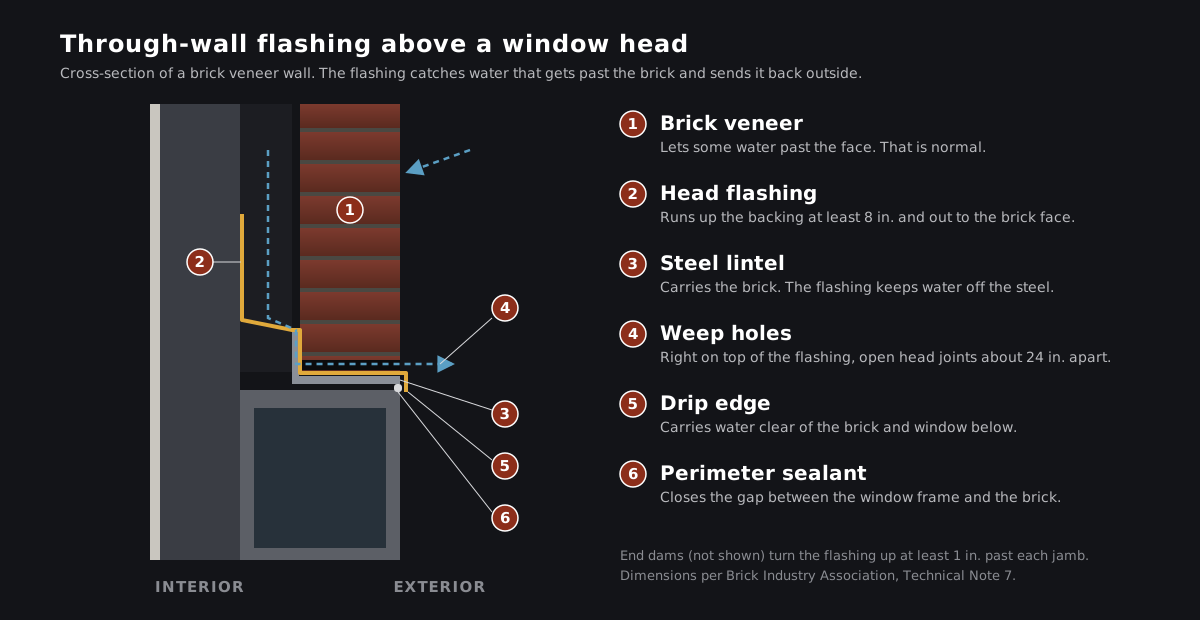
So a well-built wall doesn't try to stop every drop. It manages the water that gets in:
- 1Rain works its way past the brick face.
- 2Water runs down the back of the brick.
- 3Flashing above the opening catches it.
- 4Weep holes let it drain back outside.
Where the flashing goes
BIA calls for through-wall flashing at wall bases, window sills, the heads of openings, shelf angles, parapets, chimneys and anywhere a projection interrupts the wall. Above windows and doors, it usually sits directly on the steel lintel, the angle iron that carries the brick across the opening.
What sits above a window or door
| Component | Its job | What good installation looks like |
|---|---|---|
| Steel lintel | Carries the brick over the opening | Protected by flashing on top so water never sits on the steel |
| Head flashing | Catches water running down inside the wall | Runs up the backing at least 8 inches and reaches to or past the brick face (BIA) |
| End dams | Stop water from running off the ends of the flashing | Turned up at least 1 inch, past the window jambs on both sides (BIA) |
| Weep holes | Drain the water the flashing collects | Right on top of the flashing. BIA prefers open head joints no more than 24 inches apart; the International Residential Code allows up to 33 inches with a minimum 3/16-inch opening |
| Perimeter sealant | Closes the gap between the window frame and the brick | Flexible, fully bonded to both surfaces, replaced as it ages |
If one of these parts fails, the others can't make up for it. Good flashing with sealed weeps still traps water. Open weeps with no end dams still let water run into the wall beside the window.
Solid Brick Walls vs. Brick Veneer
This difference matters for older Chicago-area homes. BIA describes historic walls built from solid brick, anywhere from 12 inches to 6 feet thick, that soaked up moisture and released it slowly during dry weather. Many were never built with a drainage cavity.
Newer homes usually have a single layer of brick veneer over framing, with an air space and flashing behind it. A 1920s solid brick home may never have had flashing above its windows. A 1990s veneer home that's missing it has a construction defect. The right repair depends on which kind of wall you have.
Water stains above a window? Call (847) 713-1648 or
Schedule a Free InspectionWhy Does Through-Wall Flashing Above Windows Fail?
Flashing problems above openings fall into a few groups: it was never installed, it was installed wrong, it wore out, or the weep holes that drain it stopped working. Mortar and sealant failures don't damage the flashing directly, but they send more water into the wall and can look exactly like a flashing leak.
It was never there
Some older solid masonry walls were built without flashing at window heads. In other homes, a previous window replacement or renovation cut through the original flashing and never restored it. Either way, water moving down inside the wall above the opening just keeps going.
It stops short or has no end dams
BIA notes that building codes allow flashing to be trimmed flush with the brick face, but when it doesn't extend past the face, surface tension can pull water back under the flashing and into the wall below. Missing end dams cause a similar problem. Water reaches the end of the flashing, runs off the side and soaks into the brick next to the window.
It tore, cracked or corroded
Older metal flashing can corrode through, and joints that were never lapped and sealed open up over time. BIA recommends laps of at least 6 inches, sealed with a compatible adhesive. It also warns that many flashing membranes break down under UV light, which is why an exposed edge that's been left in the sun for years is a red flag.
The weep holes are blocked or in the wrong place
Weep holes clog with mortar droppings, paint, caulk and debris. InterNACHI points out that homeowners often stuff them with steel wool to keep out insects, which blocks the drainage too. BIA advises against weep tubes because they clog easily, and it warns that setting weeps one or more courses above the flashing lets water pool inside the wall.
Worn mortar and failed sealant add more water
Open or recessed mortar joints let more rain into the wall, which puts more load on the flashing. Sealant around the window frame shrinks and pulls away from the brick with age, opening another path for water. Both need fixing, but neither one replaces the drainage behind the brick.
Signs of Flashing Failure Above Windows and Doors
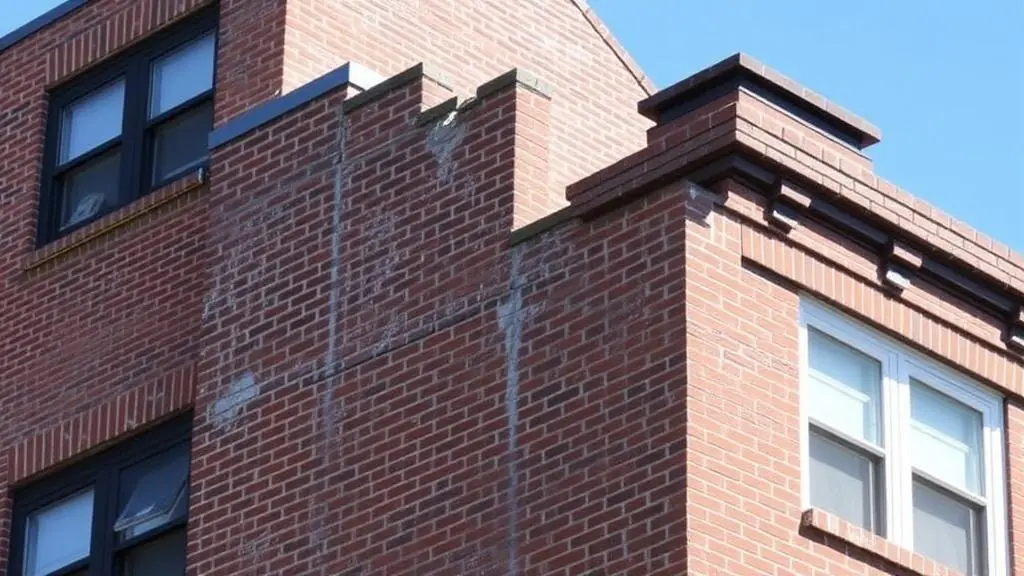
The first signs usually show up on the brick right above the opening or on the interior wall just above the window trim. BIA lists efflorescence, cracking, spalling, corroded metal and damaged interior finishes as common results of too much water in a brick wall, and a failed flashing detail puts that water right where you'll notice it.
| What you see | What it can point to |
|---|---|
| Brown or yellow stains on the wall or ceiling above a window | Water entering the wall above the opening. The stain can appear well below the actual entry point. |
| White, powdery deposits on the brick above the lintel | Efflorescence, left behind when water moves through brick and carries salts to the surface |
| Rust streaks at the lintel | The steel lintel is corroding because water is reaching it |
| Horizontal or stair-step cracks above the opening | A rusting lintel expanding and pushing the brick up, or movement in the wall |
| Flaking or spalled brick near the window head | Repeated wetting combined with freeze-thaw damage |
| Crumbling or missing mortar joints above the opening | More water getting into the wall, adding load on the flashing |
| Paint that keeps peeling or bubbling at the window head | Recurring moisture behind the finish |
| Leaks only during wind-driven rain | Water getting behind the brick in storms, which points to the wall rather than plumbing or condensation |
| No visible weep holes above the lintel | Flashing may be missing, or its drains have been sealed over |
One sign alone doesn't prove the flashing failed. Two or three together above the same opening are a good reason to have the wall inspected.
A couple of notes on specific symptoms. Efflorescence can be washed off with low-pressure masonry cleaning, but it'll come back if water keeps moving through the wall. And spalling has several possible causes, including the wrong mortar, so it's worth reading up on what causes brick spalling before assuming the flashing is to blame.
Seeing two or more of these above one window? Call (847) 713-1648 or
Book an InspectionHow Is Through-Wall Flashing Repaired?
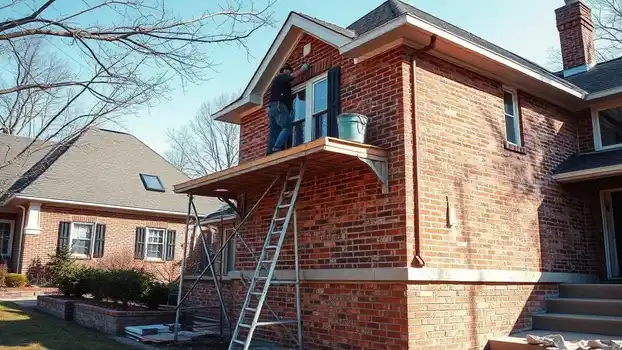
Repairing through-wall flashing means taking down the brick above the opening, fixing what's underneath and rebuilding it. The flashing sits inside the wall, so it can't be patched from the surface. A proper repair, following BIA's detailing guidance, covers eight steps.
Confirm where the water is coming from
A good inspection looks at the brick, mortar joints, lintel, weep holes, window sealant and any interior staining. It should also rule out the roof, gutters, the window unit itself and condensation before any brick comes down. Some leaks only show up under a controlled water test.
Support the wall and remove the brick above the opening
Enough courses come out to expose the lintel and the flashing line. The opening in the brick should extend past each side of the window, because BIA calls for head flashing to run beyond the jambs before the end dams are formed.
Deal with the lintel
Light surface rust can be cleaned and coated. A lintel that's badly corroded, flaking in layers or bent under load gets replaced. This is where steel lintel repair and flashing work usually happen together.
Install new flashing
Per BIA, the flashing runs up the backing at least 8 inches, extends to or past the brick face (ideally with a drip edge), gets end dams turned up at least 1 inch at each end, and has any laps overlapped at least 6 inches and sealed.
Set the weep holes at the flashing line
Weeps go directly on top of the flashing, never a course higher. BIA recommends open head joints spaced no more than 24 inches apart.
Rebuild the brick
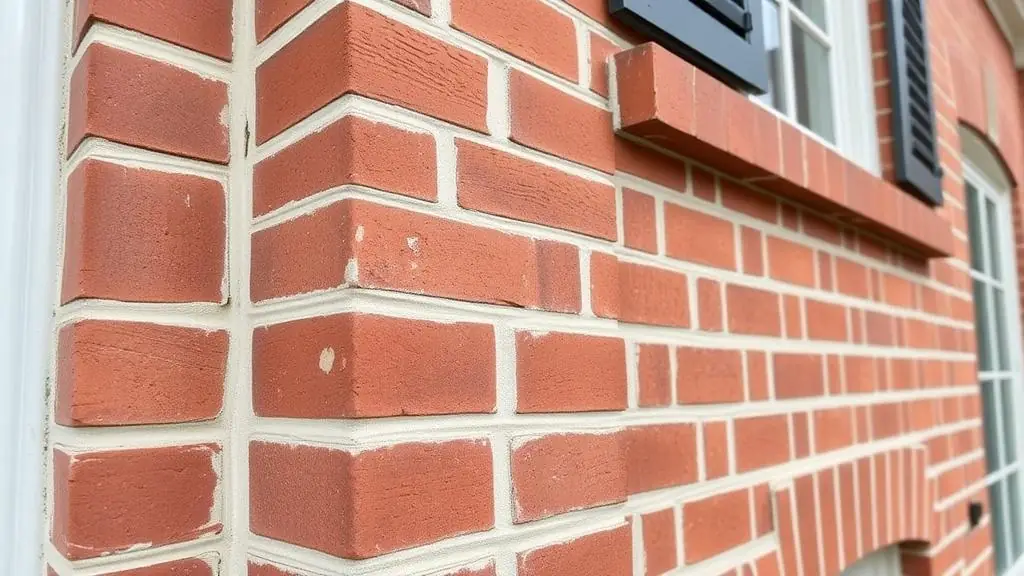
Sound brick is cleaned and reused. Cracked or spalled units are replaced with matching brick repair work. The new mortar should match the existing wall in strength and appearance, which is why mortar color matching matters on a visible front elevation.
Reseal the window perimeter
Fresh, flexible sealant goes between the frame and the brick. The weeps stay open.
Fix related damage
Deteriorated joints elsewhere on the wall may need tuckpointing, and any other openings with the same symptoms should be checked. Repairing one window while the one next to it fails the same way just moves the problem.
On older solid brick walls with no drainage cavity, the detail may need to be adapted to how the wall was built. That's a judgment call for someone who has seen the wall opened up, not something to settle from a photo.
Why Tuckpointing or Caulk Alone Won't Stop the Leak
Tuckpointing replaces worn mortar and caulk closes the gap at the window frame. Neither one reaches the flashing buried behind the brick. If the mortar above a window is failing, repointing it is worth doing. But if water is also getting behind the brick with no working flashing to catch it, the leak will continue after the new joints cure.
Some quick fixes make things worse. Caulking over weep holes or smearing sealant across cracks above the lintel can trap water inside the wall, where it keeps rusting the steel. Clear water repellents have limits too. BIA notes that a repellent may reduce some water getting into the brick, but it does nothing to help the wall handle water that's already inside.
The order of work matters. Find where the water enters, fix the drainage behind the brick, then repoint and reseal.
Chicago and North Shore Brick: What to Keep in Mind
Brick homes around Chicago span more than a century of construction methods, from solid masonry bungalows and two-flats to newer veneer houses, condo buildings and commercial properties. That range affects what's behind the brick and how a flashing repair should be detailed.
Weather adds pressure. Wind-driven rain off Lake Michigan pushes water into the wall face, and winter swings above and below freezing turn trapped moisture into ice that cracks mortar and pops brick faces. Water sitting on a failed flashing line above a window is exactly the kind of moisture that feeds that cycle.
Older homes need extra care. Many houses in Evanston, Wilmette, Highland Park and Lake Forest have decades of past repairs layered on the original wall, and earlier window replacements may have changed the original details. Pre-war brick and soft lime mortar also call for compatible materials, which falls under historic masonry restoration rather than standard repair. Brick homes and two-flats in Skokie and the rest of Cook County face the same weather with their own mix of building eras.
A small leak above one window can turn into rusted lintels, loose brick and interior damage over several winters. Catching it early keeps the repair to one opening instead of a whole elevation.
When Should You Have the Masonry Inspected?
Schedule an inspection if you notice any of these above a window or door, especially more than one at the same opening:
- Water stains or peeling paint that keep coming back after rain
- White deposits, rust streaks or cracks in the brick above the lintel
- Mortar joints that are crumbling or recessed right over the opening
- Weep holes that are missing, painted over or filled with caulk
- Moisture that only appears during wind-driven storms
Frequently Asked Questions
Is through-wall flashing the same as window flashing?
Can through-wall flashing be added to an existing brick wall?
Should I seal weep holes to keep insects out?
How much does through-wall flashing repair cost?
What's the difference between a lintel and flashing?
Sources
- Brick Industry Association, Technical Note 7: Water Penetration Resistance, Design and Detailing (November 2017)
- International Code Council, 2015 International Residential Code, Chapter 7, Section R703.8.6 Weepholes
- Journal of Light Construction, Weep Holes in Brick and Stone Veneer
- InterNACHI, Inspecting Brick Veneer in Residential Construction