The Problem
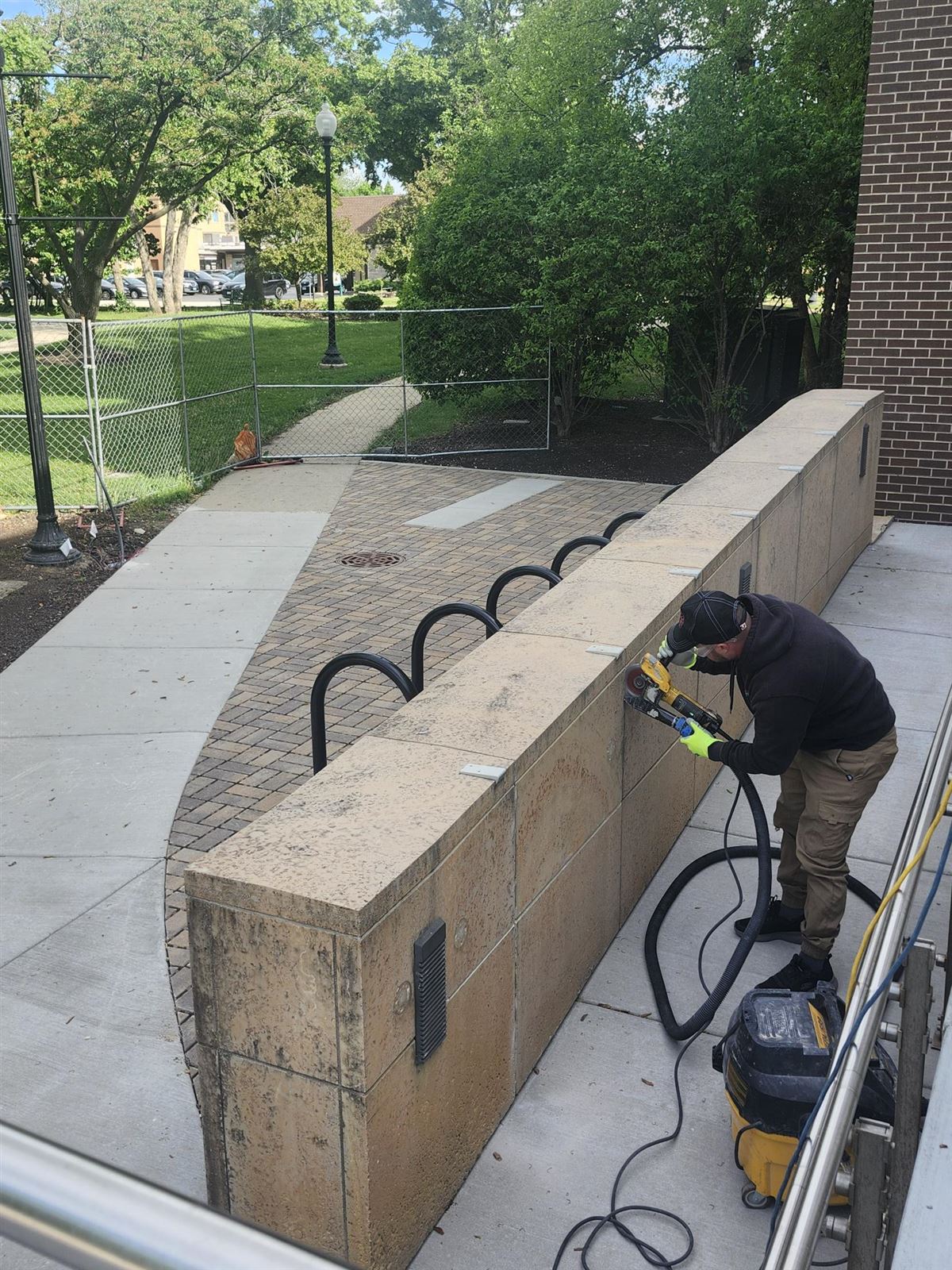
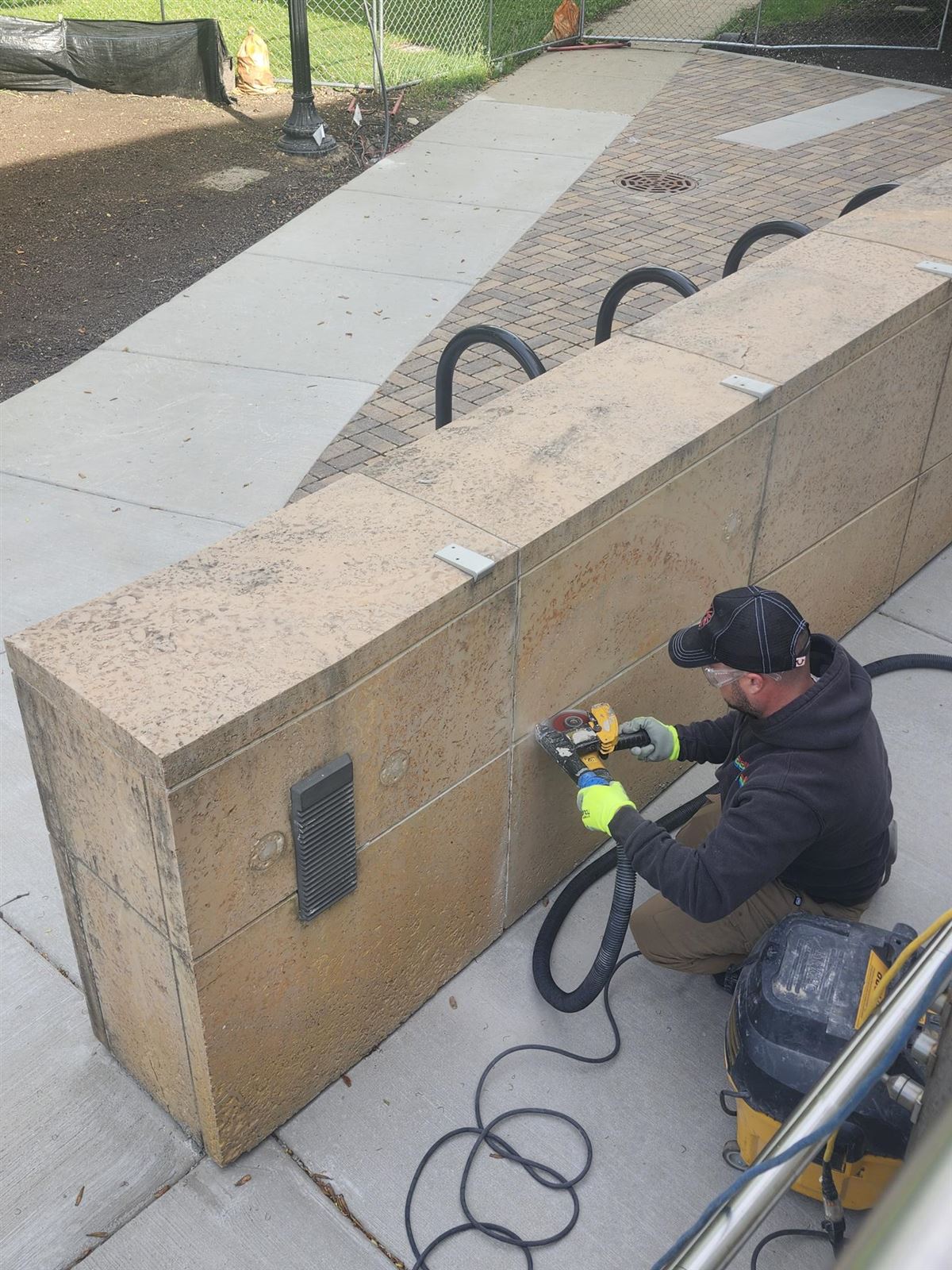
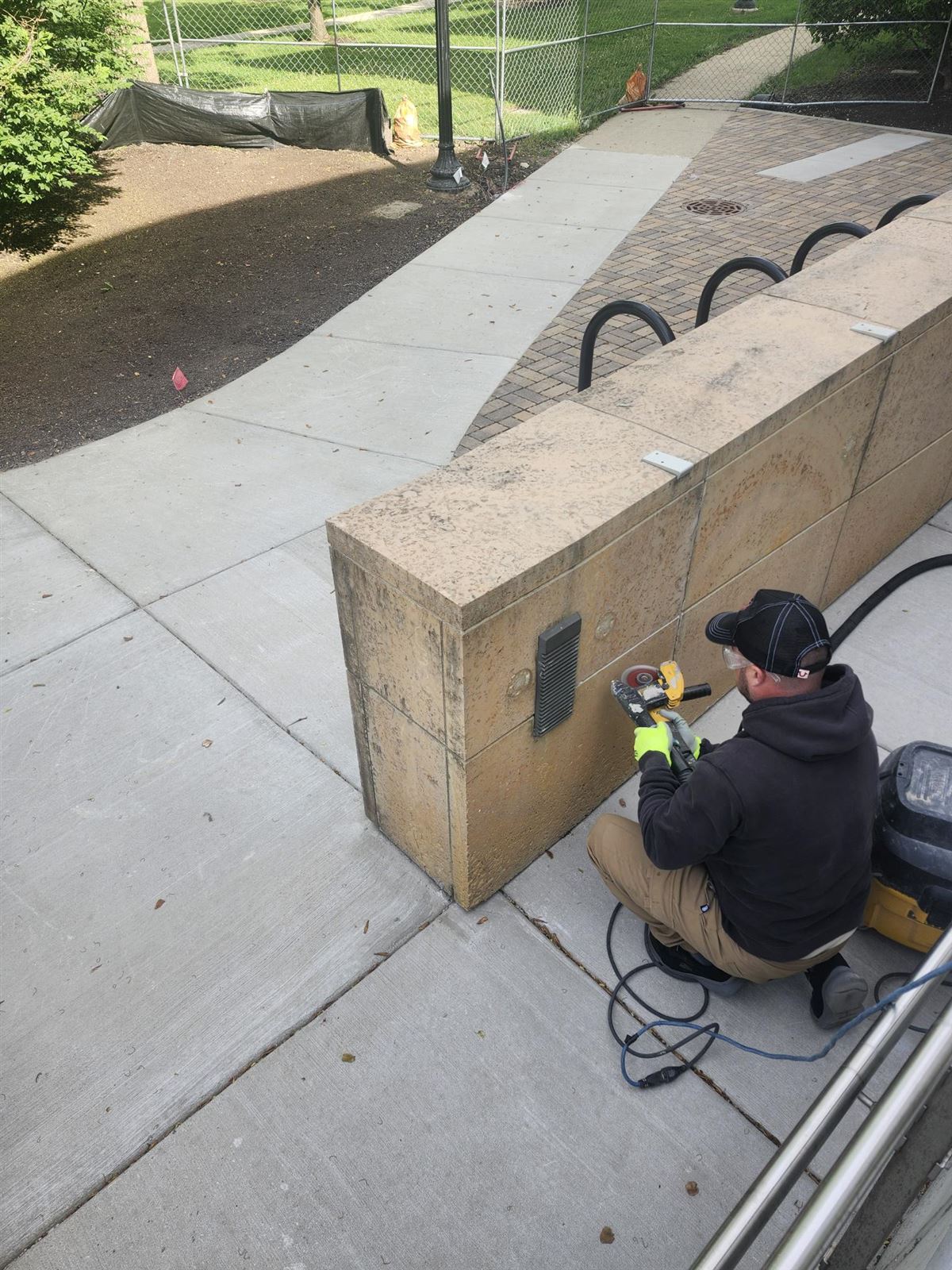
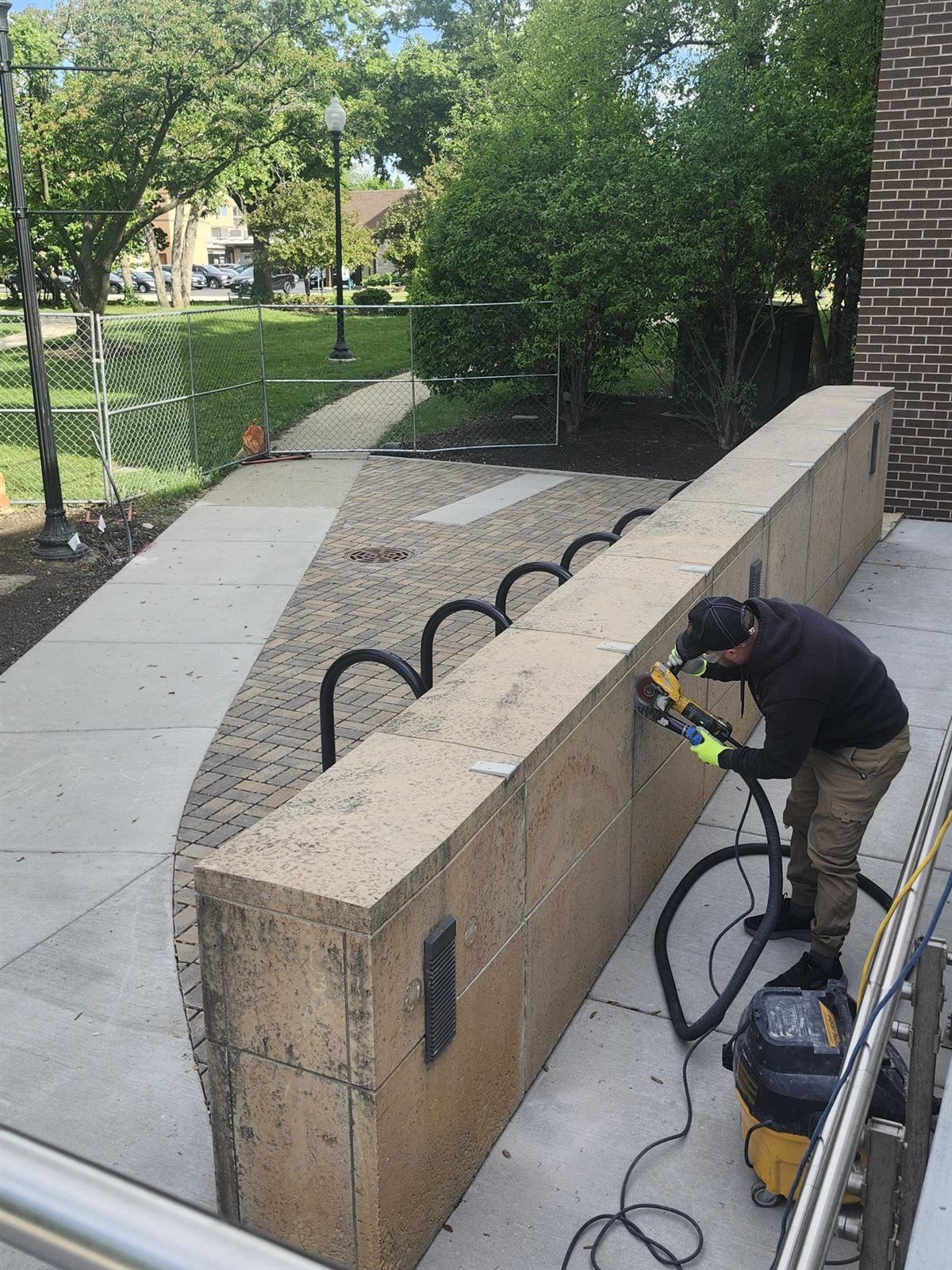
This stone wall restoration in Wheaton was at a public building, on the low stone seating wall that lines the walkway and bike racks outside the building. The wall is built from large sawn stone panels with a heavy coping on top, built-in light fixtures, and narrow joints between each unit. It is the kind of public masonry that people sit on, lean bikes against and walk past every day.
The weak point on a wall like this is the joints. Thin joints between big stone units take the movement from temperature swings, and once the material in them cracks or pulls away, water gets behind the panels and freezes there. Over time that shows up as staining, loose units and coping that starts to shift. The stone panels themselves were intact, so the work focused on the joints.
Our Solution
The crew worked from ground level, grinding out the old joint material between the panels with a grinder fitted with a dust shroud and hooked to a dust extraction vacuum. On a public site next to an entrance and an open walkway, capturing the dust at the blade keeps silica out of the air for staff and visitors and keeps the plaza and stone faces cleaner. We cover why in our post on silica dust and masonry safety.
Cutting joints on sawn stone takes a steady hand. The goal is to remove the old material to a consistent depth without touching the edges of the stone, because a chipped edge on a sawn panel can’t be hidden. Once the joints were clean, they were filled and tooled with new joint material to restore a tight, weather-shedding seal across the wall. Our stone masonry page describes how we approach this kind of work.
The Result
With the joints restored, the seating wall is sealed against water again and the panels and coping keep their clean lines. For a public building, that means a durable entrance feature without a disruptive rebuild, and our commercial masonry crews plan this kind of work around building hours. As a stone restoration contractor working on public and private property, we see the same pattern on homes: small joint failures caught early keep the stone in place. Our guide to stone masonry repair explains the options, and you can see a residential stone job in our stone veneer knee wall in Arlington Heights.