The Problem
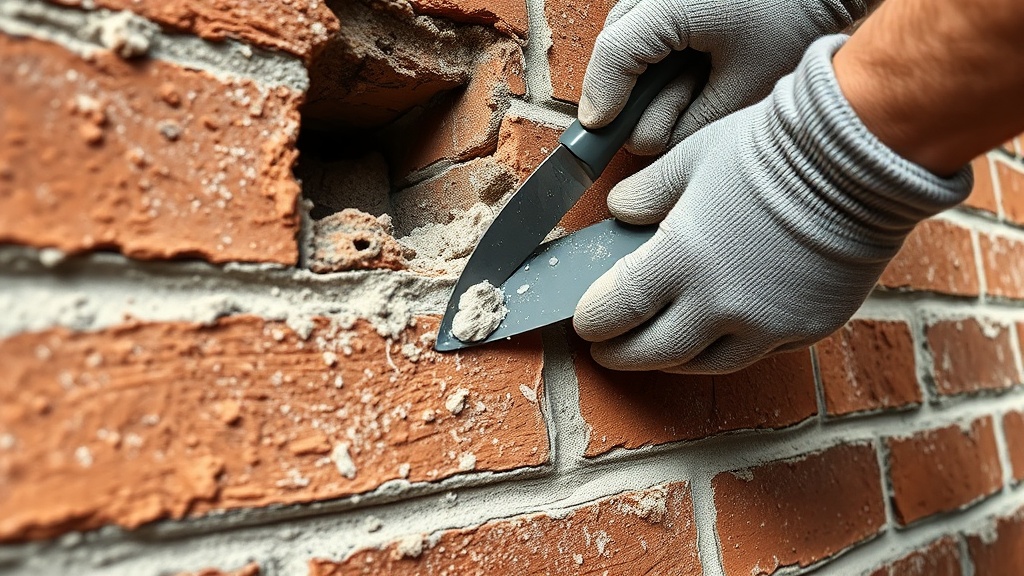
The owner of this 1979 brick Colonial in West Schaumburg’s residential subdivisions first noticed deterioration at the window returns on the second floor - the short sections of brick that wrap from the face of the wall to the window frame. These header courses had cracked mortar and visible recession on all four windows. By the time we arrived, the same pattern had progressed to the front facade below as well, with joints receded 1/2 inch or more across most of the elevation.
The home had never had its mortar touched since original construction. Forty-five years is a typical service life for the mortar mixes used on 1970s subdivision brick, particularly in the Chicago climate where joints cycle through freeze and thaw dozens of times each winter.
Our Solution
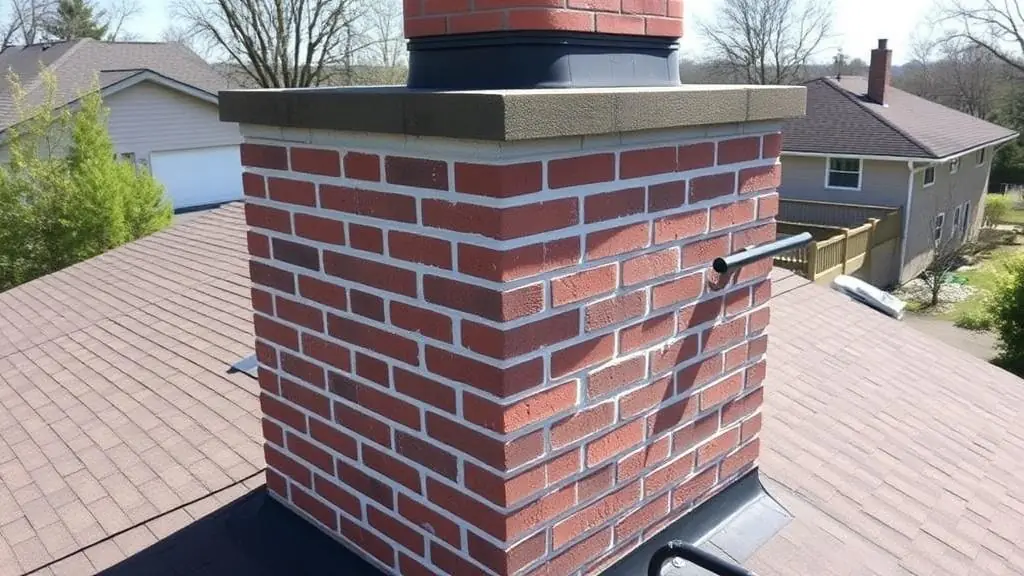
We repointed the front facade and both gable ends - 210 linear feet total. The window returns on all four second-floor openings were addressed first because deterioration was most advanced there and water was getting behind the brick at the window frame.
Mortar was ground to 3/4 inch depth throughout using a hand grinder with a diamond blade. Type N mortar, the period-correct specification for homes of this era, was mixed on site and color-matched to the tan-buff tone of the original joints. We sampled from a protected joint at the underside of the second-floor soffit overhang where the original mortar color had not faded.
All joints were packed in two lifts and tooled to a slightly recessed concave profile matching the original joint style.
The Result
The window return joints, which had been allowing water to track behind the brick at the frame, are now sealed. The mortar on the front facade reads consistently across the elevation. The homeowner commented that the house had looked tired for years and now looked solid again - which is exactly what sound mortar does for the appearance of a brick home.