Call Now Free Quote
(847) 713-1648 Get Free Estimate
Tuckpointing - Arlington Heights, IL

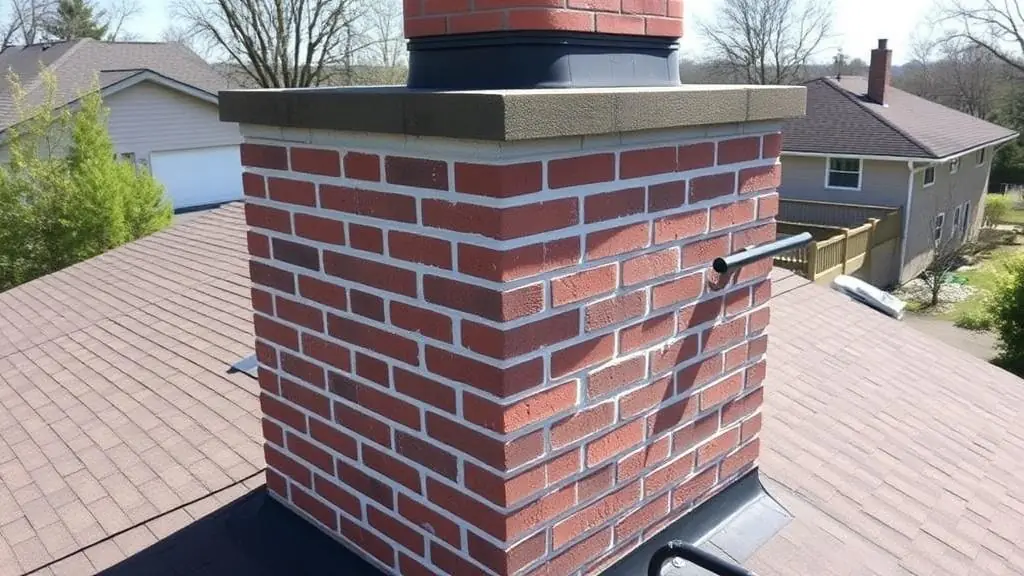
Full Facade Tuckpointing After Foundation Settlement - 1955 Cape Cod

September 2, 2025 | Central Arlington Heights near Northwest Highway

Before: Full Facade Tuckpointing After Foundation Settlement - 1955 Cape Cod Before
After: Full Facade Tuckpointing After Foundation Settlement - 1955 Cape Cod After
Location Arlington Heights, IL
Service Tuckpointing
Scope 210 linear feet of mortar joint restoration on a 1955 brick Cape Cod in Central Arlington Heights. Repair of settlement-related joint cracking on the north elevation plus full facade tuckpointing with Type N mortar. All four elevations repointed to uniform condition. Concave joint profile retained.
Mortar Type Type N
Duration 4 days
Building 1955 Cape Cod

The Problem

The homeowner contacted us after a structural engineer had assessed and cleared minor foundation settlement on the north side of their 1955 Cape Cod. The engineer’s report noted that movement had stabilized and recommended repointing the opened mortar joints on the north wall as a follow-up repair. The homeowner asked us to assess the full building while we were there.

The north elevation showed the expected settlement signature: a stair-step crack pattern running diagonally across three courses of brick near the northeast corner, with joint gaps up to 5/8 inch wide where the wall had moved slightly. Beyond the settlement area, the north face showed mortar recession of 5/8 to 3/4 inch across the full height - pre-existing deterioration that the settlement had not caused but that needed addressing regardless.

Walking the other three elevations confirmed what we expected on a 70-year-old Cape Cod: the east and west faces averaged 1/2 inch recession, and even the protected south face showed 3/8 inch recession in the upper courses below the roofline. No other settlement indicators were present on the south, east, or west walls.

The structural event had triggered the call, but the building needed a full facade tuckpoint regardless.

Our Solution

We began on the north elevation and worked clockwise. All joints were cut to 3/4 inch depth using a 4-inch angle grinder with a 1/8-inch diamond blade. In the settlement crack zone, joint gaps that already exceeded 3/4 inch were cleaned to their full depth with a cold chisel and compressed air to remove loose material from the crack walls before packing.

The replacement mortar was Type N at a 1:1:6 portland-lime-sand ratio, appropriate for a mid-century Cape Cod using standard Chicago-area brick with medium absorption. The sand aggregate was a grey-tan blend that closely matched the original mortar color visible in protected joints under the window sills on the east and south faces.

All joints were packed in two lifts. The settlement crack joints received a third intermediate lift on the widest gaps to ensure full consolidation without shrinkage voids. Final tooling on all four elevations used a 1/2-inch concave jointer to match the original profile present in the undisturbed sections of the south wall.

The Result

The completed tuckpointing closed all settlement-related gaps and brought the north elevation into the same condition as the rest of the facade. The stair-step crack pattern is no longer visible in the finished work.

All four elevations now read uniformly from the street. The homeowner has a written repair record, including the mortar formula, to accompany the structural engineer’s stabilization documentation.
Related: Tuckpointing Services | Arlington Heights Service Area

Questions About This Project

Can tuckpointing fix cracks caused by foundation settlement?

Tuckpointing addresses the open joints and mortar gaps that settlement creates, but it does not correct the settlement itself. Before tuckpointing after any structural movement, it is important to confirm with a structural engineer or foundation contractor that the movement has stopped or been stabilized. Repointing over active settlement will result in the new mortar cracking again. On this project, the homeowner had already confirmed stabilization before we began.

How do you distinguish settlement cracking from ordinary mortar deterioration?

Settlement cracks tend to follow a stair-step pattern through the mortar joints along diagonal lines, often radiating from corners or window openings. Normal weathering deterioration is more uniform - recession across many joints without a directional pattern. Settlement cracking can also produce open gaps rather than gradual recession, and the crack edges are often sharper and less weathered-looking than mortar that has been deteriorating for years.

Why tuckpoint the full facade if only one wall shows settlement damage?

A 70-year-old Cape Cod with settlement damage on one elevation typically has age-related mortar recession across all four faces as well. Doing only the damaged wall leaves the rest of the building in a condition that will require the same work within a few years. Doing the full facade in one mobilization is more cost-effective and produces a uniform result that ages consistently rather than showing visible patches between old and new work.

Project Location

Loading map - 1 project in this area

Need Similar Work? Let's Fix It Right.

Free on-site inspection and written estimate - no obligation. Serving the North Shore and Chicagoland for over 39 years.

(847) 713-1648 Request Online Estimate