The Problem
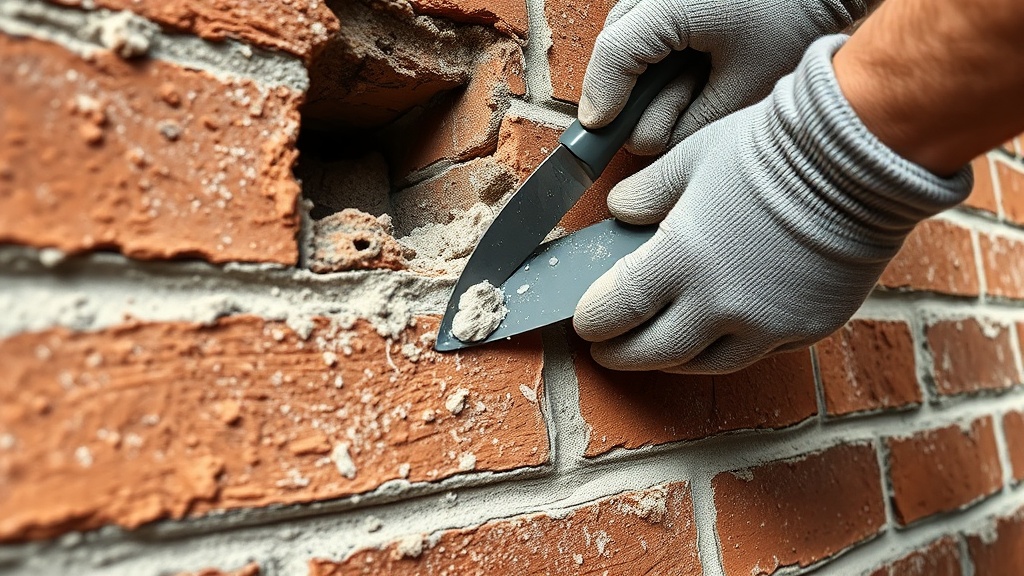
The owner of this single-story 1968 brick ranch in Plum Grove had watched the mortar joints along the front and both side elevations grow progressively softer over several years. By the time we inspected, the joints on the east-facing wall were recessed nearly 5/8 inch and had started pulling away from the brick face in short horizontal runs. On the south wall, two sections of mortar had fallen out completely, leaving gaps wide enough to pass a screwdriver through.
Plum Grove ranches of this era were built with a standard modular brick and a Type N lime-based mortar that was common in Cook County residential construction through the late 1960s. The original joints had a slightly rounded flush profile - not the deeply concave tooling used in later decades. Any replacement mortar needed to match both the composition and the tooling to keep the repair from reading as a patch.
Our Solution
We ground out deteriorated mortar on three elevations to a consistent depth of 3/4 inch using angle grinders fitted with diamond blade discs set at a stop depth. No cutting into the brick face. On the two sections where mortar had already fallen out, we probed the cavity to confirm the brick ties were still sound before packing new material.
The replacement mortar was a Type N lime-based mix with natural sand chosen to match the original joint color under dry conditions. We blended a small test batch, packed one running foot of joint, and let it cure 24 hours before matching the sand proportion to the surrounding undisturbed mortar. The final blend matched within one shade across all three elevations.
Joints were packed in a single lift on this application - the 3/4-inch depth did not require the two-lift method used on deeper restoration work - and tooled immediately to reproduce the rounded flush profile of the original 1968 joint before the mortar reached its initial set.
The Result
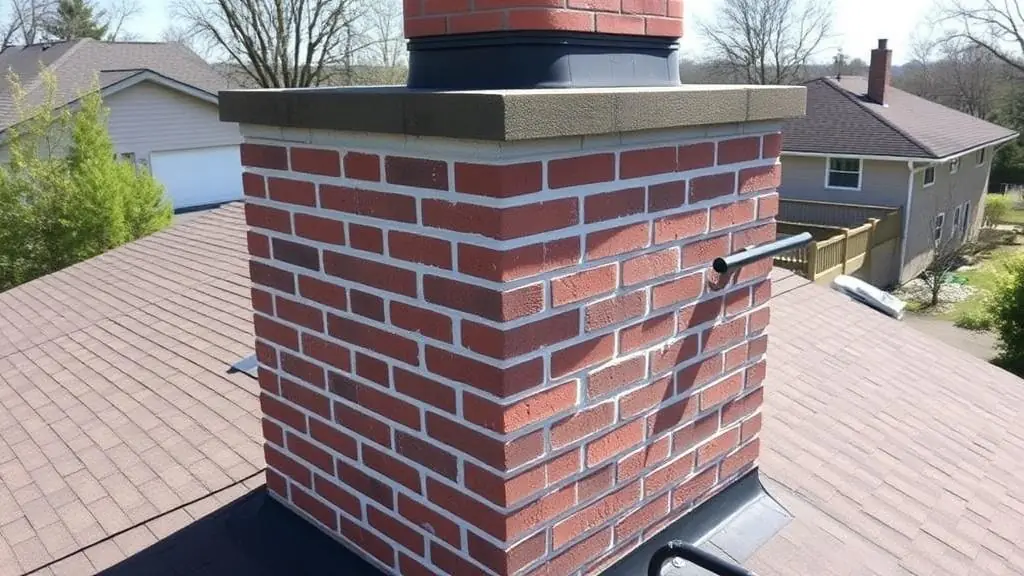
All three elevations are now fully sealed with mortar joints that match the original profile and color. The sections where mortar had fallen out completely are indistinguishable from the surrounding wall. The homeowner has watertight joints and a facade that does not announce that repair work was done.
Frequently Asked Questions
How do you tell if a 1968 brick ranch needs full tuckpointing versus spot repairs? We probe the joints with a screwdriver along all four elevations. Soft mortar that yields to light pressure or joints recessed more than 1/2 inch consistently across a wall face indicate that the mortar has reached the end of its service life. Spot repairs on a wall in that condition tend to look patchy and fail sooner than a full repoint because the surrounding mortar continues to degrade.
Why does mortar color matter if the joints are sealed either way? Color mismatch is the most common reason homeowners are unhappy with tuckpointing work. New mortar packed into a 1968 wall with the wrong sand or cement ratio cures to a noticeably different shade. We do a test batch and a 24-hour cure check before committing to the full wall so we can adjust the sand proportion if the initial match is off.
Can you tuckpoint in fall when temperatures drop? Yes, with precautions. We do not apply mortar when the ambient temperature is below 40 degrees or expected to fall below 40 within 24 hours of application. This job was completed in late September with temperatures holding in the mid-50s at night, which is within the acceptable range. We monitor the forecast before scheduling each day of work.