
Call Now Free Quote
(847) 713-1648 Get Free Estimate
Brick Repair - Morton Grove, IL

Brick Repair - 1958 Cape Cod, Brick Veneer Tie Failure

January 13, 2026 | near Ferris Avenue

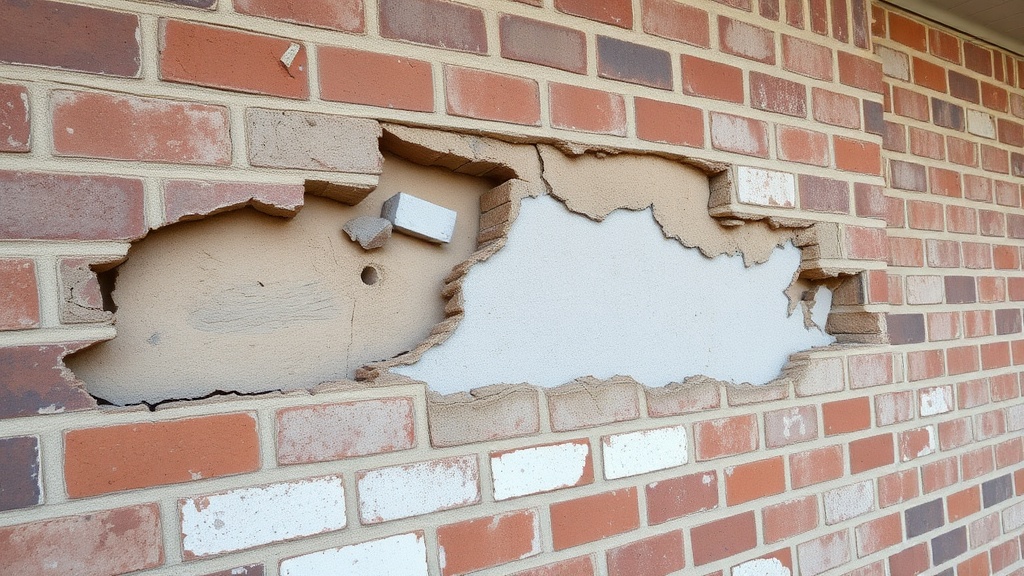
Before: Brick Repair - 1958 Cape Cod, Brick Veneer Tie Failure Before
After: Brick Repair - 1958 Cape Cod, Brick Veneer Tie Failure After
Location Morton Grove, IL
Service Brick Repair
Scope 16-foot section of brick veneer, 12 courses, rebuilt with new tie system
Mortar Type Type N
Duration 4 days
Building 1958 Cape Cod with brick veneer

The Problem

The owner of a 1958 Cape Cod in West Morton Grove called after noticing a section of the front brick wall was bowing outward. The affected area - about 16 feet wide centered on the first-floor window - had moved roughly 1.5 inches out of plane. Tapping the brick face produced a hollow sound across the bottom eight courses, confirming the veneer had separated from the wood frame backup wall behind it.

The cause was tie failure. The original corrugated galvanized steel ties had corroded through over 67 years of service. With no mechanical connection remaining, that section of veneer was held in place only by the mortar bond to the courses above and below - a temporary condition that would not survive another winter freeze-thaw cycle.

Our Solution

We carefully removed the 12 affected courses of brick in the 16-foot section, starting from the top of the detached area and working down. Each brick was removed with a cold chisel to avoid damaging the backup wall sheathing behind. Many original bricks were undamaged and were set aside for reuse after cleaning mortar residue from their faces and beds.

The backup wall sheathing was inspected for water damage - there was minor surface staining but no structural damage to the framing behind. New stainless steel corrugated ties were fastened into wall studs at code-compliant spacing: every 24 inches horizontally, every other course vertically, embedded a minimum of 1.5 inches into the mortar bed.

The veneer was rebuilt from the bottom up, incorporating original salvaged bricks mixed with a small quantity of period-matched new bricks to complete the section. All joints were set in Type N mortar, and we tooled a matching concave profile to align with the existing wall above.

The Result

The rebuilt section is mechanically anchored to the framing with a full stainless steel tie system. The veneer is plumb and in the same plane as the undisturbed wall above. Original brick was reused wherever possible - the rebuilt section blends with the adjacent courses.

The homeowner was advised to monitor the remaining tie condition on the east and north elevations, which were not part of this project but are approaching the same age as the failed section.
Related: Brick Repair Services | Morton Grove Service Area

Questions About This Project

What are brick veneer ties and why do they fail on mid-century homes?

Brick veneer is not a structural wall - it is a single-wythe facing attached to a wood frame backup wall by metal ties embedded in the mortar joints. On homes built in the 1950s and 1960s, these ties were typically corrugated galvanized steel. Over 60 to 70 years, the galvanized coating degrades, moisture reaches the steel, and rust begins. As the tie corrodes, it loses tensile strength and eventually breaks. Once enough ties fail in a section, the veneer has no mechanical connection to the backup wall and can bulge or detach.

How do you know if brick veneer is at risk of detaching?

Early signs include horizontal cracks at mortar joints in a stair-step pattern, sections of veneer that sound hollow when tapped, or visible outward bulging of the wall face. A hollow sound when you knock on the brick face indicates the veneer has separated from the backup wall behind it. This is a safety concern - detached brick veneer can fall. If you see outward bulging combined with horizontal cracking, have a mason assess it before the next freeze-thaw cycle.

When veneer is rebuilt, what tie system is used now?

Current practice on veneer rebuilds uses stainless steel corrugated ties or hot-dip galvanized ties rated for exterior use, fastened to the wood backup wall with stainless or hot-dip screws. Tie spacing follows code requirements: typically one tie per 2.67 square feet of wall area, placed at every other course vertically and every 24 inches horizontally. Stainless steel ties cost more upfront but do not have a defined corrosion lifespan the way galvanized does.

Project Location

Loading map - 1 project in this area

Need Similar Work? Let's Fix It Right.

Free on-site inspection and written estimate - no obligation. Serving the North Shore and Chicagoland for over 39 years.

(847) 713-1648 Request Online Estimate