The Problem
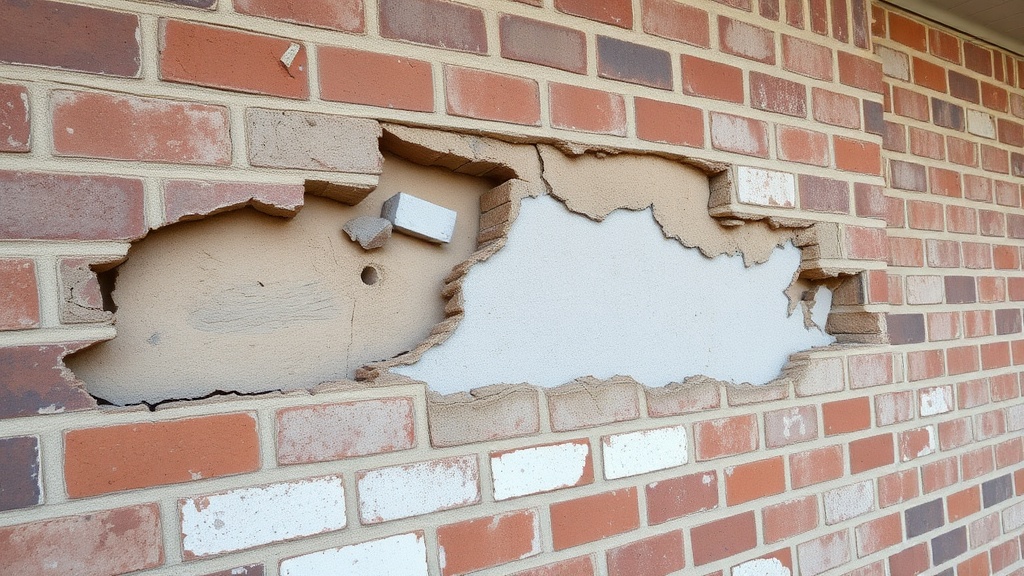
The owner of this 1962 split-level noticed that brick faces were popping off along the lower course near the front entrance and around the left bedroom window on the upper level. When we inspected, we counted 23 bricks that had lost their face - some completely delaminated, others cracked through to the core. The exposed cores were showing freeze-thaw pitting that had progressed through more than half the brick thickness.
The root cause was not the brick age itself. The lower course showed evidence of ground moisture wicking up through a failed through-wall flashing at the foundation line. On the window surround, a sealant bead applied at some point by a previous owner had trapped moisture between the brick and the window frame, which then cycled through the brick face during freeze-thaw events. Both moisture entry points needed to be addressed before any replacement brick was set.
Our Solution
We removed the 23 deteriorated units by cutting the surrounding mortar joints on all four sides with a hand grinder, then extracting each brick whole to keep the surrounding units undisturbed. Every cavity was wire-brushed clean and vacuumed before inspection.
At the foundation course, we installed a new rubberized through-wall flashing strip behind the replacement units before setting them - the original lead flashing had perforated in two locations and was allowing moisture to wick directly into the brick field. On the window surround, we removed the failed sealant bead entirely and left a properly sized mortar joint, which breathes rather than trapping moisture.
Replacement units were sourced from a regional reclaim supplier to match the original 1962 modular face brick. We checked face dimensions, color range, and surface texture against undisturbed units three rows above the repair zone before committing. Each replacement brick was set with a full Type N mortar bed and head joint, no gaps, and tooled to match the concave profile on the surrounding undisturbed courses.
The Result
The 23 replacement units are seated, the flashing is in place, and the window surround joint is correctly detailed to drain rather than trap water. The color match falls within the natural variation range of the original brick field. The owner has a watertight lower course and window surround rather than a growing delamination problem.
Frequently Asked Questions
Why were the brick faces popping off rather than the whole brick failing? Face delamination happens when water gets behind the face of the brick - through a failed mortar joint, trapped sealant, or wicking from below - and then freezes. Water expands roughly 9 percent when it freezes. That expansion shears the face off while the core of the brick remains intact. On this home the problem was happening from two separate moisture entry points, which is why we addressed both before setting replacement units.
How close is the color match on replacement brick? Brick from the early 1960s is no longer in production. We source from regional reclaim suppliers and match by inspection - face dimensions, color range, and surface texture. The replacement units read correctly in the field because they sit within the natural color variation of the original brick. There is no such thing as a guaranteed exact match on a 60-year-old unit, and we tell homeowners that upfront.
Do you need to replace mortar in the surrounding courses when doing brick replacement? Not always. If the surrounding mortar is still sound - firm under probing, not recessed more than 1/4 inch - we leave it in place. On this job the mortar in the three courses above the repair zone was intact and stayed untouched. Where we removed individual bricks, we cut only the joints directly bonding those units and packed fresh Type N mortar when resetting.