The Problem
The owner of a 1961 brick ranch in West Waukegan noticed a stair-step crack pattern running diagonally from the corner of a window opening down toward the foundation on the front elevation. Stair-step cracking in brick veneer almost always traces back to either settlement or, more commonly on postwar ranches, a corroding steel lintel above the opening.
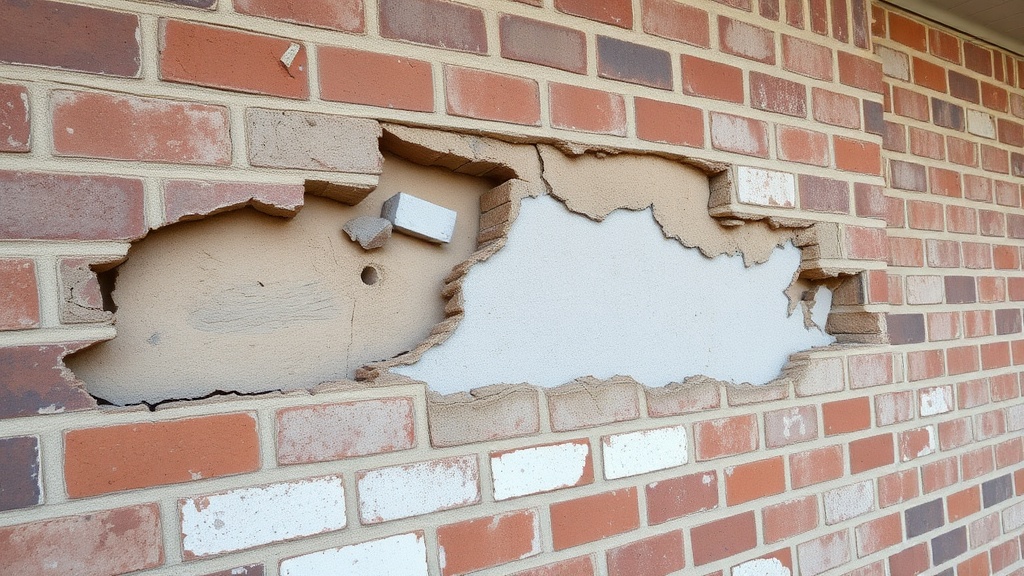
When we inspected the window header area, we found the original steel angle lintel had rusted and expanded, pushing the brick course directly above it outward and breaking the mortar bond at 22 consecutive joints. Two bricks had tilted outward visibly. The rust expansion had also cracked three bricks at the point of maximum pressure directly above the lintel seat.
Our Solution
We removed the displaced and cracked brick in the affected section, exposing the full length of the lintel. The steel showed surface rust and moderate section loss but had not yet reached structural failure. We wire-brushed the lintel surface to bare metal and applied a rust-inhibiting primer rated for embedded steel before reinstalling brick.
The three cracked brick units were replaced with face brick sourced to match the mottled tan-and-buff tone common in early-1960s Lake County residential construction. We brought sample brick to the site for color comparison before ordering. The remaining 19 displaced bricks that were structurally intact were reset in fresh Type N mortar, as pulling and resetting is preferable to grinding and patching on a clean joint face.
After the lintel section was rebuilt, we repointed the 45 linear feet of mortar joint along the front base course that had softened with age. These lower joints on postwar ranches take the most abuse from ground splash and snow accumulation and are typically the first to require attention on homes of this era.
The Result
The stair-step crack is closed and the front elevation is structurally tied back together. The treated lintel will resist further rust expansion. The color match on the replacement brick is close; the new units will weather toward the original tone within two seasons given the south-facing exposure.
We noted that the east wall shows early signs of similar lintel rust at the bedroom window. The homeowner was advised to budget for that repair in the next two to three years before the same displacement pattern develops.
Frequently Asked Questions
-
question: “What causes the stair-step crack pattern in brick veneer?” answer: “Stair-step cracking that originates above a window or door opening almost always means the steel lintel is rusting and expanding. The rust forces the brick above it outward, and the crack follows the path of least resistance along the mortar joints diagonally. Differential settlement can cause similar patterns but usually appears at corners or foundation transitions.”
-
question: “Does a rusted lintel need to be replaced completely?” answer: “Not always. If the rust is surface oxidation with limited section loss, cleaning to bare metal and priming before rebuilding the brick is an effective and economical solution. Full replacement is warranted when the steel has lost significant cross-section or has bent under load.”
-
question: “Will the new brick match the 1961 originals?” answer: “On postwar brick ranches, the original face brick was typically a standard builder-grade unit in the tan-to-buff range. Finding a close match is usually achievable. The new brick will be slightly brighter initially but weathers noticeably within one to two seasons on a south or west-facing wall.”