The Problem
A June hail storm moved through the Kenilworth Gardens area of Wilmette and the homeowners filed a property claim that included their chimney. The insurance adjuster noted mortar damage and cracking on the chimney cap but flagged that a masonry contractor would need to assess what was storm-related versus pre-existing before the claim could be settled. The homeowners contacted us to provide that assessment and to complete the repair once scope was agreed with their carrier.
The 1929 Tudor cottage chimneys in Kenilworth Gardens are modest in scale compared to the larger estate chimneys to the east, but they share the same exposure conditions. When we arrived, the chimney crown was cracked across the full width in two locations - one crack consistent with hail impact at the crown lip, one consistent with longer-term thermal cycling. The upper six courses showed fresh mortar fracturing in a pattern aligned with the storm’s northwest approach, with impact spatter visible on the south face of several joints.
Below the top six courses, mortar condition was acceptable with minor recession that did not require repair. We documented both conditions separately with photographs and written notes before touching anything.
Our Solution
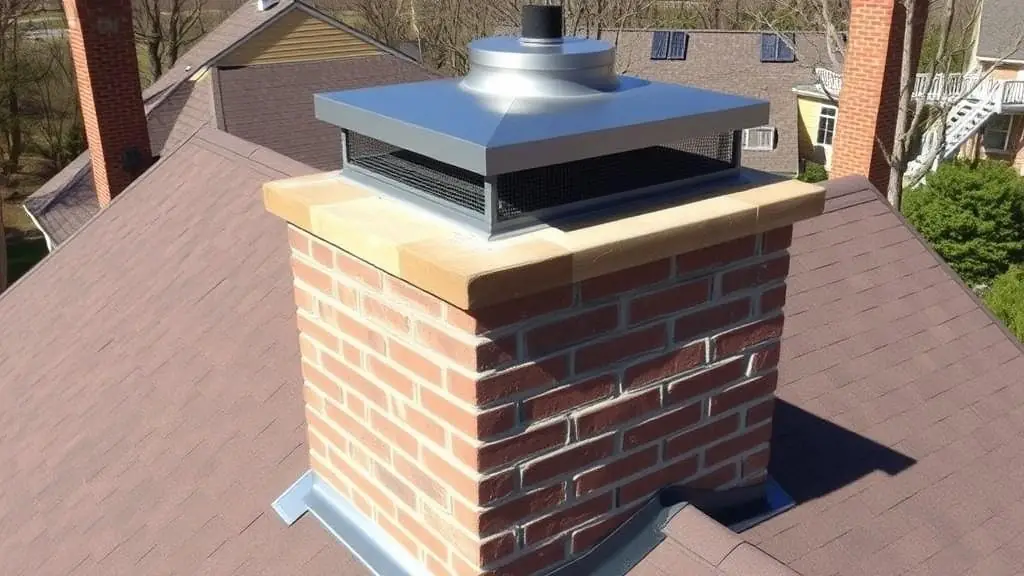
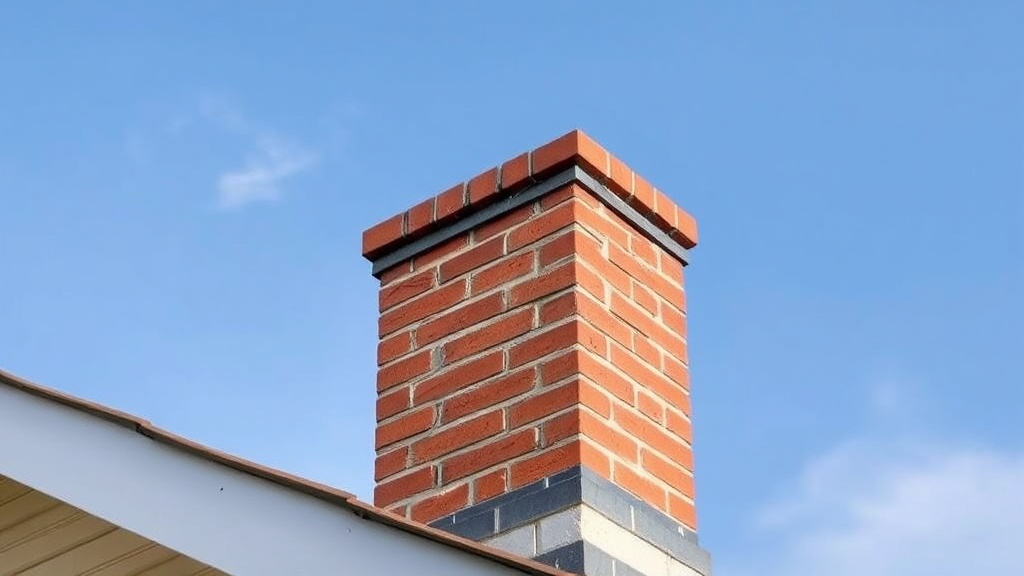
With the scope agreed between the homeowner and their carrier, we began on a two-day schedule. Day one focused on the crown removal and upper course repointing. The cracked crown was removed in sections by hand to avoid shock to the upper courses. We removed mortar from the top six courses to a minimum 3/4 inch depth, cleaned the joints with compressed air, and packed fresh Type N lime-blend in a single lift given the narrow joint width on this chimney’s above-roofline coursing - approximately 5/16 inch per joint.
The new chimney crown was formed and cast on day one afternoon and left to initial set overnight. The mix used a slightly richer Portland content than standard Type N to achieve the density appropriate for an exposed crown cap, with a sloped top profile draining to a 1-inch overhang on all four sides.
Day two completed the crown cure check, form removal, final tooling of the repointed joints to a concave profile, and elastomeric sealer application on the crown surface.
The Result
The two-day project was complete within the timeframe the homeowners needed to close out their insurance claim. The written assessment we provided distinguished the storm-caused damage from the background pre-existing recession, which the carrier accepted.
The new crown is properly sloped and drained. The repointed upper courses show consistent Type N mortar color matching the retained lower courses below the roofline.