
The Problem
A realtor flagged the mortar condition on this 1925 bungalow in East Wilmette near Lake Avenue during a pre-sale inspection. The inspection report noted recessed joints on the north and west elevations, with several locations showing mortar loss exceeding one inch. The homeowner was preparing to list and needed a documented repair before closing.
When we walked the home, the inspection report was accurate but incomplete. The south elevation showed early-stage mortar recession that had not yet been flagged, and the east elevation had a section of old patch material applied in an incompatible mix. That patch was already pulling away from the brick face and had induced hairline cracking in three adjacent brick units.
The bungalow style construction common to this stretch of East Wilmette uses Chicago common brick - a soft, high-absorption brick that requires a compliant, lime-rich mortar to function correctly. Running anything harder than Type N on a home like this accelerates spalling, which is exactly what the east patch had begun doing.
Our Solution
We removed deteriorated mortar across all four elevations to a minimum depth of 3/4 inch, using 4-inch angle grinders with depth-limited diamond cup wheels to avoid overcutting the soft brick edges. On the north wall, where joint recession exceeded one inch in multiple locations, we ground to full depth and cleaned the joint cavity with compressed air before packing.
The replacement mortar was a lime-rich Type O blend at 1:2:9 portland-lime-sand ratio. We mixed in batches of no more than 45 minutes of working time given the July heat. The sand used was a buff-tone local aggregate matched against the extracted core sample from the porch joint. All joints were packed in two lifts, with the first lift allowed to stiffen before the second lift was tooled to a concave profile matching the original.
The incompatible east elevation patch was fully removed with hand chisels to avoid vibration damage to the already-stressed brick faces. Those 22 linear feet were cut back, cleaned, and repacked with the same Type O blend used across the rest of the home.
The Result
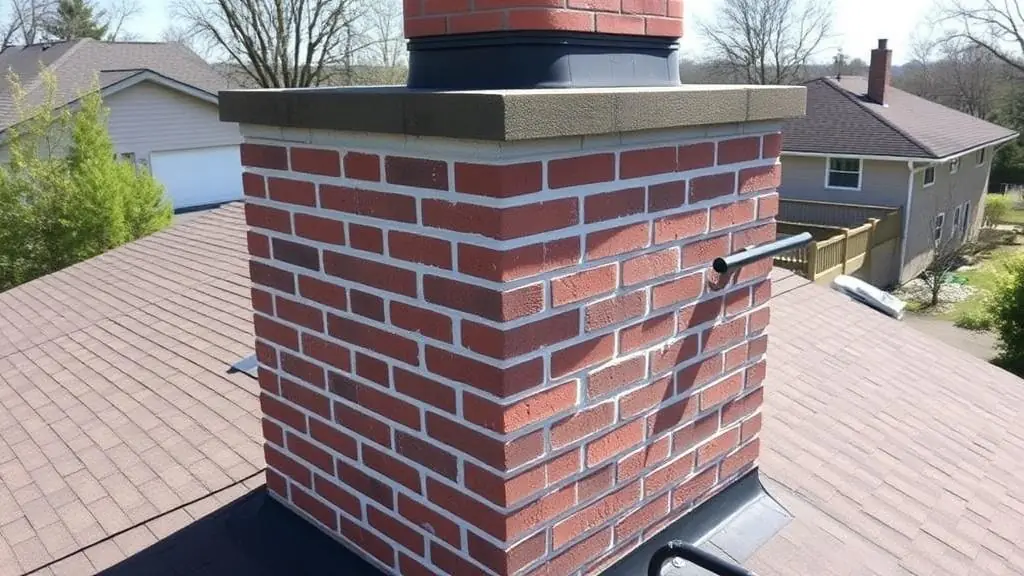
The completed work brought all four elevations into consistent condition. Mortar color across the new joints matched the original protected joints on the porch to within a visible shade under daylight. The east elevation no longer shows the patch seam that had been visible from the street.
We provided the homeowner with a written repair summary and the mortar formula used, formatted for inclusion in the disclosure documents for the sale. The listing proceeded on schedule.