The Problem
The homeowner noticed a pattern of white staining - efflorescence - running down the upper courses of the chimney exterior each spring for the past three years. The staining was getting wider and more pronounced each year, which indicated that water was penetrating deeper into the chimney brick and carrying soluble salts outward as it evaporated.
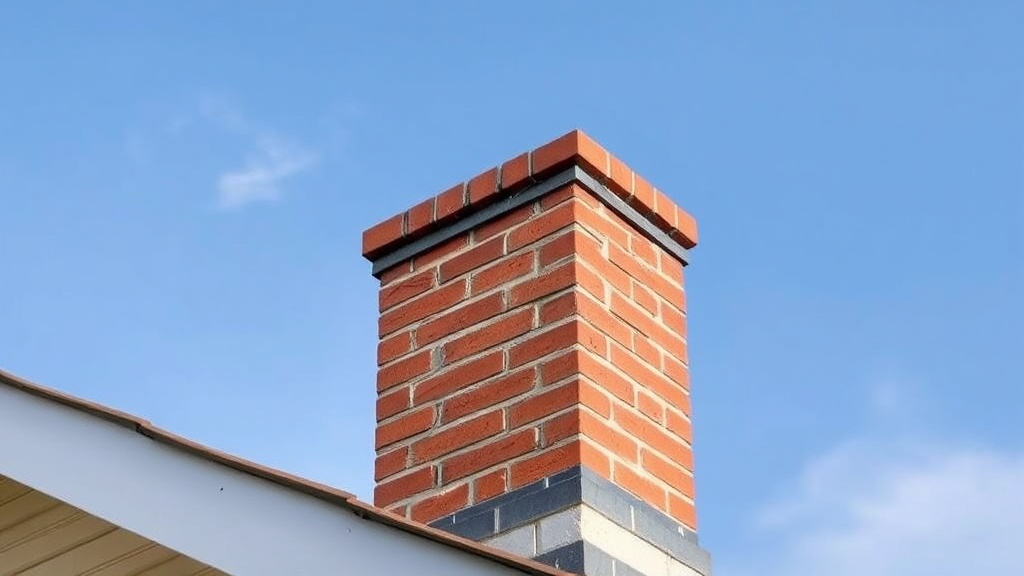
Our inspection confirmed significant cumulative freeze-thaw damage. The two top courses of brick above the roofline showed mortar recession of 3/4 inch to 1 inch on all four faces. Below the roofline, recession averaged 5/8 inch on the north and west faces, with the south and east faces in better condition - roughly 3/8 inch recession, consistent with less direct exposure. The chimney crown had surface cracking in a spiderweb pattern across roughly 60 percent of its surface area. The cracks had not yet penetrated full-depth, but water was visibly entering the crack network and contributing to the efflorescence pattern.
The damage pattern was consistent with 15 to 20 years of unchecked freeze-thaw cycling - not a recent onset but a slow accumulation that had reached a threshold where visible symptoms appeared annually.
Our Solution
We set scaffold from the ground to the chimney top to safely access all four faces at full height. All chimney joints were cut to 3/4 inch depth using a 4-inch angle grinder with a 1/8-inch diamond blade. On the top two courses where recession already exceeded 3/4 inch, we ground to the full existing depth, then cleared the joint cavity with compressed air before packing.
The replacement mortar was Type N, mixed at a 1:1:6 portland-lime-sand ratio consistent with the original specification for late-1960s residential chimney construction. All joints were packed in two lifts. The first lift was taken to approximately half depth and left to achieve thumbprint firmness before the second lift was applied. Final tooling used a 5/8-inch concave jointer to match the joint profile visible on the protected lower courses of the chimney near the roofline flashing.
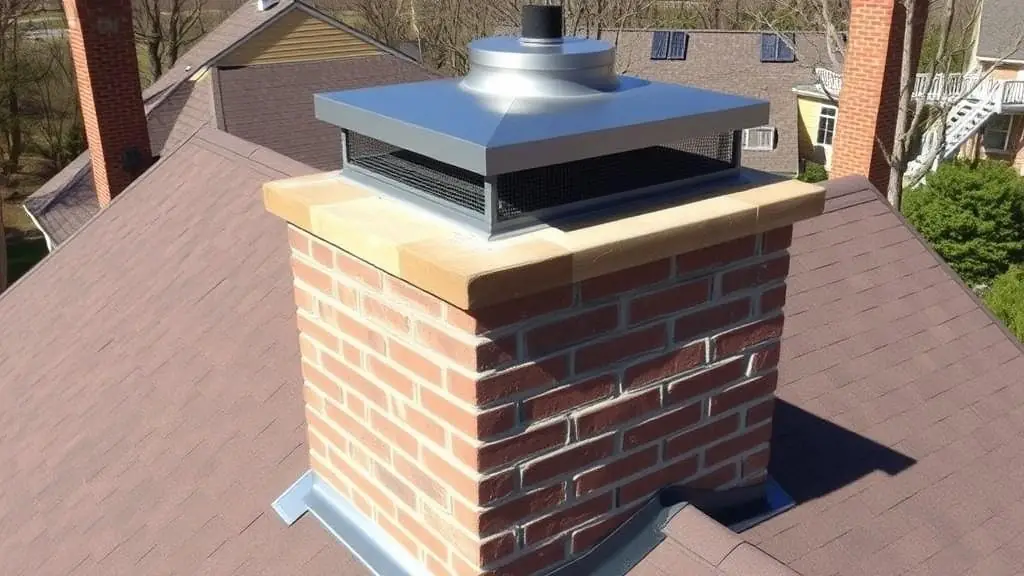
The crown was cleaned, surface cracks were opened with a grinder and filled with a flexible polyurethane caulk, and the entire crown surface was coated with two applications of an elastomeric crown sealer rated for exterior freeze-thaw exposure. The overhang and drip edge geometry were intact and retained. A new stainless steel chimney cap with a rain cover was installed over the flue liner.
The Result
Efflorescence stopped appearing on the chimney exterior after the first full winter following the repair. The homeowner reported no staining in the spring following completion.
The repointed joints, resurfaced crown, and new cap address all three water entry points that were contributing to the deterioration pattern.