The Problem
A homeowner in Central Buffalo Grove discovered water staining on the ceiling of their second-floor bedroom directly below the chimney chase. The chimney on this 1988 home is a framed wood chase sided with brick veneer over a prefabricated metal flue, a common configuration in late-1980s suburban construction across Lake County.
When we accessed the roof, we found the original concrete cap had cracked through in two places and was sitting open at the joint where it meets the chase sides. The mortar joints on the upper three courses of brick veneer had also opened significantly, with gaps visible along the entire south-facing run. The flashing at the base of the chase showed separation from the brick at two corners, which was contributing to the interior water entry along with the failed cap.
Our Solution
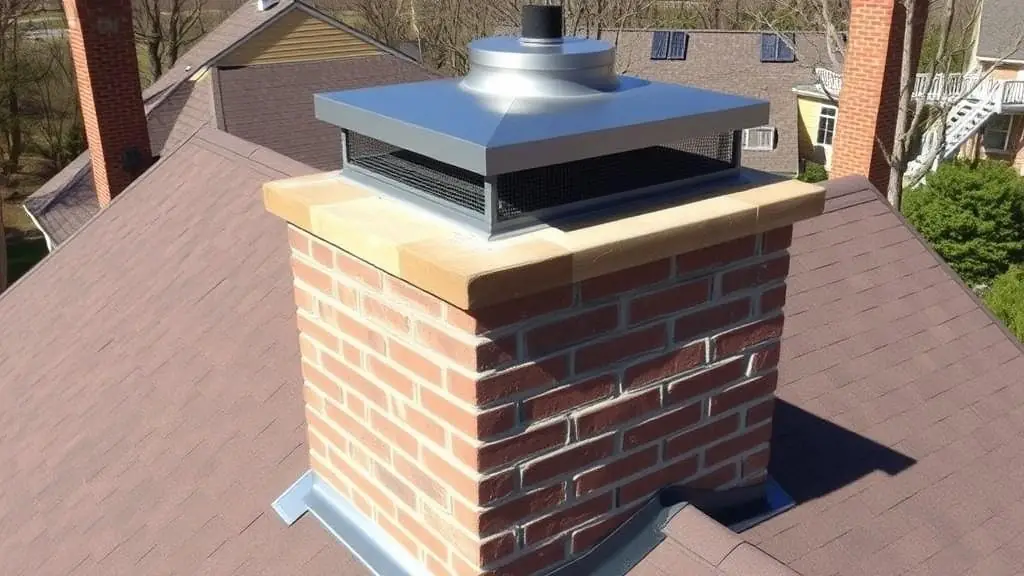
We removed the failed concrete cap in sections and cleaned the chase top surface down to sound material. A new reinforced concrete cap was formed and poured with a 2-inch overhang on all four sides and a positive drip edge to direct water away from the brick face below. The cap was sloped 1/4 inch per foot from center to edge so water sheds rather than ponds.
The upper three courses of brick veneer were repointed with Type N mortar after grinding deteriorated joints to 3/4-inch depth. On prefab chase construction, Type N is the correct choice: the wood framing behind the veneer allows slight seasonal movement, and a softer mortar accommodates that movement without cracking. Harder Type S in this application tends to crack within a few years as the frame shifts.
The separated flashing at the two corners was lifted, recountered with sheet metal, and sealed with roofing-grade sealant. We do not replace flashings outright unless the metal itself has failed; in this case, the metal was intact and only the seal had let go.
The Result
The cap replacement and corner flashing repairs address the two primary water entry points. The repointed upper courses eliminate the open joints that were allowing wind-driven rain to saturate the veneer and migrate behind it.
The homeowner was advised to have the interior staining assessed for any drywall or insulation damage that the water entry may have caused over time.
Frequently Asked Questions
-
question: “Is a prefabricated chimney chase repaired the same way as a full masonry chimney?” answer: “The brick veneer work is the same - grinding, repointing, cap replacement. The key difference is mortar selection: prefab chases sit on wood framing that moves seasonally, so Type N is the right mortar. A stiffer mix will crack as the frame flexes.”
-
question: “How long does a concrete chimney cap last?” answer: “A properly formed and cured cap should last 20 to 30 years. The ones that fail early are typically poured too thin, lack an overhang drip edge, or were not reinforced. We pour ours at a minimum 2-inch thickness with rebar and a full overhang.”
-
question: “Should I have the interior ceiling damage repaired before or after the chimney work?” answer: “After. Repair the source of water entry first, confirm it is resolved, then address the interior cosmetic damage. Repairing drywall before the exterior is fixed means doing the work twice.”