The Problem
The new owners of this 1932 French Eclectic estate in East Glencoe contacted us within 90 days of closing. Their pre-purchase inspection had noted masonry concerns across multiple elevations, and they had set aside budget for remediation before moving in. They wanted the work done properly from the outset rather than managing a condition that was already progressing.
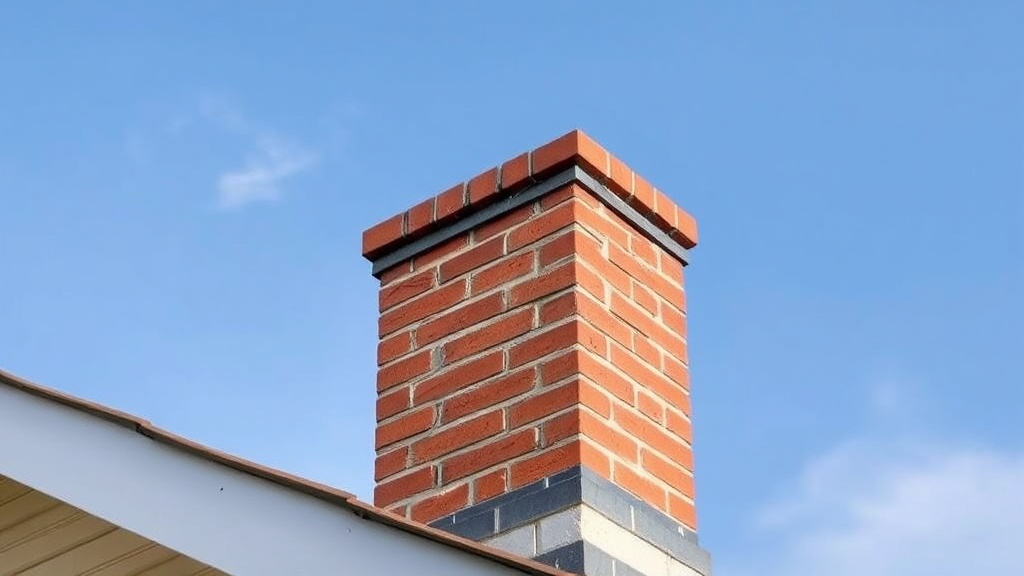
French Eclectic estates along the East Glencoe lakefront corridor are among the more architecturally specific homes we work on in this area. The 1932 construction on this home uses a hand-molded Norman brick with a tight joint width and a V-joint profile that is closely associated with this style. The visual character of the wall depends on that joint profile reading correctly - a concave or flush repointing job on a home like this changes the appearance of the entire facade.
When we assessed the three affected elevations, the condition matched the inspection findings: average recession of 5/8 inch on the north and west faces, with localized peaks at 1 inch in the sheltered northeast corner where leaves and debris had held moisture against the wall. Two prior patch zones were visible on the north elevation - one approximately 12 linear feet, one approximately 8 linear feet - both filled with Portland-heavy mortar that was noticeably lighter in color and harder to the tap test than the surrounding original joints. The 8-foot patch had already caused micro-cracking in two adjacent brick units.
One quoin block at the southwest corner had shifted outward 3/16 inch, likely from freeze-thaw movement behind the block. The movement had not yet opened the surrounding joints to active water entry, but left unaddressed it would continue.
Our Solution
We extracted mortar cores from three protected locations: a rear addition joint, a basement window reveal, and a covered porch wall. The samples confirmed a natural hydraulic lime chemistry without Portland content. NHL 3.5 was selected as the closest available match to the original formulation.
Work began with removal of the two incompatible patch zones on the north elevation. Both patches were cut out by hand chisel to avoid vibration stress to the surrounding original mortar and adjacent brick. The micro-cracked brick units near the 8-foot patch were stabilized with NHL 3.5 grout injection before the surrounding joints were repointed.
The displaced quoin block at the southwest corner was removed, the bed and head joint surfaces cleaned, and the block reset in fresh NHL 3.5 mortar. We used a laser level to confirm plumb and alignment to the adjacent course before the mortar stiffened. The reset joint was braced for 48 hours.
For the 290 linear feet of repointing across the north, west, and east elevations, we removed recessed mortar to a minimum 3/4 inch depth using hand chisels throughout - the tight V-joint profile on this home does not allow a grinder to work without risking the brick arris. All joints packed in two lifts and tooled to a V-joint profile using a purpose-ground steel jointing tool set to the original V-angle measured from intact protected joints.
The Result
Three weeks of work brought all three affected elevations to consistent documented condition. The V-joint profile reads uniformly across the repaired areas, matching the retained south elevation joints and restoring the formal coursing appearance characteristic of this style of construction.
The quoin block at the southwest corner is reset and stable. The two prior incompatible patch zones are no longer visible.
We provided the new owners with a full mortar specification, photographic survey, and notes on the V-joint tooling so that any future contractor has the information needed to match the work correctly.