The Problem
The homeowners in central Hubbard Woods had been managing a recurring water stain on their living room plaster wall for two winters. The stain tracked down from a corner of the ceiling near the interior chimney mass and had expanded each season. A plumber and a roofer had both inspected and cleared their respective systems. When they called us, they suspected the chimney but had not had it assessed.
Hubbard Woods holds a dense concentration of Tudor Revival and Georgian Colonial estates from the 1930s. The chimney masses on these homes are typically substantial - multiple flues, corbeled crowns, and significant above-roofline exposure. They are also 90 years old, and most have seen at least some prior work.
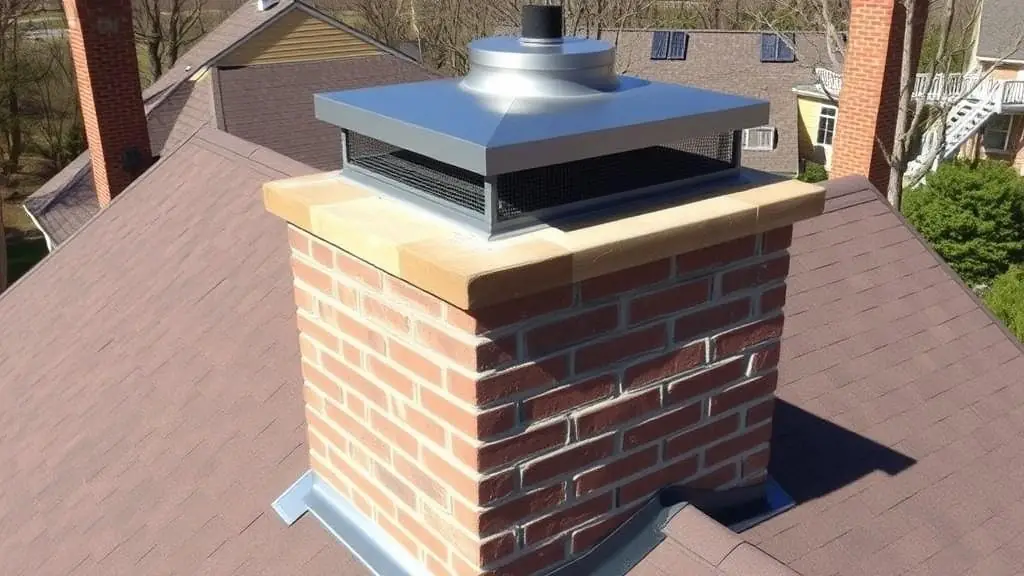
On this 1935 Tudor Revival, scaffolding access to the chimney confirmed what the interior stain had suggested: the chimney crown was fully delaminated and had been holding standing water against the flue tile during rain events. Below the crown, mortar joints across the top eight courses above the roofline had recessed to over one inch. Water was tracking through those joints and running down the interior face of the chimney mass to the living room wall. At the firebox opening, the original steel lintel had corroded through, expanding outward and fracturing the brick course directly above it.
Our Solution
We erected full-height scaffolding on day one to access the chimney from crown to roofline. The delaminated crown was removed entirely by hand to avoid vibration damage to the upper chimney courses.
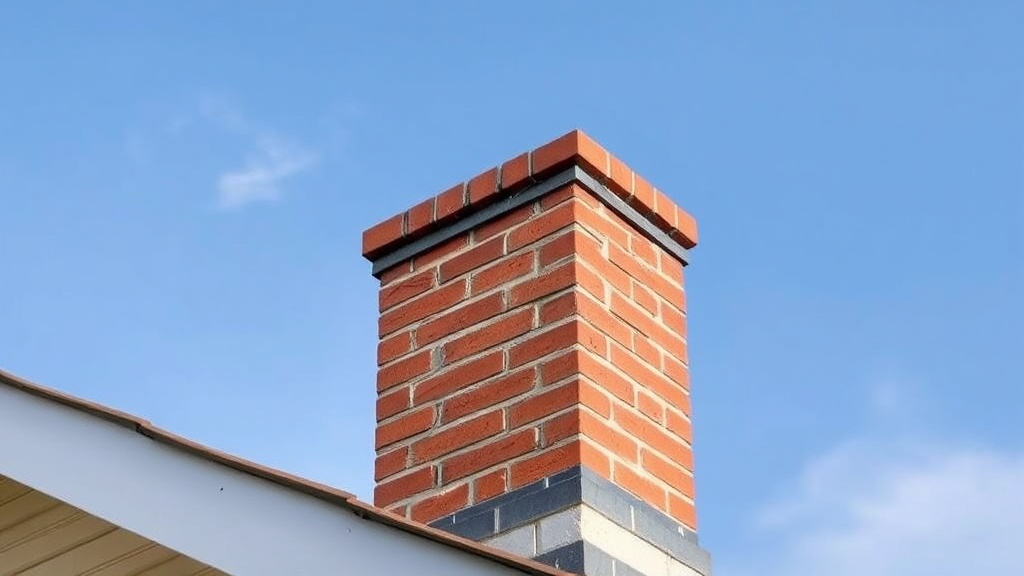
Working down from the crown, we dismantled and rebuilt the top six courses of brick above the roofline where mortar loss and freeze-thaw damage had made the units unstable. Salvage brick from the demolished courses that remained sound was reused in the rebuilt section; units that had cracked through were replaced with matched salvage stock. All new mortar in the rebuild was Type N at 1:1:6, packed and tooled to a concave profile.
At the firebox opening, we removed the failed steel lintel. Mortar had completely lost bond to the corroded steel surface across its full 36-inch span. We set a new steel lintel with a mil-spec galvanized coating, packed the bearing pockets solid, and rebuilt the three brick courses above the lintel that had fractured from the expansion pressure. Each course was reset plumb and level with a 24-hour cure between lifts.
The new chimney crown was formed and cast in two pours with a structural slope to the drip edge overhang. After a 28-day cure, we applied a breathable elastomeric sealer across the crown surface and the top two brick courses.
The Result
The chimney work was complete at two weeks. The interior plaster staining stopped after the first rain event following completion, confirming the chimney as the source. The homeowners documented the repair sequence for their insurance carrier.
We left a written record of the lintel specification, mortar formula, and crown construction detail for the home file.