The Problem
The sellers of a 1939 Colonial Revival in West Glencoe received their pre-sale inspection report three weeks before closing. The inspector cited the chimney on two counts: a cracked and partially collapsed crown allowing direct water entry into the flue, and mortar joints recessed 5/8 inch or deeper across the upper two-thirds of the stack. The brick on this chimney is original soft common brick, the kind that spalls within a season when water gets behind deteriorated joints and freezes. One of the shoulder courses on the south face showed early spalling that confirmed the water had already been working. The buyers came back with a repair contingency. Closing depended on a contractor report and photographic documentation of completed work.
Our Solution
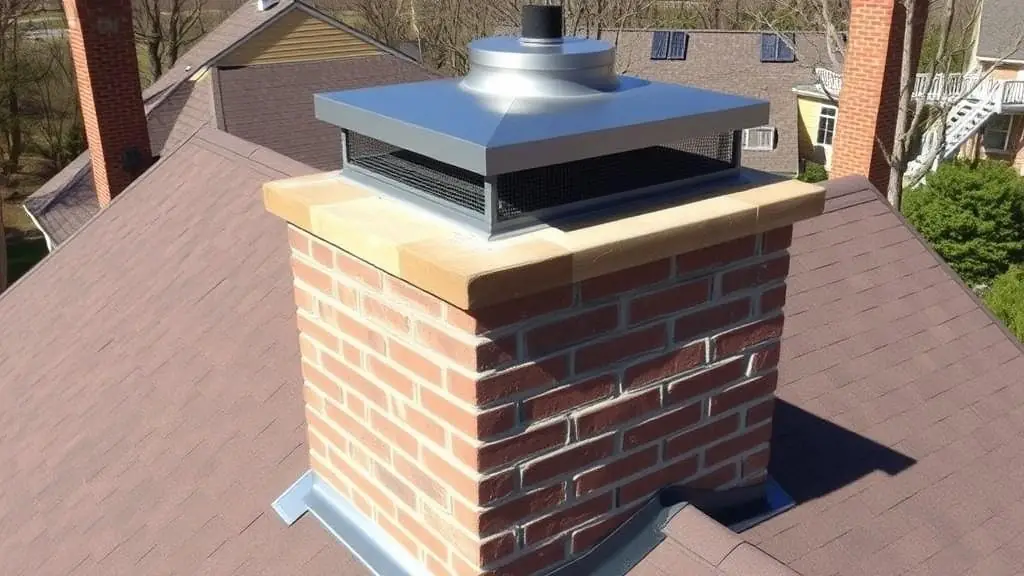
We demolished the failed concrete crown with hand chisels rather than power tools to protect the fragile brick below the crown bed. The replacement crown was formed and poured in two separate lifts to achieve the correct 1/4-inch-per-foot outward slope that sheds water away from the flue liner. We used a fiber-reinforced crown mix with an elastomeric seal coat applied once the pour had cured.
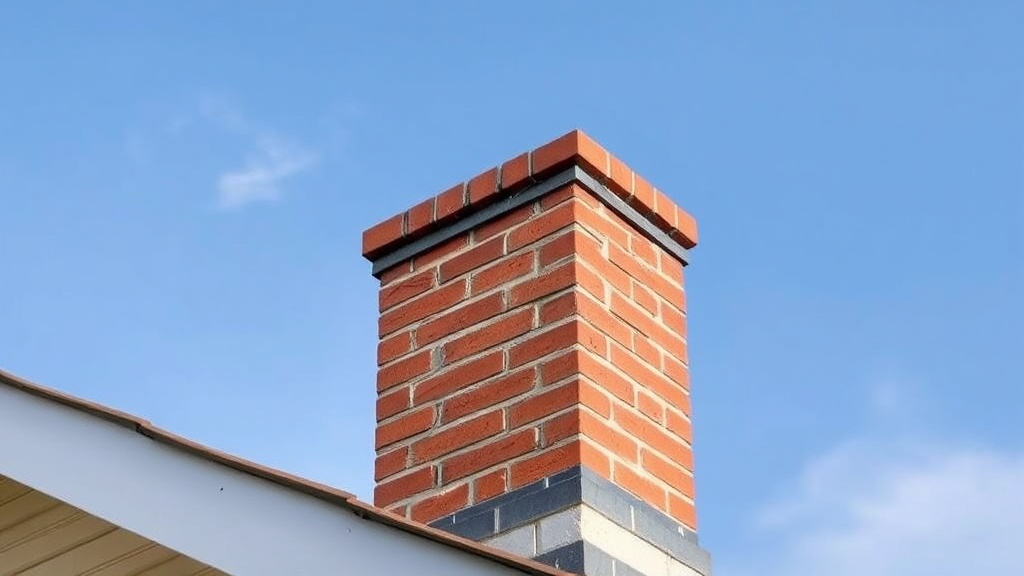
The repointing used a Type N lime-based mortar blended to match the original 1939 joint color. On Colonial Revival chimneys from this era in West Glencoe, the joints are typically a warm buff with coarse natural sand aggregate. We pulled a sample from a sheltered interior course to verify the original sand tone before batching. All joints were raked to 3/4-inch depth, vacuumed clear, dampened to control suction, and packed in two lifts. The profile was tooled to a slightly concave finish matching the existing courses below the repair zone.
Flashing at the roofline was reseated with a polyurethane sealant compatible with the existing lead counter-flashing and the asphalt shingles. We provided the sellers with a written scope-of-work completion letter for the real estate transaction file.
The Result
The chimney passed its re-inspection within six days of project completion. Closing proceeded on schedule. The repointed joints and replacement crown restored the stack to watertight condition, and the mortar color reads as original against the unrepaired lower courses. The spalling brick on the south shoulder was stabilized by removing the water source at the joints above it. No brick replacement was required.