The Problem
The homeowner filed an insurance claim in February after noticing that two limestone water table units on the north face of their 1962 Briergate split-level had cracked through and lifted out of plane. One unit was fully displaced by 3/4 inch, leaving a continuous gap at the base of the brick veneer above it. The second unit had fractured diagonally and remained in position but had opened a 1/2-inch joint on its uphill end.
The adjuster approved the claim and required a licensed masonry contractor to provide a written scope and materials estimate. We were referred by the homeowner’s real estate agent, who had worked with us on other North Shore properties.
The existing mortar in the undisturbed water table joints was a grey-tan Type N with a moderate lime content and a medium sand aggregate. The water table limestone itself was 4-inch-thick Indiana buff limestone, a standard unit for postwar construction throughout Lake County.
The limestone cap above the displaced section had also spalled on its top face, leaving an open horizontal surface that would channel water directly to the joint below if not addressed.
Our Solution
We sourced replacement Indiana limestone units from a regional stone supplier in Gurnee that stocks standard 4-inch water table profiles. The replacement units were slightly lighter in color than the weathered originals, which is expected on new-cut stone and will narrow as the stone oxidizes over 12 to 18 months.
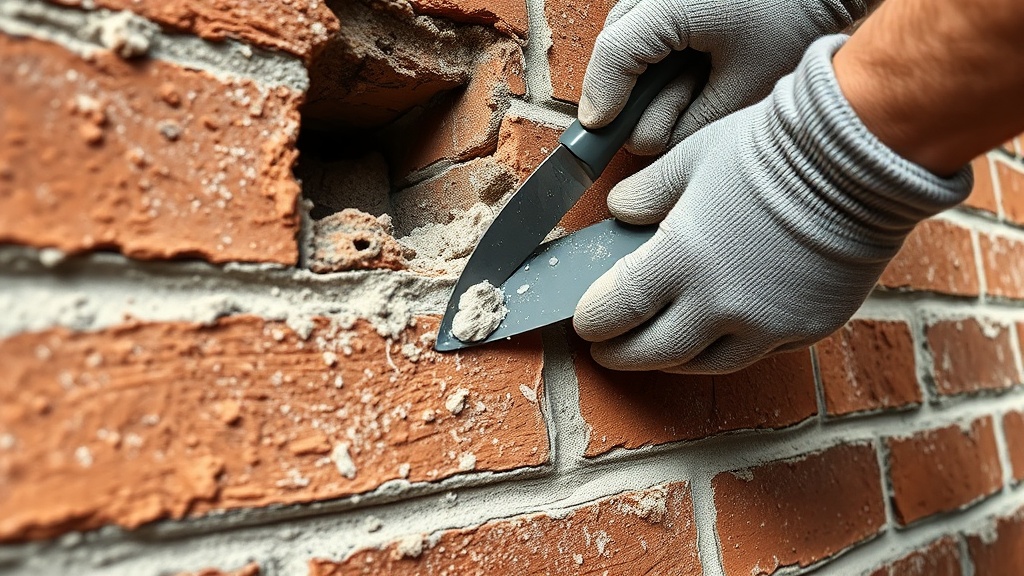
The displaced and fractured units were removed by hand after cutting the existing bed and head joints with a 4-inch grinder and a 3/16-inch blade. The underlying masonry ledge was cleaned and checked for level before any new units were set. We found the ledge had risen 3/8 inch on the east end due to the heave event, so we shimmed with a thin mortar bed to restore level before setting the replacement stones.
The bed and head mortar for the reset units was mixed as a Type N at a standard 1:1:6 ratio (Portland, masonry lime, medium sand) with the sand selected to match the existing grey-tan tone. We applied mortar to both the ledge and the back face of each unit before setting, to ensure full bed contact and eliminate air voids below the stone.
The spalled limestone cap was cut back to sound stone, a 2.5-inch reduction in surface area, and the exposed horizontal face was pointed with the same Type N mix struck flat to shed water.
The Result
Work was completed in two days. Both replacement limestone units are level and fully bedded. The mortar joints match the undisturbed sections within one tone, consistent with the new-stone color offset.
We provided the insurer with the completed scope documentation, material receipts, and before-and-after photographs required for the claim file.
The homeowner was advised in writing to have the north-side grading corrected before the next winter season to reduce the risk of a recurrence.