The Problem
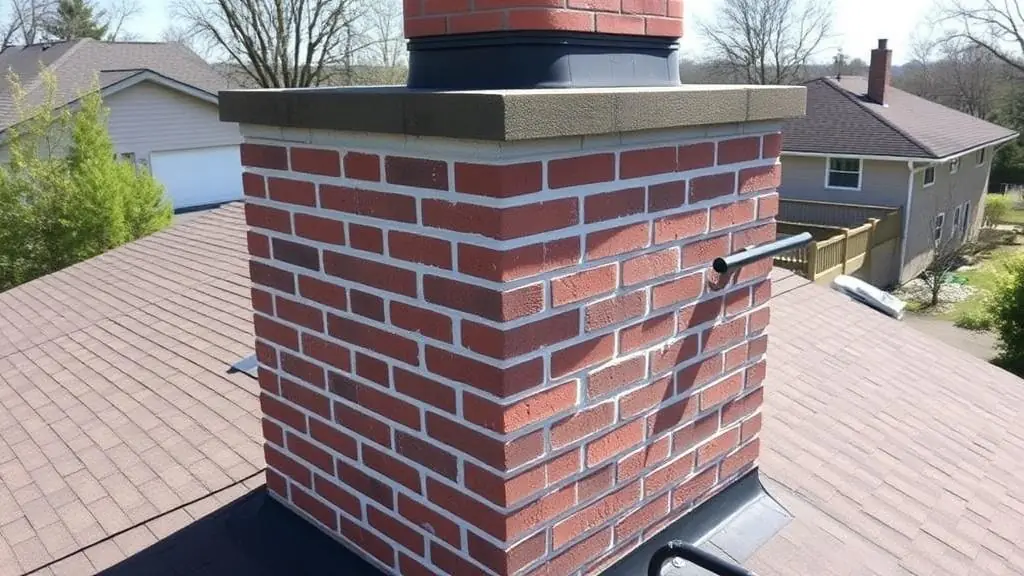
The homeowners of a 1923 Tudor Revival in Ravinia had been watching the mortar joints on their north and west facades deteriorate over several years. By the time they called us, the joint recession on the north face averaged 5/8 inch across the middle four courses, with several joints recessed over 1 inch. On the west face, six courses above the dining room window showed active cracking with white powder deposits indicating regular moisture movement.
No prior repointing had been done on the primary facades. The mortar throughout was original 1923 lime putty and sand with no Portland content, consistent with construction-era practice. The original mortar was soft but intact in protected sections, giving us a clean sample for color and texture matching.
The east facade was in better condition due to its sheltered orientation, but probe testing found joints soft enough to crumble under finger pressure at three locations near grade, likely from years of lawn irrigation runoff.
Our Solution
We began by pulling three mortar core samples from protected interior joints using a 3/8-inch masonry bit, then sent them to a local materials lab for aggregate size and composition analysis. The lab report confirmed a fine-grain natural sand with a warm tan cast and a lime-to-sand ratio of approximately 1:2.5 by volume, with no detectable Portland.
Our replacement mortar was mixed as a Type N lime-blend: one part white Portland, two parts aged lime putty, and five parts natural sand selected to match the lab-confirmed aggregate. We did not use pre-bagged Type N because the standard bagged formulation runs slightly more Portland than this home’s soft brick will tolerate over time.
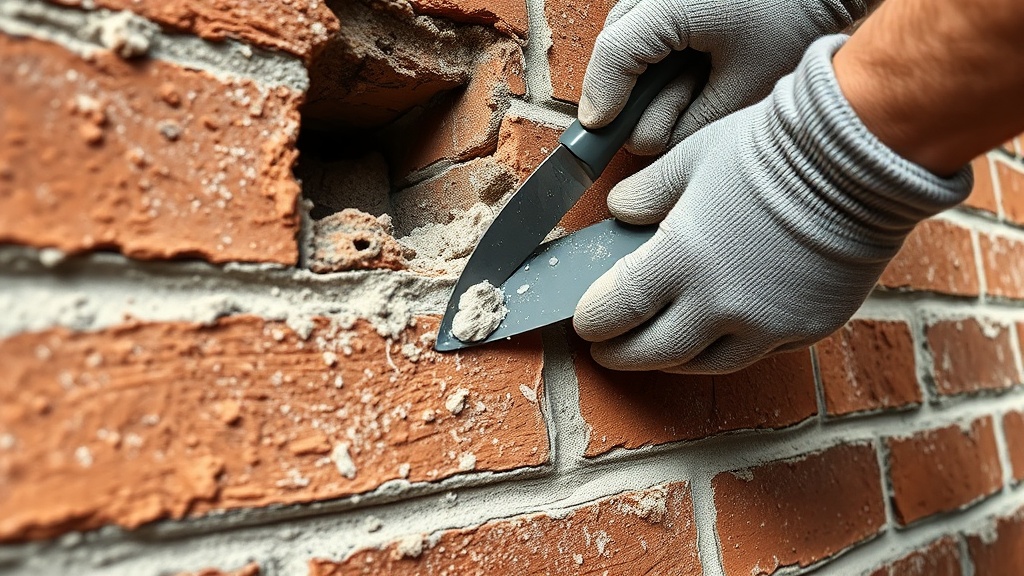
Joint preparation used a 4-inch angle grinder with a 3/16-inch diamond blade set to 3/4 inch depth. We made two passes on joints wider than 1/2 inch to ensure clean parallel sidewalls. All 340 linear feet were packed using a two-lift method: first lift to half depth, allowed to firm for 45 minutes, second lift flush with the face. Each joint was tooled with a convex sled jointer to match the original rounded profile.
The three soft joints near grade on the east facade were excavated 1 inch deep and filled with a slightly leaner blend to allow more drainage flexibility at the base course.
The Result
All three facades were repointed over eight working days. The mortar color on completed joints is within a shade of the original protected sections on all exposures. The two-lift fill eliminated the voids we probed prior to repair.
We documented the lab report, mortar formula, and blade depth settings for the homeowner’s records. Future repair work will be able to match this repointing exactly.