The Problem
The homeowner called two days after a severe hailstorm moved through the Deerfield area in May 2024. They had noticed mortar chunks in the flower beds along the front of the house and wanted an assessment before any rain moved in.
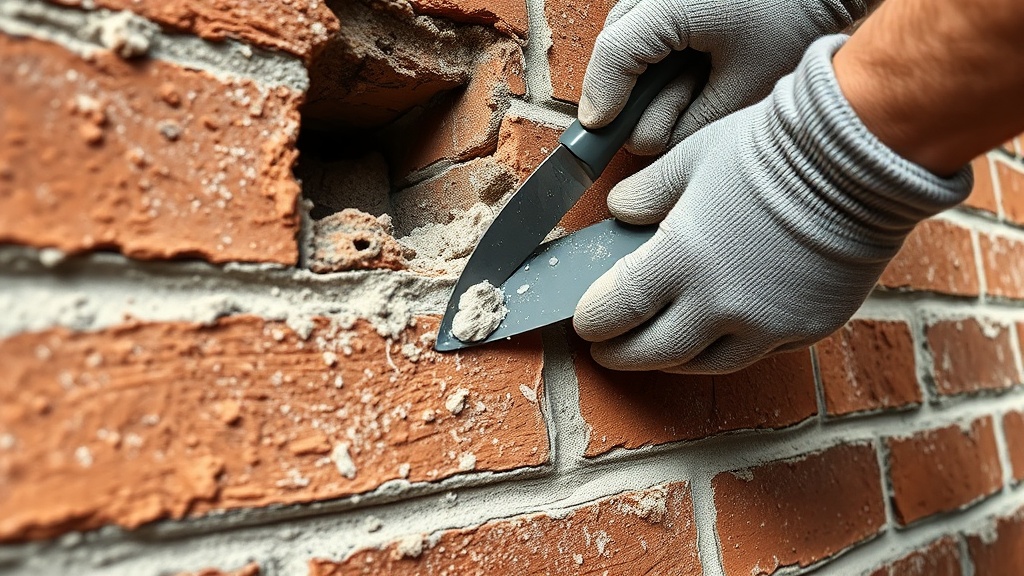
When we arrived, the storm damage was visible but the underlying condition told a fuller story. The hail had knocked loose mortar from roughly 30 linear feet of the front elevation - primarily in joints that were already recessed between 1/2 and 3/4 inch. The storm had accelerated deterioration that was already underway. On the north and west elevations, which the hail had not directly hit, mortar recession averaged 5/8 inch across the full height of the wall. Several joints had opened to 7/8 inch depth in the upper courses near the roofline where moisture had been sitting longest.
The bungalow’s original mortar was a lime-putty blend consistent with 1929 construction - soft, slightly buff in color, and at a stage of deterioration where it no longer shed water but instead absorbed it. That absorption pattern is what makes storms like this one accelerate existing joint failure rather than create new damage on its own.
Our Solution
We removed mortar across all four elevations to a consistent 3/4 inch depth, using 4-inch angle grinders with 1/8-inch diamond blades depth-limited to avoid cutting into the brick face. On the north elevation where recession already exceeded 3/4 inch in multiple courses, we ground to full existing depth - up to 7/8 inch - cleaned the cavity with compressed air, and dampened the joint before packing to improve mortar adhesion.
The replacement mortar was a lime-rich Type O blend at a 1:2:9 portland-lime-sand ratio. We batched in small quantities given the June heat - no batch exceeded 40 minutes of working time. The sand aggregate was a buff-tone local blend matched against a mortar core extracted from a sheltered joint inside the bungalow’s front porch knee wall, where the original 1929 material was still intact and unweathered.
All joints were packed in two lifts. The first lift filled to approximately half joint depth and was allowed to firm up to thumbprint hardness before the second lift was applied and tooled. Final tooling used a 3/8-inch convex jointer to replicate the original concave profile visible on the porch elevation.
The Result
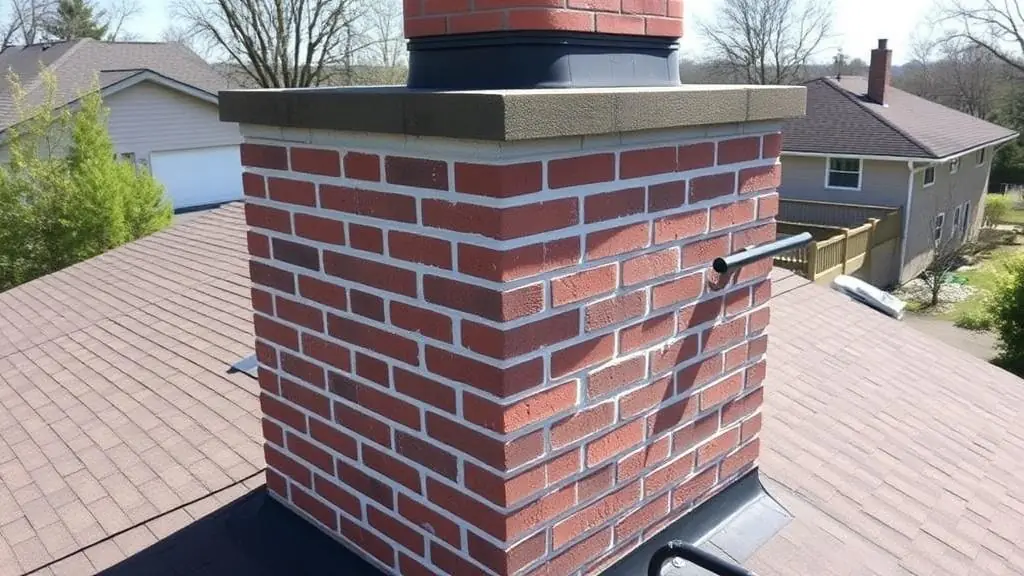
The completed tuckpointing unified the appearance of all four elevations for the first time in decades. Storm-damaged areas on the front are indistinguishable from the surrounding work.
We provided a written repair summary documenting the mortar formula and the storm-related vs. pre-existing scope breakdown. The homeowner used the documentation when consulting with their insurance agent, though the claim outcome was their own process to navigate.