The Problem
The referral came from a real estate agent who had worked with us on two previous pre-sale repairs in the northwest suburbs. The homeowner was preparing to list a 1978 brick Colonial in Strathmore and the agent had walked the property before the listing appointment, noted the mortar condition, and made the call before the home was even formally listed.
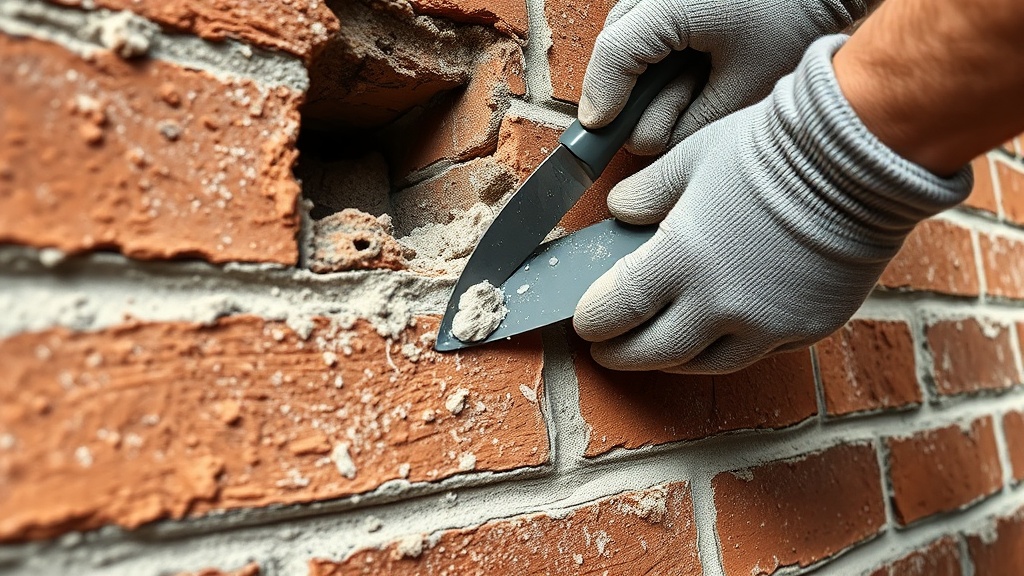
When we assessed the property, the agent’s concern was well-founded. The north and west elevations showed mortar recession averaging 5/8 inch across the full height of the wall, with localized recession reaching 3/4 inch along the upper courses and at the corners where two exposed faces meet. The south and east faces were in better condition - roughly 3/8 inch recession - consistent with a home where the protected sides have aged more slowly.
The 1978 construction used a standard modular brick common to subdivision Colonial homes of that era in the northwest suburbs: a medium-density unit in a muted red-tan tone with moderate absorption characteristics. The original mortar was a Type N formulation, now showing the surface carbonation and slight powder texture typical of late-1970s mortar at 45-plus years. No previous tuckpointing was evident - the home was approaching its first major mortar maintenance cycle.
The condition was not urgent, but it was past the point where a thorough inspection report would pass it without comment.
Our Solution
We began on the north elevation and worked clockwise around the building. All joints were cut to 3/4 inch depth using 4-inch angle grinders with 1/8-inch diamond blades set and checked for consistent depth before each elevation. On the north wall’s upper courses where recession reached 3/4 inch, we cut to full existing depth and cleaned the joint cavity with compressed air before packing.
The replacement mortar was Type N at a 1:1:6 portland-lime-sand ratio. We matched sand color against mortar cores extracted from two sheltered joint locations: the return corner where the garage meets the main house body on the east side, and the underside of the front entry sill. Both locations showed well-preserved original mortar in a warm grey-tan tone. The final sand blend combined a grey aggregate base with a small proportion of buff-tone local sand to hit the target color.
All joints were packed in two lifts. The first lift filled to approximately half depth and was left to achieve thumbprint firmness before the second lift was applied. Final tooling used a 1/2-inch concave jointer matching the original profile retained in the protected sheltered locations.
The Result
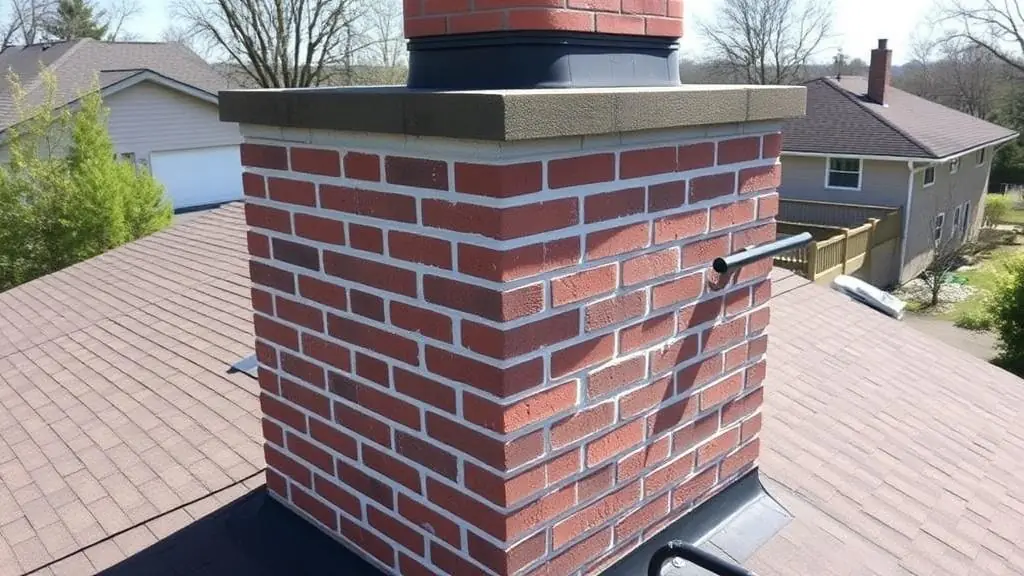
The completed tuckpointing brought all four elevations to consistent condition. The color match between new and original protected joints is close enough that the new work reads as maintenance rather than patch.
We provided a written repair summary including joint footage, mortar formula, and date of completion. The homeowner included the documentation in the listing disclosure and the subsequent inspection report noted the recently completed tuckpointing without flagging any concerns.