The Problem
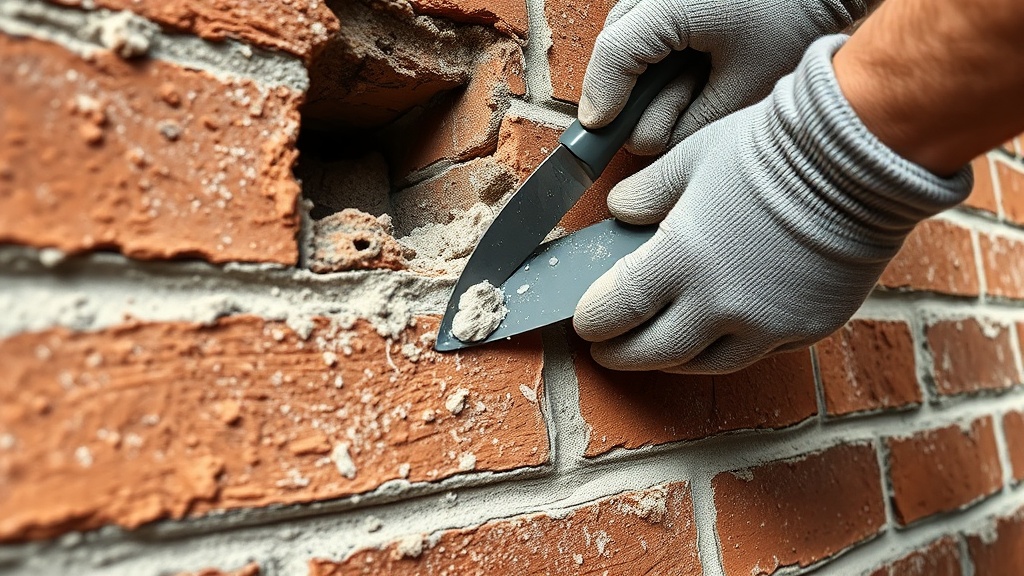
The owner of this 1949 brick bungalow in Central Niles had noticed that the interior drywall behind the front facade was damp to the touch at one spot near the corner. Exterior inspection confirmed that mortar joints on the front and south facades were receded significantly, with two courses near the front corner showing failed mortar at what appeared to be tie course locations. Water was getting behind the veneer at those joints and tracking to the backup structure.
The home is face brick veneer construction over wood framing - typical of postwar Chicago bungalows built in the late 1940s. Water reaching the wood backup is more urgent than on a solid brick home because there is no second masonry wythe to slow the infiltration.
Our Solution
We repointed the full front facade and south side wall - 200 linear feet - with Type N lime-blend mortar. This mix is appropriate for postwar brick of this era: stronger than Type O for structural adequacy on a veneer system, but with enough lime content to remain flexible against the soft common brick used in 1949 construction.
At the two suspect tie course locations, we ground the joints to full depth and examined the cavity before filling. Both showed the expected metal tie in place - neither had corroded through, which was positive. The joints were packed carefully in two lifts to ensure no void remained behind the tie.
All joints on the front and south facades were ground to 3/4 inch depth, cleaned, and filled. Joint color was matched to the original warm buff-tan of the 1949 mortar using a sample from the protected joint at the underside of the front porch ceiling.
The Result
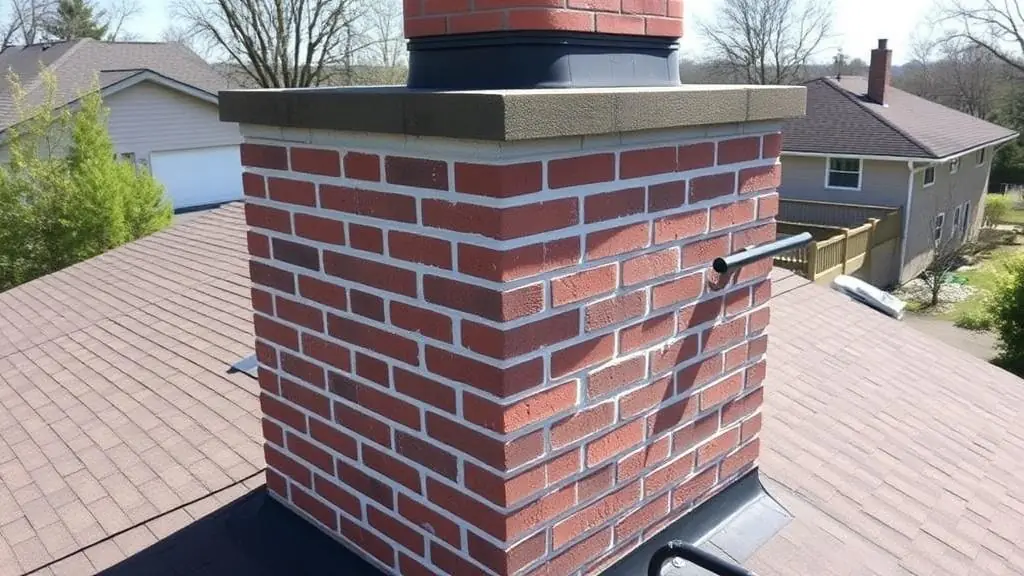
The damp interior wall dried out over the first weeks following the repair. The homeowner confirmed no further moisture at that location through the following winter. The veneer tie courses are resealed, the face brick mortar is sound across the full elevation, and the wood backup structure is no longer exposed to water infiltration through the mortar joints.