The Problem
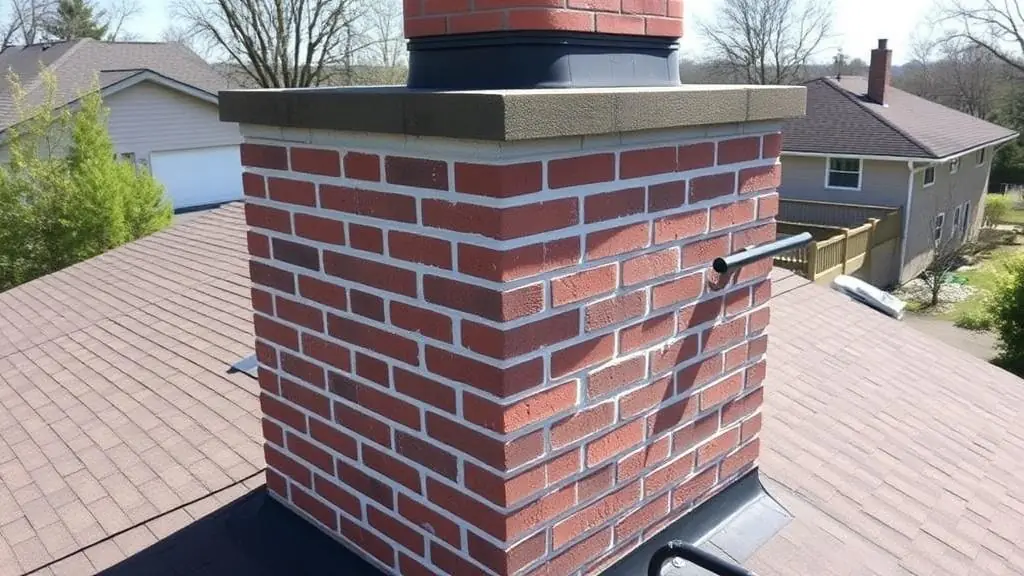
The homeowner called in late November for what he described as a few joints that needed touching up on the south face of his 1965 brick ranch in the Cherry Lane neighborhood. We scheduled an inspection for early January and found the situation was more advanced than the homeowner had realized.
Probe testing across all three brick-clad facades found mortar recession averaging 5/8 inch on the south face, 3/8 inch on the east, and 1/4 inch on the west. Total affected linear footage across the three facades came to 185 linear feet. A small patch of newer grey mortar on the south face near the hose bib indicated a prior repair attempt, but the surrounding joints had continued to deteriorate, leaving the patched section looking worse by contrast.
The homeowner had been aware of some visible joint gaps for a couple of years but had not realized how far the deterioration had spread. No interior moisture had been detected yet, but the south-face joints in the course above the window sills were open enough to allow direct water entry during a driven rain event.
The existing mortar was a standard grey Type N, medium sand aggregate, consistent with 1960s residential construction in the Northbrook area.
Our Solution
We scheduled the work for mid-January during a weather window with forecast temperatures holding above 45 degrees for six consecutive days. All joint grinding was completed in the first two days, followed by mortar packing on days three and four.
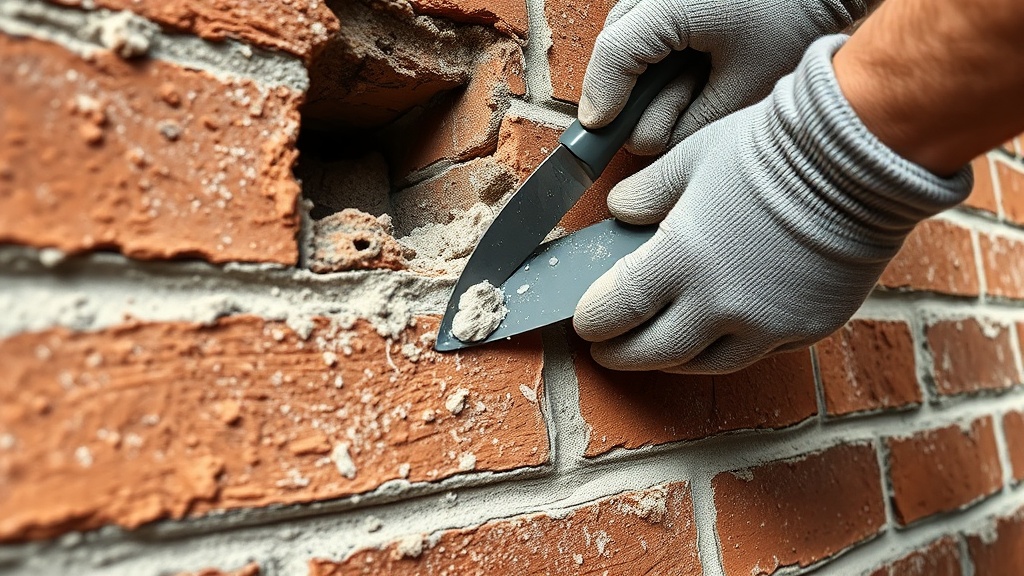
Joint preparation used a 4-inch angle grinder with a 1/8-inch diamond blade set to 3/4 inch depth. On the south face, where the joints were widest, we increased depth to 1 inch on 18 joints to reach sound mortar. The prior grey patch near the hose bib was ground out entirely and replaced with the same batch as the rest of the south facade.
Mortar was mixed as a standard Type N at 1:1:6 (Portland, masonry lime, medium grey sand). We matched the sand source to the region’s standard supply to keep the finished color close to the original undamaged joints. The south and east facades were packed first, prioritizing the higher-recession areas before the temperature window could close.
All joints were tooled with a concave jointer to match the existing rounded profile, which was consistent across all three facades.
The Result
All 185 linear feet were completed in four days within the weather window. Mortar color on completed joints is consistent with the undisturbed sections on all three exposures.
The prior mismatched patch on the south face was removed and replaced, eliminating the visual discontinuity.
The homeowner now has a maintenance baseline. We noted the locations of two brick units on the east face that show early surface crazing, which should be monitored and addressed in the next maintenance cycle.