The Problem
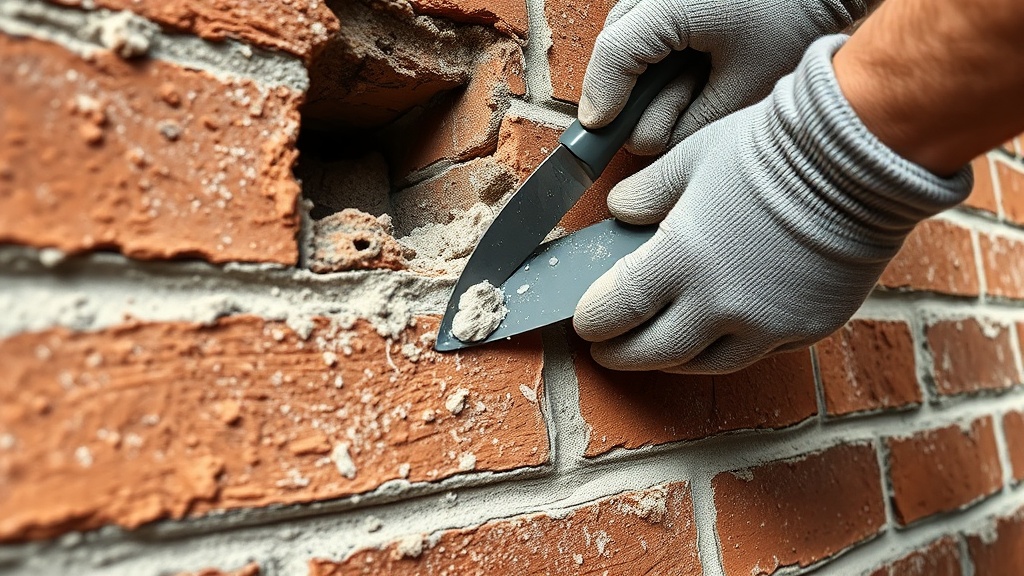
A homeowner in Northwest Gurnee contacted us after their home inspector flagged deteriorating mortar joints during a pre-sale inspection. The 1992 brick Colonial had been well maintained cosmetically but the mortar joints had reached end of serviceable life. On brick veneer construction from the early 1990s, the original mortar typically shows significant softening by the 30-year mark in Lake County’s climate.
The inspector’s report noted recessed joints averaging 1/2 inch deep across the north and west facades and soft, powdery mortar across the south and east elevations. We also found a more specific problem when we walked the base course: seven of the original weep holes had been filled with mortar, either during original construction as an error or during a previous maintenance attempt. Weep holes in brick veneer are not optional. They allow moisture that collects at the base of the cavity to drain out, and blocking them causes water to build up behind the veneer.
Our Solution
We ground deteriorated joints to 3/4-inch depth on all four facades using hand grinders set to controlled depth. On a 1992 brick Colonial, the original brick is harder than pre-war common brick but the veneer system still benefits from Type N mortar, which has enough flexibility to accommodate the seasonal movement of the wood frame behind the veneer without cracking.
The weep holes were cleared by carefully drilling out the blocking mortar with a masonry bit sized to the original 3/8-inch weep opening. We did not use full-size chisels here because the adjacent mortar joint work had not yet been done and we wanted to avoid vibrating the soft surrounding joints loose. The cleared openings were covered with open-cell backer material to keep insects out while maintaining drainage function.
Repointing proceeded in two lifts per joint across all 240 linear feet. We matched the original joint color, a warm buff-gray tone common in Lake County subdivision construction of this period, using a pre-colored Type N mix. Joints were tooled with a slicker to match the slightly concave profile of the original work.
The Result
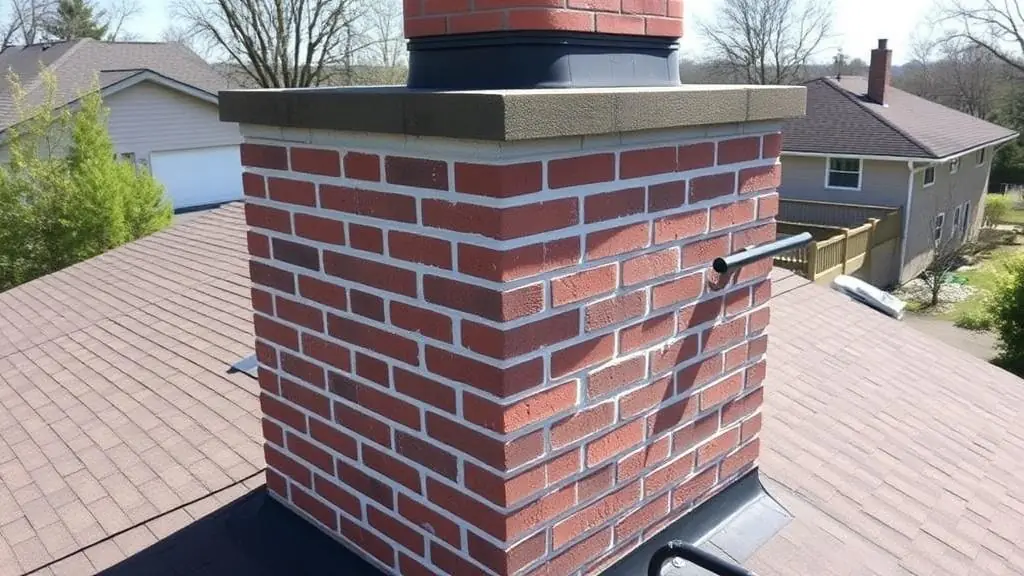
All four facades are repointed and the weep holes are functioning as designed. The home passed re-inspection and the sale proceeded. The mortar color match is consistent across all elevations.
We provided the property buyer with a written record of the mortar specification and the work completed so the next owners have a baseline for future maintenance.
Frequently Asked Questions
-
question: “Why do brick veneer weep holes matter?” answer: “Brick veneer is a single-wythe (one brick thick) wall tied to a wood frame. Moisture condenses in the cavity between the brick and the frame, and weep holes at the base course let that moisture escape. Block them and water builds up, eventually soaking the frame sheathing behind. It is a significant issue that shows up as interior mold and rot before it shows as a masonry problem.”
-
question: “Is Type N the right mortar for a 1990s brick Colonial?” answer: “Yes, for brick veneer over wood frame construction. The frame moves seasonally and Type N accommodates that movement without cracking. A stiffer Type S would resist movement and crack at the brick face instead of flexing with the joint.”
-
question: “How long does tuckpointing take on a two-story Colonial?” answer: “A full four-facade repoint on a typical two-story Colonial runs three to five days depending on the linear footage and the condition of the existing joints. Very deteriorated joints require more careful grinding to avoid brick damage. Very hard original mortar requires slower removal.”