The Problem
This 1916 Foursquare in the Waukegan Lakefront historic district came to us with mortar joint deterioration concentrated on the north and east facades but present across all four sides. The home sits two blocks from the lake and the combination of wind-driven moisture, freeze-thaw cycling, and over a century of weathering had reduced the original lime-rich mortar to a powder in many joints.
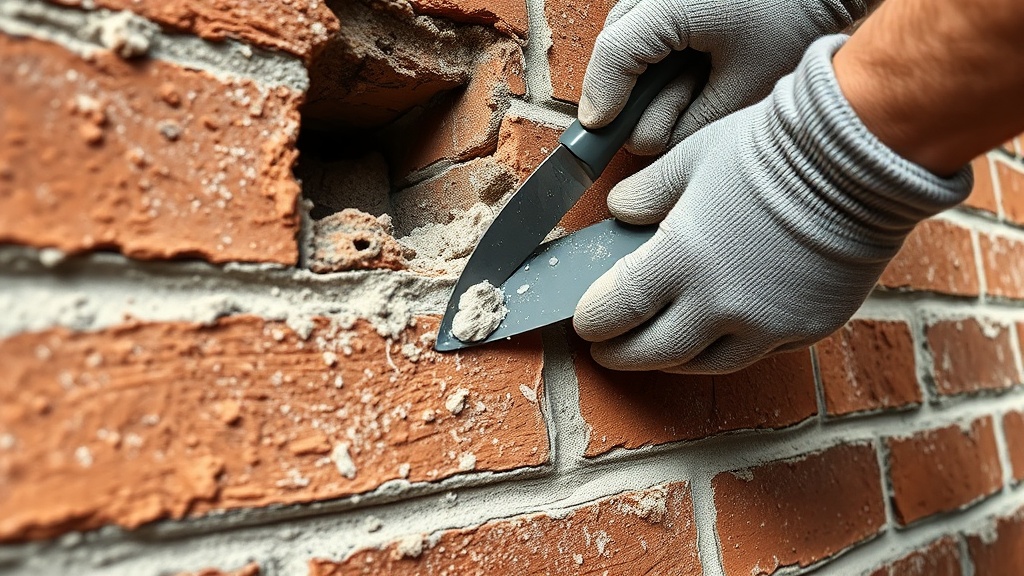
The more urgent concern was a prior repair on the south wall: a previous contractor had repointed approximately 40 linear feet with modern Portland-heavy mortar, likely a Type S mix. That section was already causing brick damage. The harder mortar had no flexibility to accommodate the movement of the soft, porous common brick used in 1916 construction, and we could see compression cracks forming at the brick face adjacent to the patched joints. This is the defining failure mode of hard mortar on pre-war soft brick, and it requires correction before it compounds.
Our Solution
The mismatched Type S mortar on the south wall was carefully removed by hand chisel and pneumatic chisel, working from the joint inward to avoid chipping the soft brick face. No rotary cutting tools were used on this project. Waukegan lakefront Foursquare homes from this period typically used Chicago common brick, which is soft enough to chip instantly if a cutting disc contacts it.
We pulled mortar samples from protected interior joints to determine the original sand aggregate color and texture. The replacement mortar was blended to a Type O specification: high lime content, low Portland, with natural sand matched to the original warm gray tone. Type O is the correct mortar for this era and brick hardness. It remains flexible as the masonry expands and contracts seasonally and will sacrifice itself rather than the brick face over the next several decades.
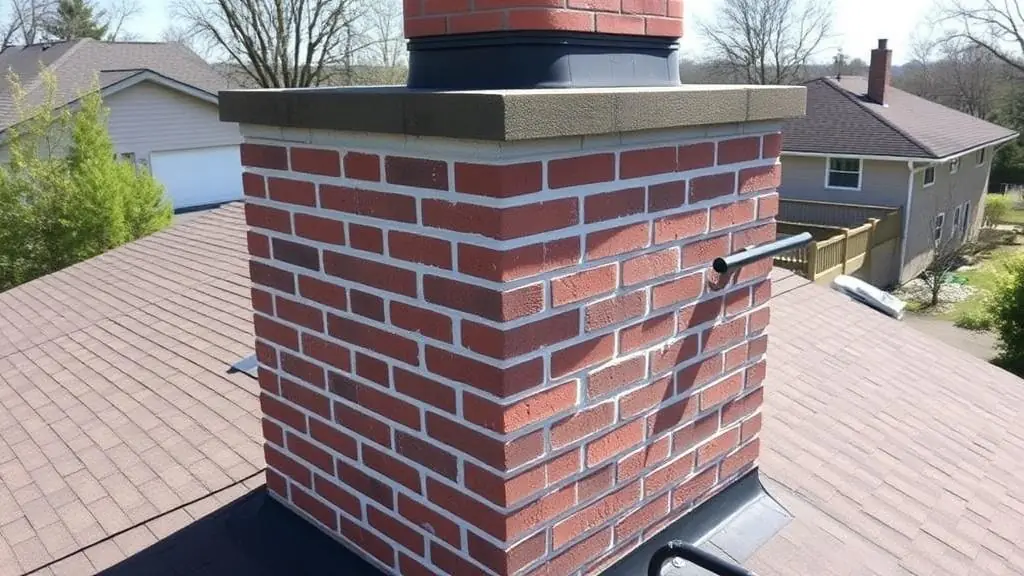
All 320 linear feet were repointed in two lifts per joint, with each lift allowed to reach initial set before the second was applied. Joints were finished with a flat rodded profile matching the original 1916 tooling pattern visible in protected soffit areas.
The Result
The full facade restoration brought all four sides into consistent mortar color and profile. The failed Type S patch on the south wall was replaced correctly. The soft brick on this home is now protected by mortar that will move with it rather than against it.
We documented the mortar formula and sand source so any future repairs can be matched to the same specification.
Frequently Asked Questions
-
question: “What is Type O mortar and why does a 1916 home need it?” answer: “Type O is a high-lime, low-Portland mortar with a compressive strength around 350 PSI. Pre-war soft brick like Chicago common is porous and slightly flexible - it needs a mortar that is weaker than the brick itself. Harder mortars transfer stress into the brick face rather than the joint, causing spalling.”
-
question: “Why can’t rotary saws be used to remove mortar on old brick?” answer: “Rotary cutting discs cannot be precisely depth-controlled, and the contact time with the saw blade is long enough to nick soft brick before you can react. Hand chisels and pneumatic tools allow you to feel resistance and stop at the brick face. The process is slower but the brick stays intact.”
-
question: “How long does tuckpointing last on a home this old?” answer: “With the correct mortar specification, a full tuckpointing job on a pre-war home should last 25 to 40 years before any significant areas need attention again. The original mortar on this home lasted over a century in most sections. Getting the mix right is the entire game.”