
Call Now Free Quote
(847) 713-1648 Get Free Estimate
Tuckpointing - Skokie, IL

Full Facade Tuckpointing - 1928 Chicago Bungalow

October 20, 2025 | East Skokie residential area

Before: Full Facade Tuckpointing - 1928 Chicago Bungalow Before
After: Full Facade Tuckpointing - 1928 Chicago Bungalow After
Location Skokie, IL
Service Tuckpointing
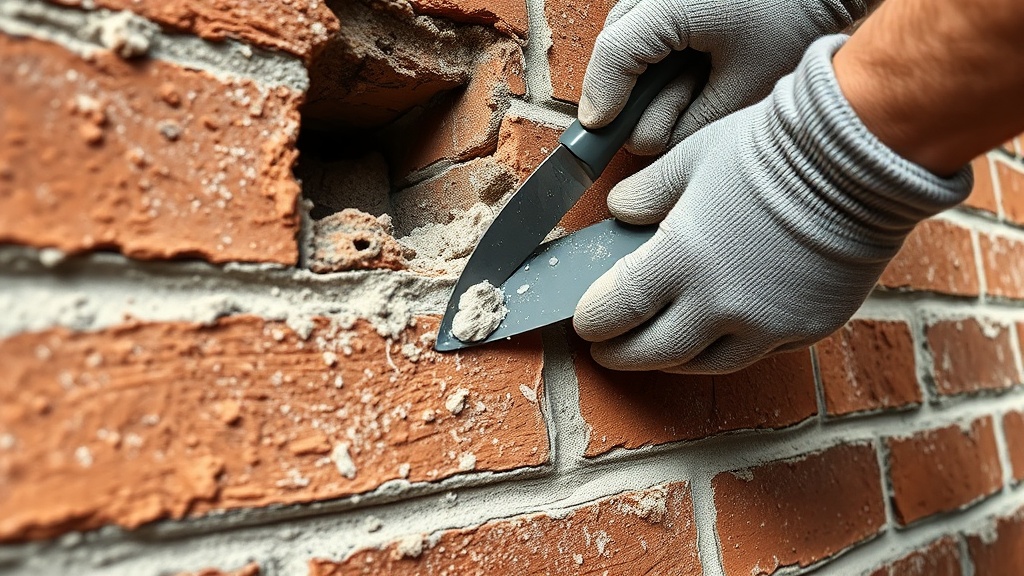
Scope Full four-elevation tuckpointing on 1928 Chicago bungalow. Approximately 260 linear feet of joints. Window sill joints, soldier courses, and porch pier joints included.
Mortar Type Type O lime-rich
Duration 5 days
Building 1928 Chicago bungalow with face brick

The Problem

The owner of a 1928 Chicago bungalow in East Skokie had deferred the tuckpointing for two years while assessing the full scope. By the time we evaluated it, the north and west elevations were past the point of waiting - joints recessed 1/2 to 3/4 inch across most of both faces, with open voids at the north foundation line where mortar had fallen out.

The face brick was original 1920s Chicago common face brick, warm red and slightly varied in tone the way hand-sorted brick tends to be. It was structurally sound with no spalling. The risk was the mortar, which had carbonated enough to crumble at the surface in the worst sections.

A previous owner had repointed a section of the east elevation using a lighter, harder gray mortar. Three of those joints showed hairline cracking at the bond line where the harder mortar was stressing the soft original brick face.

Our Solution

We raked all four elevations to 3/4-inch depth with diamond blades. On face brick courses, grinding depth requires controlled passes - the face brick profile is thinner than the body and aggressive cutting can clip the edge. At corners, window reveals, and porch pier returns, we switched to hand tools.

The previous east elevation tuckpointing was assessed joint by joint. Where harder mortar had not yet cracked the brick, we raked and replaced it with the correct Type O mix. Where hairline cracks showed bond stress, we raked carefully to avoid disturbing the affected brick face.

The replacement mortar was Type O lime-rich, matched against original 1928 mortar from beneath the south windowsill overhang - a warm gray-tan with very fine aggregate. Our blend used fine silica sand at a high lime-to-Portland ratio consistent with pre-war specifications. A 48-hour test cure confirmed the color before full production. All joints were moistened, packed in two lifts, and tooled concave. Both front porch pier cap joints were packed with a slight outward slope at the leading edge to drain water clear of the pier face.

The Result

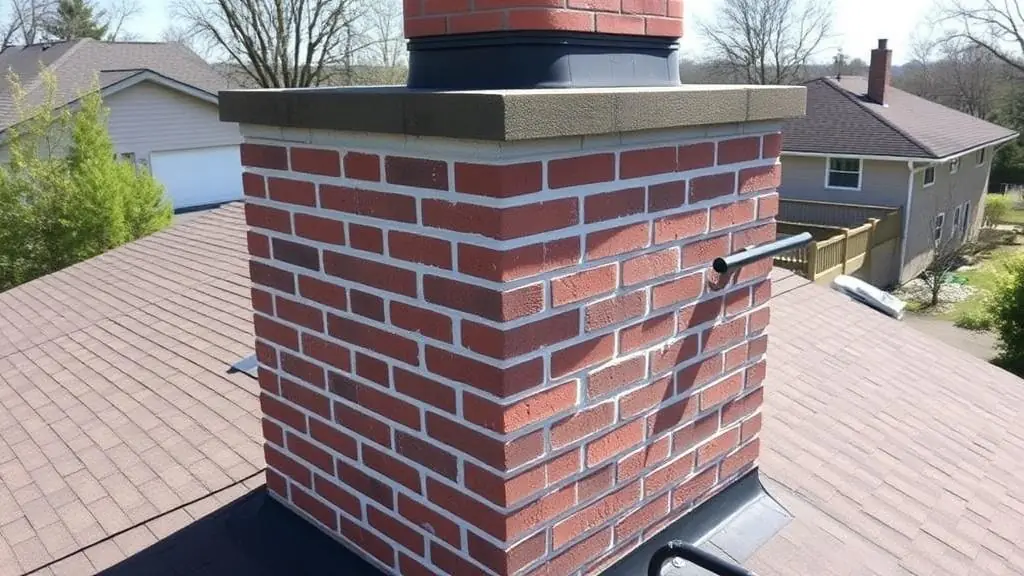
All four elevations and both porch piers show uniform concave joint depth. Mortar color matches the original surviving joints in sheltered areas. The mismatched hard-mortar section on the east elevation is gone, eliminating the stress concentration at those brick faces. The bungalow reads as one continuous surface.

Related: Tuckpointing Services | Skokie Service Area

Questions About This Project

Why does a 1928 Chicago bungalow require Type O mortar rather than the more common Type N?

Pre-1930 Chicago bungalows used face brick fired at relatively low kiln temperatures, producing a softer, more porous unit than modern brick. The original mortar from that era was high-lime and quite soft, typically equivalent to a modern Type O or a very lean Type N with elevated lime content. Introducing harder mortar - anything Type S or above, or even a standard bagged Type N without added lime - creates a mortar that is stronger than the brick. Stress from thermal movement then fractures the brick face rather than routing through the mortar joint, which is the repairable component.

What is the difference between face brick and common brick, and does it affect the tuckpointing approach?

Face brick was selected and fired to present a consistent, smooth, or textured surface on the exterior wythe of the wall. Common brick behind it could be rougher and less uniform. On a 1928 bungalow, the face brick on the exterior courses is the visible surface you are protecting. It is also the softer material most at risk from aggressive grinding or wrong mortar. The tuckpointing approach is the same structurally, but the grinding depth control and the mortar hardness specification matter more when the brick itself is the show surface.

The bungalow has a front porch with brick piers. Do those need to be done differently than the wall joints?

Porch piers are exposed on all four sides and have no building envelope behind them, so water infiltration is a 360-degree problem rather than a one-direction problem. They also tend to get more water impact from downspout splash and foot traffic proximity. The joint raking and mortar specification are the same as the wall, but we pay particular attention to the cap joint at the top of each pier, where water can sit and penetrate if the joint is not fully packed and correctly pitched to drain.

Project Location

Loading map - 1 project in this area

Need Similar Work? Let's Fix It Right.

Free on-site inspection and written estimate - no obligation. Serving the North Shore and Chicagoland for over 39 years.

(847) 713-1648 Request Online Estimate