
Call Now Free Quote
(847) 713-1648 Get Free Estimate
Brick Repair - Skokie, IL

East Elevation Spalling Repair - 1932 Brick Bungalow

September 29, 2025 | South Skokie residential area

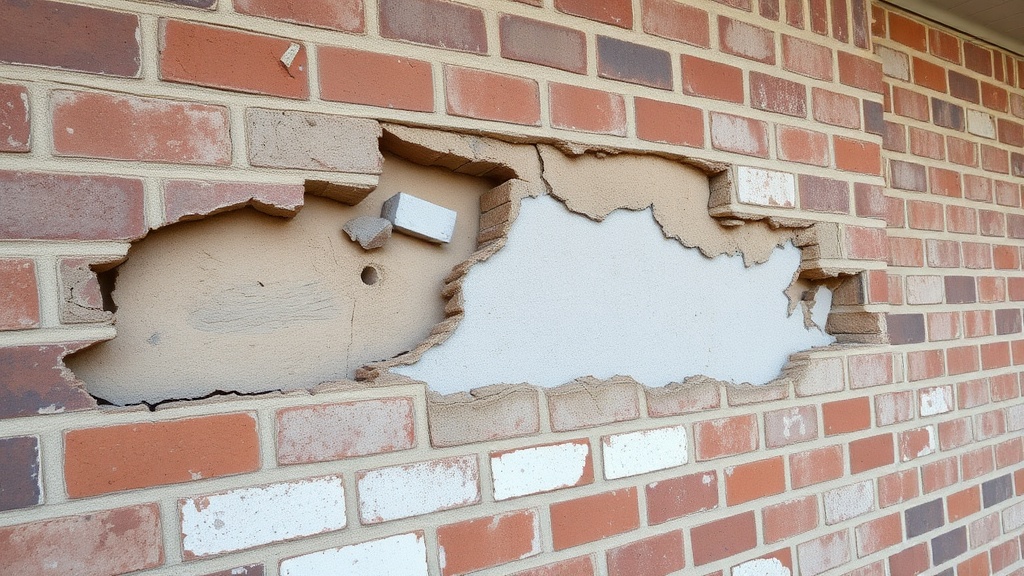
Before: East Elevation Spalling Repair - 1932 Brick Bungalow Before
After: East Elevation Spalling Repair - 1932 Brick Bungalow After
Location Skokie, IL
Service Brick Repair
Scope 22 spalled brick units removed and replaced on east elevation. Full repointing of east elevation including soldier course. Salvaged brick matched from period inventory.
Mortar Type Type O lime-rich
Duration 3 days
Building 1932 brick bungalow with spalling on east elevation

The Problem

The owner of a 1932 brick bungalow in South Skokie noticed spalling concentrated on the east elevation. Twenty-two brick units had lost their face, from small chips at the corner to full delamination where the outer half inch had popped off. East elevation joints averaged 5/8-inch recess, deeper than any other face on the home.

The east face warms rapidly in morning sun and stays in shade by afternoon. That daily thermal swing drives moisture through more freeze-thaw cycles per season than a steady north or south wall. Combined with years of deeply recessed joints, the east elevation reached critical condition while the others remained deteriorated but not yet spalling.

The brick was original 1932 Chicago face brick - soft and porous in the way pre-Depression residential brick tends to be.

Our Solution

We mapped and photographed all 22 spalled units before starting removal. Each brick was cut free at the four surrounding joints with a diamond blade, then extracted with hand tools to avoid disturbing adjacent courses. All 22 cavities were inspected for sheathing damage - every one was sound, confirming the face brick had been protecting the wall even while deteriorating.

Replacement brick came from our salvaged inventory of early-1930s Chicago area face brick, matched for nominal size, fine surface texture, and warm red color range. Each unit was set in Type O lime-rich mortar with full bed coverage and solid head joints, then checked for alignment before the mortar reached initial set.

The full east elevation was raked to 3/4-inch depth and repointed with Type O mortar batched against the sheltered north corner joint, where the original 1932 color had held best. The soldier course under the windows was tooled with a narrower profile to avoid pressure on the vertical brick edges. All joints were packed in two lifts and finished concave.

The Result

The 22 replacement bricks read as consistent with the surrounding wall at viewing distance. The salvaged brick color falls within the natural range of the original batch, so the repair zone blends rather than patches. East elevation joints are now at uniform finished depth, eliminating the moisture pathway that drove the spalling. No additional spalling was visible at the 60-day check.
Related: Brick Repair Services | Skokie Service Area

Questions About This Project

Why is the spalling concentrated on the east elevation of this bungalow and not the other sides?

East-facing elevations in the Chicago area take the brunt of freeze-thaw cycling in a specific way. They warm rapidly in the morning sun and cool again in afternoon shade. That temperature swing is more frequent and more extreme than slow changes in temperature, and it drives water in wet joints through more expansion and contraction cycles per season. When the east elevation also had the most deteriorated joints, the combination produced accelerated spalling compared to the north, south, and west faces where the cycling was less severe.

How do you source brick that matches 1930s bungalow construction?

Brick from the early 1930s in the Skokie and inner Chicago suburbs came from a specific group of regional kilns and has a characteristic size, color variation, and surface texture. We maintain a stock of salvaged brick from demolitions in the same geographic and production era. We match by size first, then by surface texture, then by color range, accepting that weathering on a 90-year-old wall means color variation is normal and a close match within the natural range of the original production batch is the achievable standard.

Should the rest of the bungalow be tuckpointed at the same time as the east elevation brick repair?

The honest answer depends on the condition of the other elevations. If those joints are at or near the 1/4-inch recess threshold, doing the full house in one mobilization is more cost-effective than returning in two or three years. If the other elevations have another 10 years before they need attention, separating the work is reasonable. We give homeowners that assessment directly rather than recommending more work than the condition supports.

Project Location

Loading map - 1 project in this area

Need Similar Work? Let's Fix It Right.

Free on-site inspection and written estimate - no obligation. Serving the North Shore and Chicagoland for over 39 years.

(847) 713-1648 Request Online Estimate