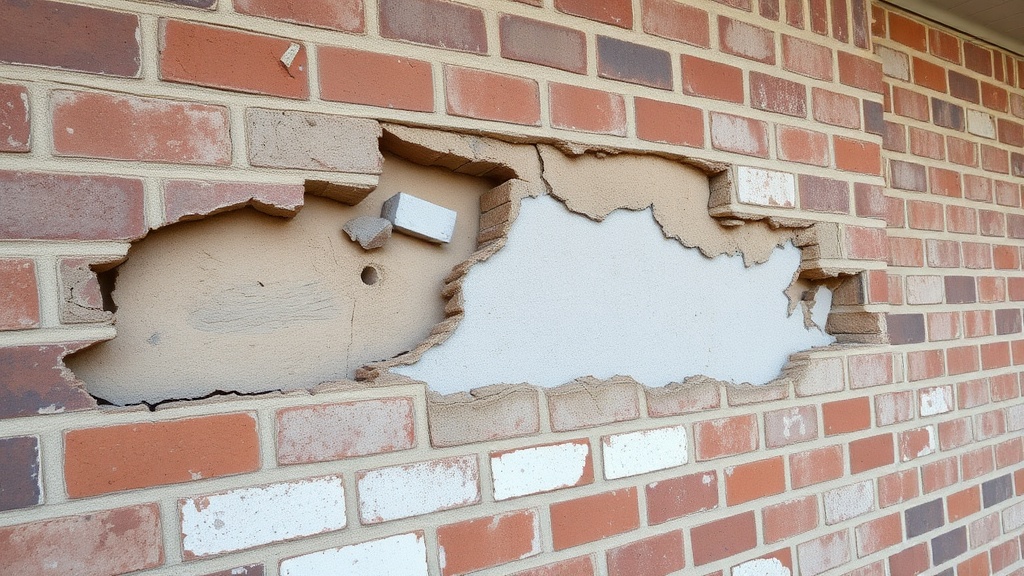
The Problem
The owner of this 1956 Cape Cod in North Lincolnwood noticed that brick faces were falling off the upper gable section above the garage - not just the face layer, but in some cases the full unit had separated from the wall plane and was sitting loose. Several had already fallen onto the garage roof below, which is what prompted the call.
Brick veneer on a 1956 Cape Cod is typically a single wythe of brick tied to a wood-framed wall with corrugated metal ties embedded in the mortar joints at regular intervals. The ties on this home had corroded through at the bend - a common failure mode on mid-century veneer construction where the original ties were plain steel rather than galvanized. Once the ties lose tensile capacity, the veneer is effectively just leaning against the house rather than anchored to it.
The spalling was a secondary symptom. Moisture had been entering the cavity behind the veneer through open head joints at the gable peak, wetting and drying the wood sheathing repeatedly. That moisture was also cycling back through the brick, accelerating face delamination on the upper courses.
Our Solution
We removed all 31 compromised units - those that were spalled through, those that were loose, and those within one course of a failed tie location. Behind each removed unit we inspected the sheathing for rot and found two sections that needed sistered blocking before we could anchor new ties. We installed stainless screw-type veneer anchors at 16 inches on center horizontally and every two courses vertically in the repair zone, connected back to the stud framing rather than to sheathing alone.
Replacement units were sourced from a regional supplier in a modular size and color range close to the 1956 original. The gable field brick on Cape Cods of this era is typically a utility grade that ran lighter in color toward red-orange, so we selected units from the lighter end of the available color range. Each replacement was set with a full Type N mortar bed and head joint, no voids, and tied to the new stainless anchors where the anchor location fell within the replacement zone.
Head joints at the gable peak were raked out on the undisturbed units and repacked with fresh Type N mortar to close the moisture entry path that had been feeding the cavity.
The Result
All 31 units are replaced, tied, and seated. The cavity is no longer receiving water at the gable peak. The sheathing sections with rot damage are sistered and stable. The gable field does not show a defined repair zone from the street due to the color match selection.
Frequently Asked Questions
How do you know when veneer ties have failed without opening the whole wall? We tap along the brick field with a rubber mallet and listen for hollow or drum sounds - units that are tied correctly have a dull thud; loose units ring hollow. We also look for vertical cracking patterns and horizontal separations that indicate sections of veneer are moving independently of the structure. On this home, the loose units in the gable field made the tie failure obvious before we opened anything.
Why replace ties with stainless rather than galvanized steel? Galvanized ties corrode through eventually, particularly in wall cavities where they see moisture cycling. Stainless veneer anchors in a screw-type format are more expensive upfront but will not corrode in service. On a repair where we are opening the wall anyway, installing ties that will outlast the brick is the only sensible choice.
Can you repair spalled brick veneer without replacing the whole veneer field? Yes, when the spalling is localized and the cause has been corrected. On this job, the moisture entry at the gable peak was the source. Once we closed that and replaced the failed-tie zone units, the remaining veneer field - which was still tied and in good condition - stayed in place. Full veneer replacement is warranted when ties have failed across the entire wall or when the sheathing behind has been damaged extensively.