The Problem
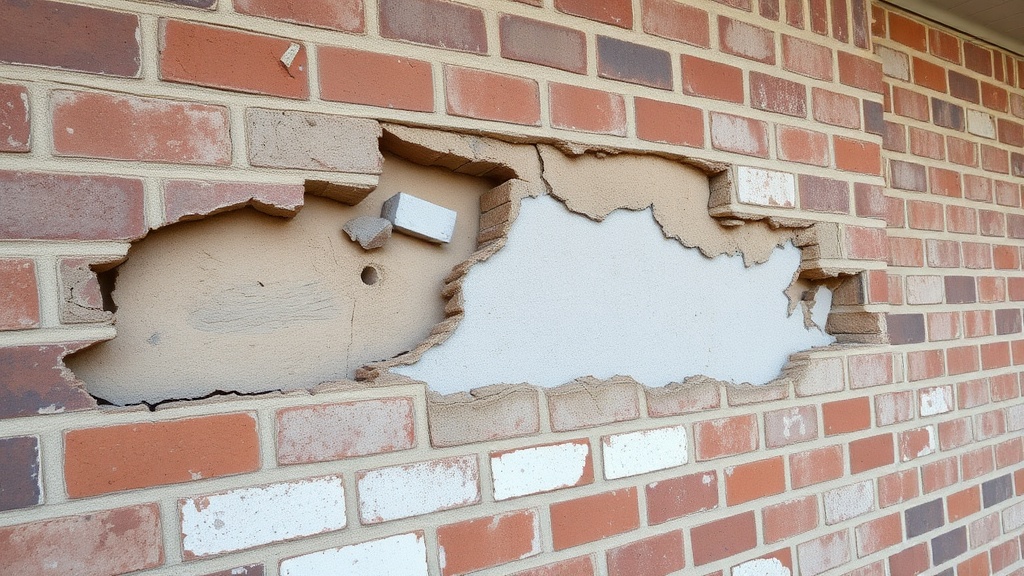
This 1924 brick two-flat in East Des Plaines had eleven brick on the front facade that had lost their faces entirely - a thin layer of the brick’s surface had fractured and fallen away, leaving a rough, porous cavity that collected water. The lintel joints above both first-floor windows had also failed, allowing water to run down the face of the wall and into the wall cavity at the window openings.
The property manager had received a quote from another contractor who proposed cutting out the damaged brick and filling the voids with hydraulic cement. We explained why that approach does not hold: hydraulic cement expands as it cures and on 100-year-old soft brick it creates new stress fractures at the edges of the fill.
Our Solution
We removed all eleven spalled brick carefully, cutting the surrounding mortar bed first to avoid vibrating adjacent brick loose. Replacement brick was sourced from a salvage yard carrying pre-1940 Chicago common brick - the closest available match in color and density to the original. We dry-stacked the candidates against the existing wall in morning light before committing to the batch.
Each replacement brick was set in Type O lime-rich mortar, the same soft mix appropriate for this era of construction. We repointed the joint courses in the affected area on both sides of the replacements, extending 18 inches beyond the repair boundary to ensure there were no open joints feeding water into the new work.
The lintel joints above both windows were ground out to 3/4 inch depth and filled with a flexible, lime-compatible mortar to allow minor movement without re-cracking.
The Result
The eleven replacement brick settled into the wall without standing out as obvious patches. The mortar color matched closely enough that the repair is not legible from the sidewalk. The lintel joints above the windows are sealed and the property manager reported no further water staining on the interior plaster below the windows after the first winter.