The Problem
The owners of this 1954 brick ranch in West Des Plaines noticed water stains on the interior ceiling directly below the chimney after heavy rains. On the roof, the chimney cap was cracked through in two places and had partially separated from the flue liner. The mortar joints on the upper four courses of the chimney - the section most exposed above the roofline - had receded significantly, with several joints open enough to pass a car key into.
A flat chimney cap is the original design on most postwar Chicago-area homes. Flat caps pool water instead of shedding it, and this one had not been replaced in the lifetime of the home.
Our Solution
We accessed the chimney from the roof and removed the failed crown completely - the old cap was cracked through and retaining a cracked crown traps debris and moisture against the liner. The existing crown was flat with no slope, which is the root cause of accelerated weathering on this chimney.
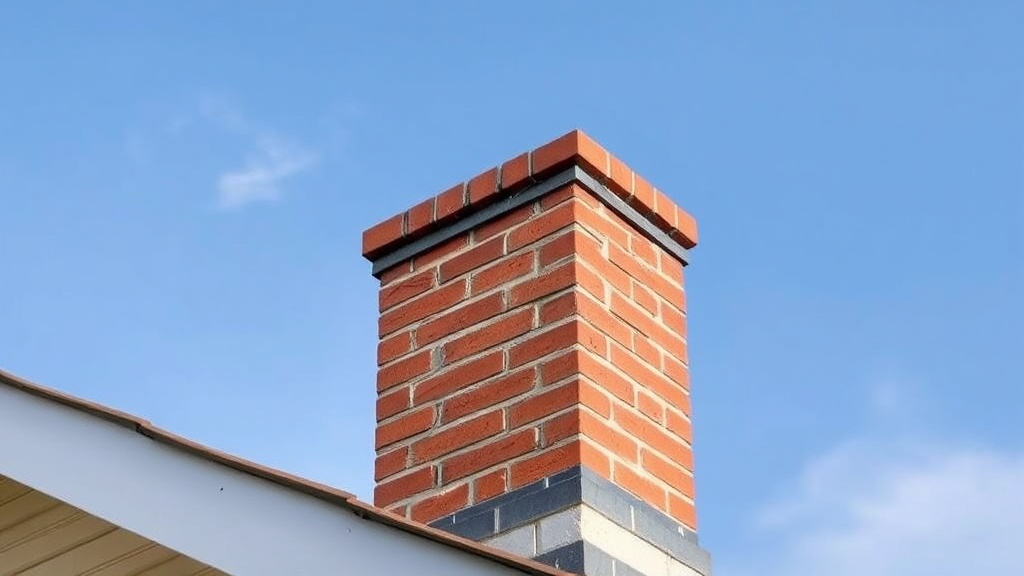
All four courses above the roofline were repointed with Type N mortar, appropriate for the postwar era of construction and matched in color to the remaining sound joints on the lower courses. Joints were ground to 3/4 inch depth, blown clean, and packed in two lifts to ensure full bond with no voids.
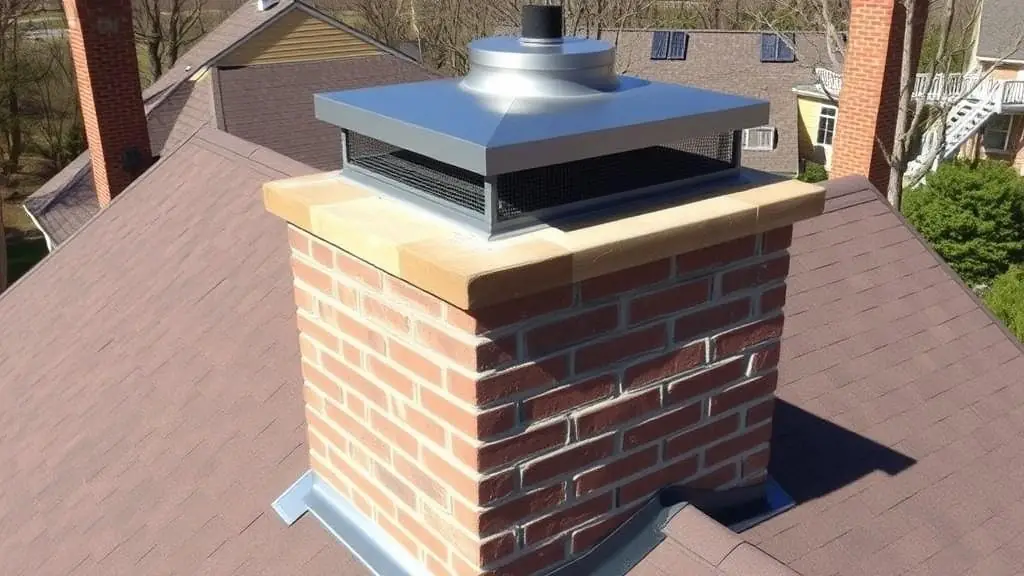
The replacement crown was formed with a 1:3 Portland-to-sand mix, sloped away from the flue liner at a 5-degree pitch on all four sides. The crown overhangs the brick face by 1.5 inches, creating a drip edge that carries water clear of the masonry below. We also applied a penetrating silane sealer to the repointed courses as an added water barrier.
The Result
The ceiling stain on the interior did not reappear after the first full rain season following the repair. The new sloped crown sheds water cleanly. The homeowner noted that the chimney, which had looked visibly deteriorated from the street, now reads as a well-maintained structure consistent with the age of the home.