
The Problem
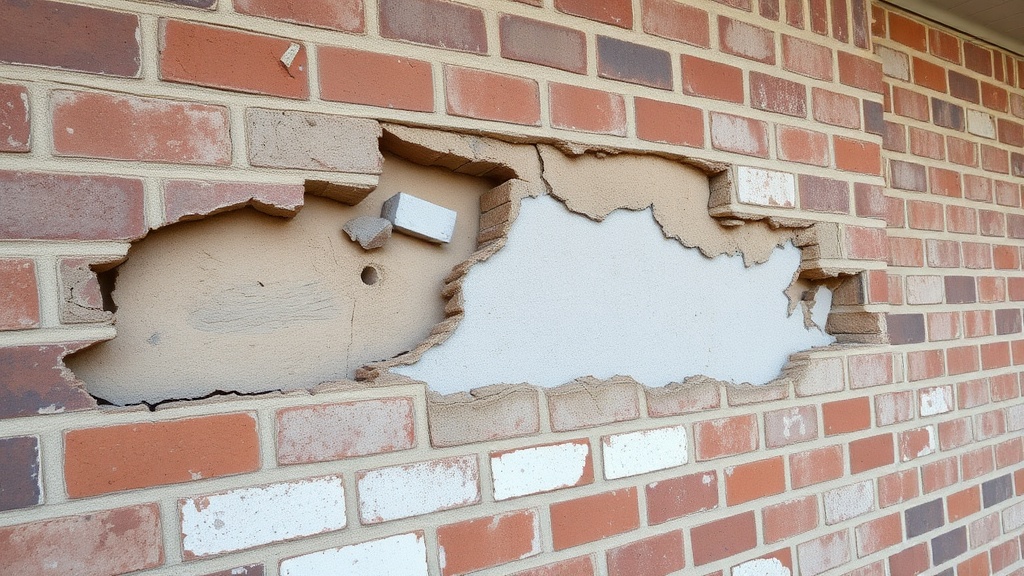
The owners of a 1908 Prairie School home in Northwest Evanston contacted us after noticing accelerating brick spalling on the north and west facades. When we assessed the property, it was immediately clear that a prior contractor had repointed approximately 200 linear feet of joint with Type S Portland mortar, likely seven to ten years before our visit. That patch mortar was still largely intact. The Roman brick around it was not. Spalling had progressed on 14 brick faces adjacent to the patch zones, with fragments ranging from thumbnail-size flakes to 3-inch sections of brick face separating from the body. The original NHL-compatible lime mortar in unpatched sections of the same elevations was in markedly better condition, confirming the failure was the patch and not the age of the masonry.
Our Solution
All Type S patch mortar was removed mechanically using oscillating tools and hand chisels rather than rotary grinders. Roman brick is thin enough and soft enough that a grinder set even slightly deep removes brick face along with mortar. The process was slow by necessity, averaging roughly 22 linear feet per crew-hour, but every patch section came out clean without additional brick loss.
The replacement mortar was NHL 3.5, a natural hydraulic lime with moderate compressive strength that remains below the masonry strength of the original Roman brick. We batched the mortar with a local medium-grain sand to match the warm gray-buff tone of the original 1908 joints. Joint width on this home averages 5/8 inch, wider than standard brick courses, so we packed in two lifts and profiled with a flat-flush tooling pass to replicate the original Prairie School joint expression.
For the 14 spalled brick faces, we applied a lime-putty consolidant to the exposed substrate, then built back with a tinted repair mortar in thin layers. No mechanical anchors were used on the repairs. Bond relied on the consolidant preparation and proper suction control during application.
The Result
With the Type S mortar removed, the stress source driving the spalling was eliminated. The 14 repaired brick faces stabilized and accepted the repair mortar cleanly. The NHL 3.5 repointing on the north and west elevations restored joint continuity across both facades. On a Prairie School home with wide horizontal joints as a defining design element, getting the joint profile and color correct matters as much as the structural repair. Both came out right.