The Problem
A couple who had recently purchased a 1958 brick Cape Cod in East Glenview contacted us through a referral from their real estate agent. They had no specific complaints but wanted a thorough masonry assessment before winter, knowing the home was nearly 70 years old and had never had documented masonry work.
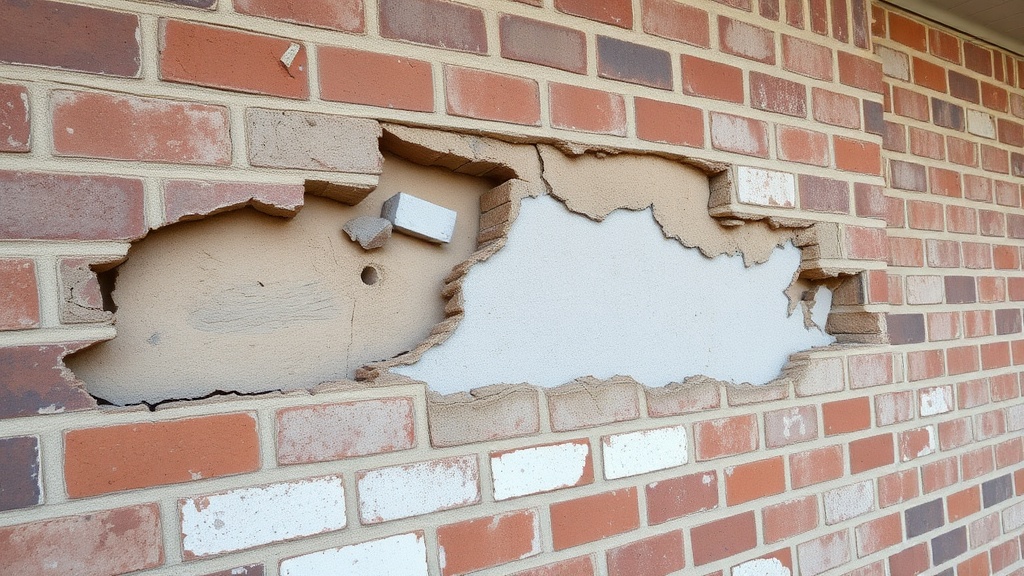
The assessment took 40 minutes and produced a written report. The front facade had 22 brick units with measurable face spalling, concentrated in two clusters: a 4-unit run below the east window sill and an 18-unit spread across the north facade at the second course above grade. Joint recession on the north facade averaged 7/16 inch, which is within the threshold for water entry during a driving rain from the northwest.
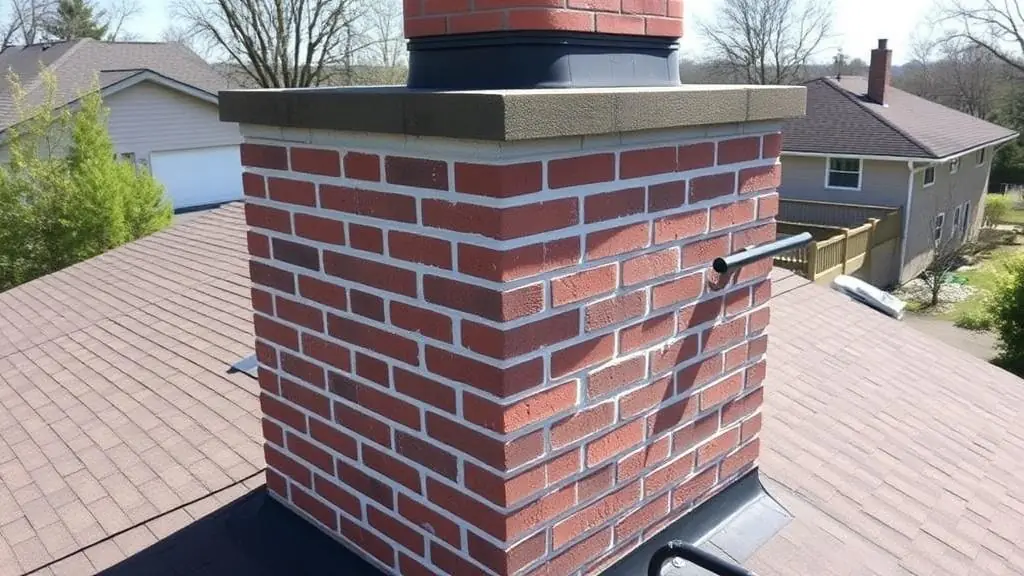
The chimney was intact with sound mortar throughout except for the crown, which had a hairline crack along the south face that was not yet open enough to cause infiltration but warranted monitoring. We documented its current width at 1/16 inch.
Efflorescence was visible on the north facade at two locations, both directly above areas of joint recession. This confirmed that water was already entering the wall cavity in those sections during rain events and evaporating through the brick face.
Our Solution
We prioritized the north facade for first-day work given the active efflorescence and the approaching winter timeline. Spalled brick units were removed individually by scoring the surrounding joints with a 4-inch grinder and a 1/8-inch blade, then removing each unit by hand. Cavities were cleaned of all loose material, dampened, and back-buttered with mortar before the replacement units were set.
Replacement brick came from a Glenview masonry supplier carrying standard postwar modular units in the red-tan range common to 1950s North Shore construction. The match was close on the front facade units and acceptable on the north. We placed the best-matching units on the front facade, which has greater street visibility.
Repointing on the north facade covered 80 linear feet, concentrated in the two courses where recession had allowed water entry. Mortar was Type N at 1:1:6 (Portland, masonry lime, medium grey-tan sand). Joint grinding ran at 3/4 inch depth with a 1/8-inch blade. All joints were tooled with a concave jointer to match the existing rounded profile on the undamaged sections.
The front facade spalling repair required no repointing beyond the set mortar for each replacement unit, as the surrounding joints were still sound.
The Result
All 22 replacement units were set and pointed in three days, completing before the first frost of the season.
The efflorescence locations were noted in the written assessment report. They will fade over the next two to three rain seasons as the wall cavity dries. If they reappear after repair, that would indicate a different moisture source, such as flashing at the window head, that should be investigated separately.
The chimney crown hairline was measured and photographed for the homeowner’s file. We recommended a follow-up measurement in 12 months to determine whether the crack is active or static.
The new owners have a complete written assessment, mortar batch record, and maintenance schedule as a starting point for their ownership of the home.