The Problem
The homeowner contacted us after their listing agent walked the property and flagged the chimney during a pre-listing walkthrough. The agent had seen inspection reports cite similar chimneys on comparable ranch homes in the neighborhood and wanted the issue addressed before the home went on the market.
Our inspection confirmed two distinct problems. The chimney crown had cracked through in two places, with one gap running nearly the full width of the flue opening. The crown was the original thin mortar wash from 1961 - less than an inch thick at the center - which is inadequate for the load and thermal movement a chimney crown experiences. On the four chimney faces, mortar joints were recessed an average of 1/2 inch, with the north face showing recession reaching 3/4 inch in several courses above the roofline. The original mortar was a lime-based Type N, soft and slightly powdery at the surface from six decades of weathering.
The homeowner needed the work completed within a week to stay on the listing schedule.
Our Solution
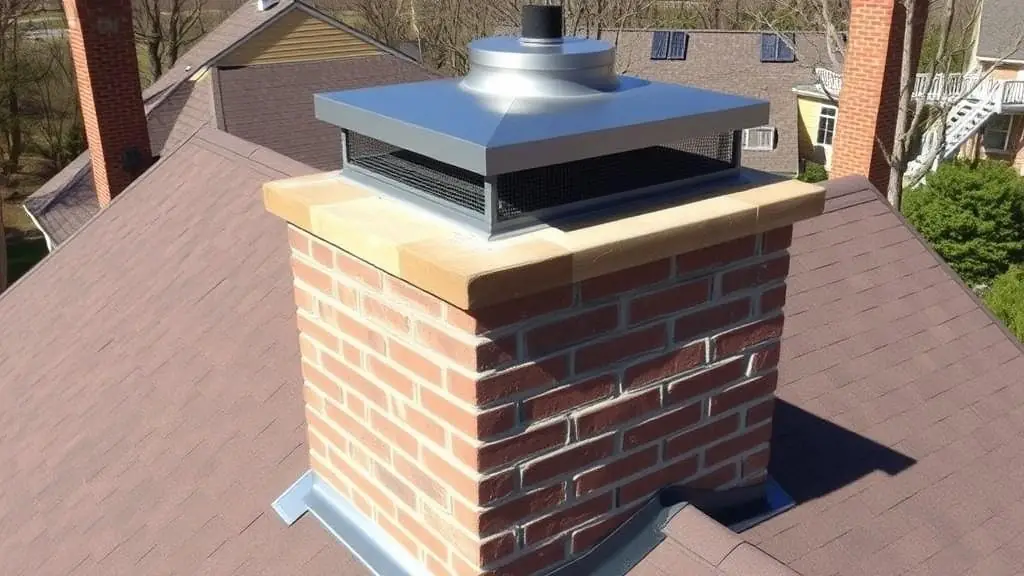
We demolished the existing crown completely, removing all cracked material down to the top course of brick. The new crown was formed using 2-inch lumber as perimeter formwork, creating a proper 2-inch overhang with a drip edge on all four sides. We used a fiber-reinforced concrete mix designed for exterior freeze-thaw exposure, poured and finished with a positive slope of 1/4 inch per foot away from the flue collar to direct water off the crown rather than pooling at the liner.
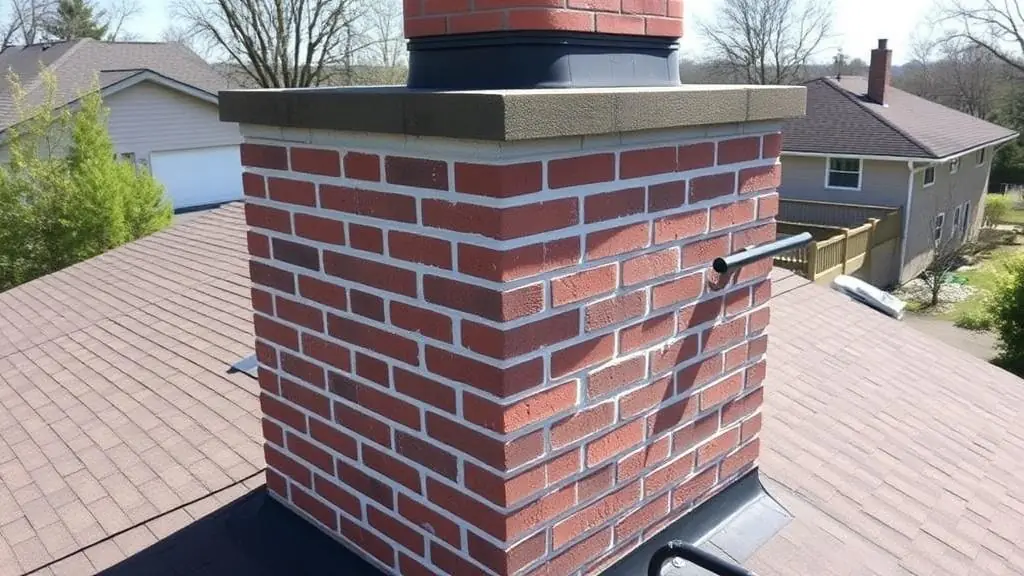
All four chimney faces were repointed with Type N mortar after cutting deteriorated joints to 3/4 inch depth using a 4-inch angle grinder with a 1/8-inch diamond blade. Blade depth was set and checked before each face to avoid overcutting the 1961 brick, which is a medium-density common brick with moderate absorption. Joints were packed in two lifts, with the first lift filling to approximately half depth and the second lift tooled to a concave profile matching the original joint shape visible in protected courses below the roofline flashing.
Step flashing at the chimney-to-roof interface was inspected and re-bedded where it had lifted from the mortar bed. A stainless steel chimney cap with a 5/8-inch mesh screen was installed over the flue to prevent water entry and animal nesting.
The Result
The completed crown, repointing, and cap passed the subsequent buyer’s inspection without any chimney line items. The homeowner provided us with a copy of the inspection report, which noted the chimney as recently repaired and in good condition.
We left a written repair summary with the mortar specification and crown mix used, formatted for the home’s disclosure documents.