The Problem
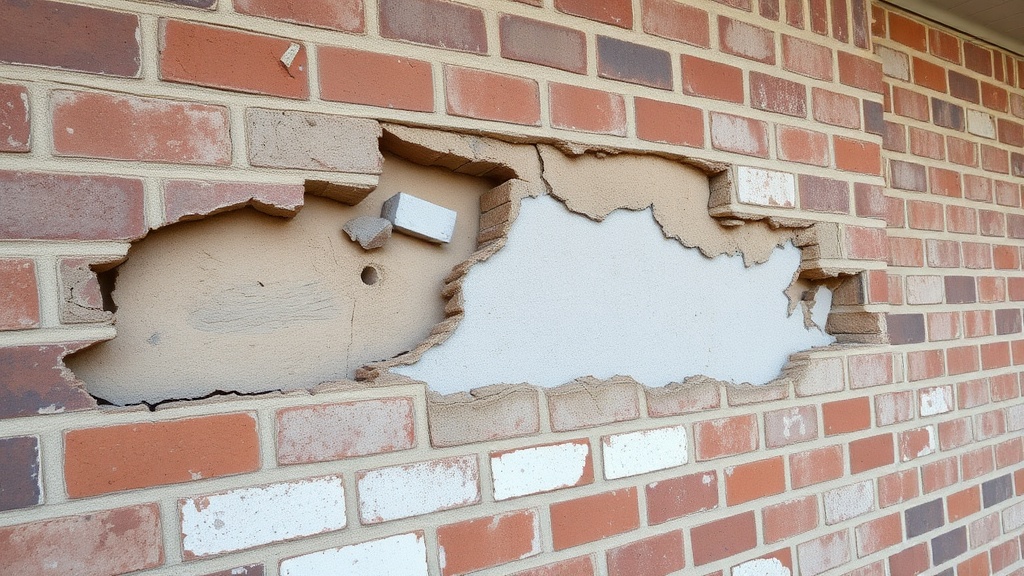
The owner of a 1938 brick two-flat in Central Niles noticed crumbling brick faces along the second-floor front facade. Chunks of brick face were accumulating on the first-floor window ledge and the front stoop. Nineteen bricks on the second-floor front had lost significant face material, exposing the soft inner core to direct weather.
The cause was a previous tuckpointing job done roughly eight years earlier. The contractor had repointed the entire front facade with Type S mortar - a Portland-heavy mix designed for structural load-bearing applications. On this 1938 two-flat, the original mortar was lime-rich Type O. The switch to hard mortar trapped moisture inside the soft pre-war brick rather than allowing it to breathe through the joints. Freeze-thaw cycles over several winters did the rest, popping face sections off brick after brick.
Our Solution
We removed all nineteen damaged bricks carefully, cutting the mortar bed on each side with a hand chisel rather than an angle grinder to avoid damaging the soft adjacent brick. Each cavity was cleaned of loose mortar debris and dampened before setting replacement brick.
Replacement brick was sourced from a demolition salvage supplier who stocks 1930s-era common brick from Chicago-area teardowns. We tested three samples against the existing wall in natural light before selecting the closest color match - a warm red with tan aggregate that reads within a shade of the original.
All replacement bricks were set in Type O lime-rich mortar, the correct specification for this era and brick hardness. We also removed the incorrect Type S mortar from the twenty-six joints immediately surrounding each replaced brick and repointed with Type O. Leaving hard mortar adjacent to soft brick would continue the moisture trap pattern on neighboring bricks.
The Result
All nineteen bricks were replaced and the surrounding joints repointed correctly. The mortar change stops the spalling mechanism. Moisture that enters the wall assembly can now migrate out through the joints rather than through the brick face.
The salvage brick has aged naturally and blends with the existing facade. The building’s two units are protected from water infiltration that was working its way toward the wall cavity behind the second-floor front bedroom.