The Problem
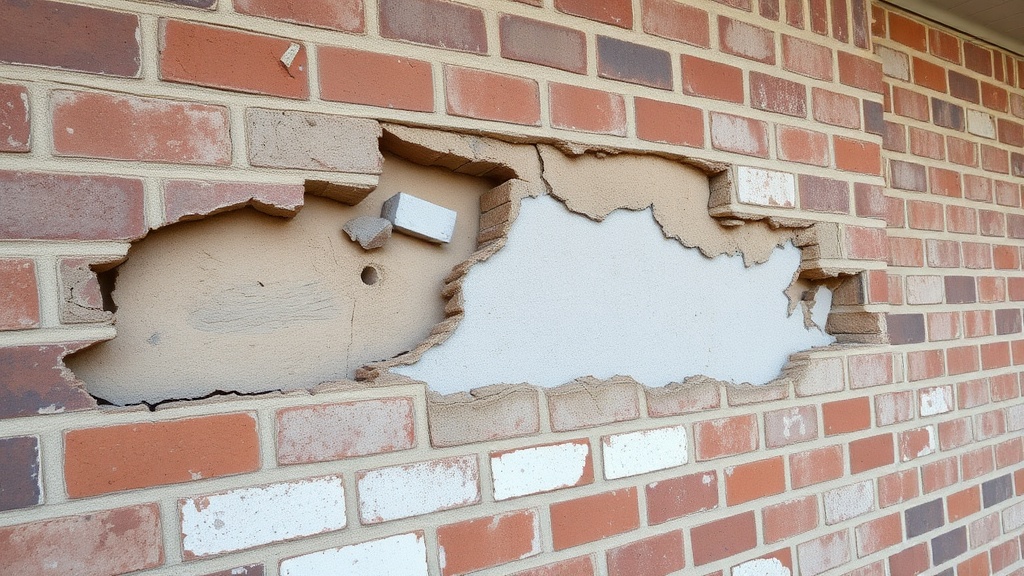
The owners of this 1924 Georgian Colonial in Indian Hill near Tower Road reached out after purchasing the home 18 months prior. The home inspection at purchase had noted some mortar condition concerns, and the new owners had been watching the north elevation through their first full winter cycle. By the following spring, they could see what the inspection had described getting worse: brick faces on the north and northwest corners were flaking, and in several locations, full face pieces had fallen to the grade below.
The Indian Hill neighborhood holds a concentration of 1920s estate-tier homes, and the Georgian Colonial construction typical of this corridor uses soft Chicago common brick with original lime-based mortar. When we examined the spalled areas, the pattern was clear. At some point in the past, a contractor had repointed sections of the north elevation with a stiff Portland-heavy mix - harder than anything appropriate for this brick. That mortar was visible as a slightly lighter color band through the middle third of the north face.
The harder repointing had been doing the opposite of its intention for years: constraining the brick units and directing freeze-thaw movement stress into the brick faces rather than the mortar joint, which is designed to be the sacrificial component.
Our Solution
We began by probing all four elevations to map the extent of the incompatible mortar. The north and northwest faces had the most coverage - roughly 140 linear feet where the stiff mix had been applied. The south and east elevations retained original lime-based mortar and showed no spalling, which confirmed the cause.
We removed all incompatible mortar on the north and northwest elevations using hand chisels and 4-inch angle grinders with a depth stop set to 3/4 inch, working carefully around already-stressed brick edges. In areas where spalling had already separated the brick face, we removed the unit entirely, cleaned the opening, and set a salvage replacement in a full Type N bed joint.
A total of 38 brick units were replaced. All salvage brick was selected from stock matching the original Chicago common brick in face color, texture, and nominal 2-1/4 inch course height. Each replacement unit was set with the original fire face outward in full mortar bed with head joints packed solid.
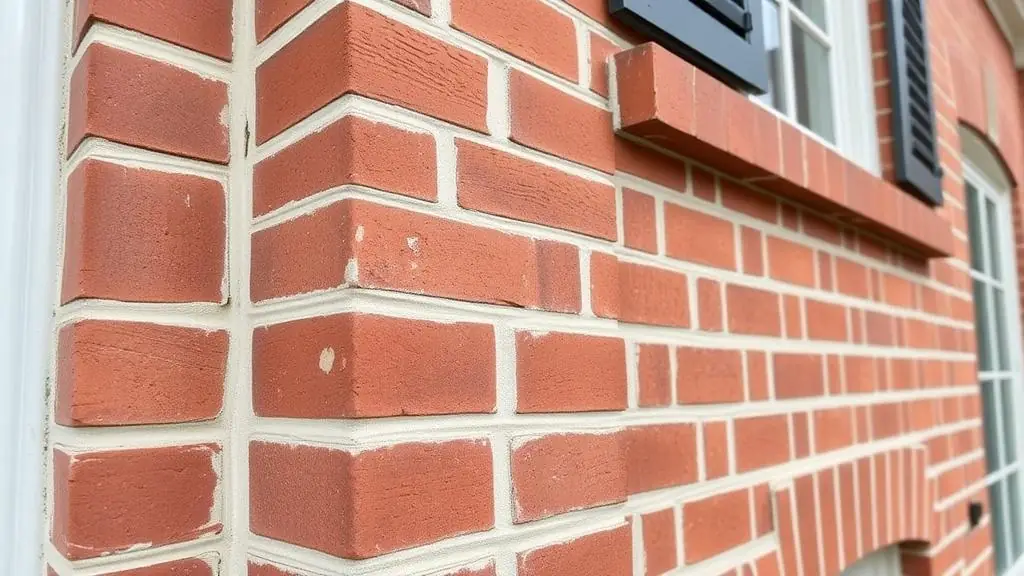
The surrounding 140 linear feet were repointed in Type N at 1:1:6, tooled to a concave joint profile matching the original south elevation joints.
The Result
At the end of one week, the north and northwest elevations were fully repaired and repointed. The salvage brick blends into the original field within a range consistent with the natural color variation in Chicago common brick. The wall surface no longer shows the face loss the owners had been watching accelerate.
We left a written account of the incompatible mortar history and the formula used for repairs so the owners can share it with any future contractor touching this home.