The Problem
The homeowners had been aware of water in the firebox after rain events for two seasons but assumed it was a flashing issue. When a chimney sweep inspected in preparation for the heating season, the cause was identified as a failed chimney crown. We were referred for the masonry repair.
The crown on this 1972 chimney was a poured-in-place concrete slab approximately 2.5 inches thick, flat with no slope and no overhang. It had developed a full-width transverse crack directly across the center, likely from freeze-thaw cycling over several decades. The crack measured 5/8 inch wide at the widest point. Both halves of the crown had settled slightly toward the crack, creating a valley that concentrated water at the failure point rather than shedding it.
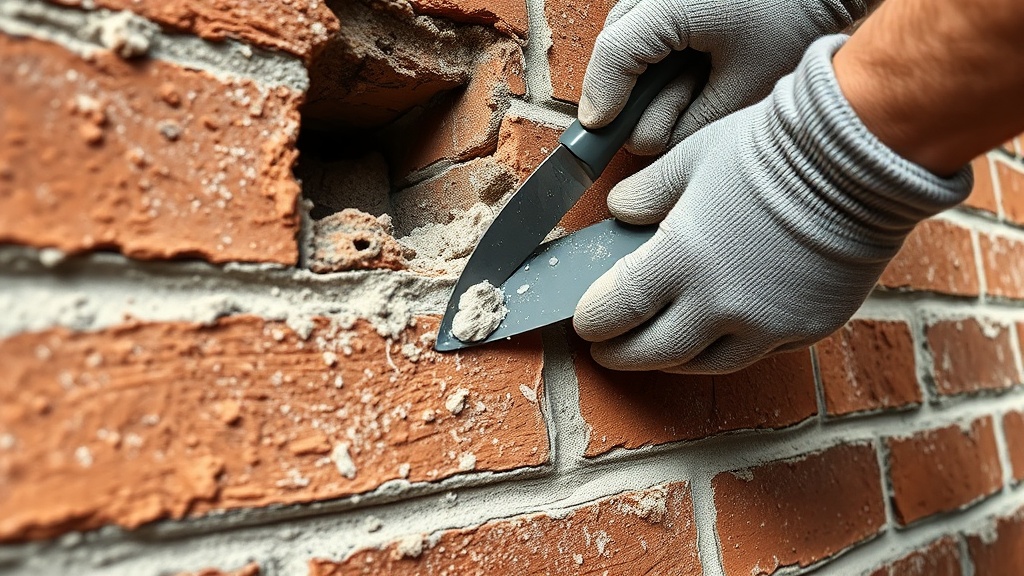
Water entry through the crown had been ongoing long enough to cause spalling on the upper two courses of the chimney stack, where the brick units had alternating wet and dry cycles through freeze seasons. Six units in those two courses showed face loss of 1/4 to 3/8 inch. The mortar in the upper three courses also showed recession averaging 5/8 inch, substantially more than the four courses below, consistent with extended direct water exposure.
Flue tile inspection from the firebox showed sound tiles with intact mortar joints down to the visible limit, approximately 6 feet below the crown. No active water was present at the time of inspection.
Our Solution
The failed crown was demolished by hand using a cold chisel and hammer. We avoided power tools on the crown demolition to prevent vibration from transferring into the upper stack. All concrete debris was collected in a bucket lowered by rope.
The six spalled brick units in the upper courses were removed and replaced with new units sourced from a regional masonry supplier. Color match was close but not exact due to weathering on the originals. We positioned the nearest-matching units in the top course, which is the most visible from the roofline.
The upper three courses of the stack were repointed using Type N mortar at a 1:1:6 ratio with a medium grey sand matching the existing lower-stack joints. Joint depth was held to 3/4 inch throughout.
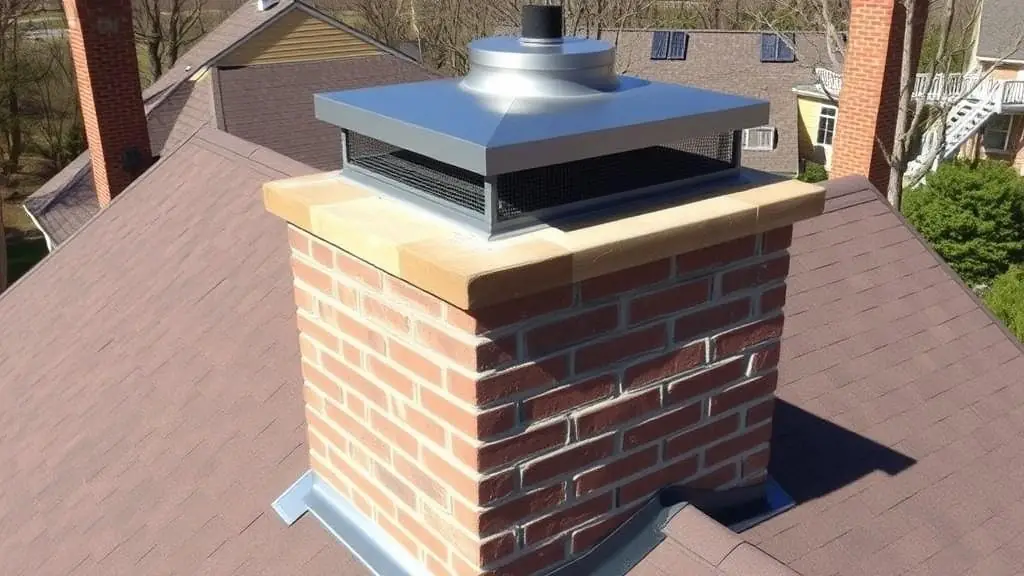
The new crown was formed with a 2-inch overhang on all four sides and a minimum 1/4-inch-per-foot slope to the outside edge. It was poured in a single lift using a Portland-lime mortar mix with fiberglass reinforcement fiber added at 1 lb per cubic yard to reduce shrinkage cracking. The crown was wet-cured for 72 hours with burlap and plastic sheeting before the staging was removed.
The Result
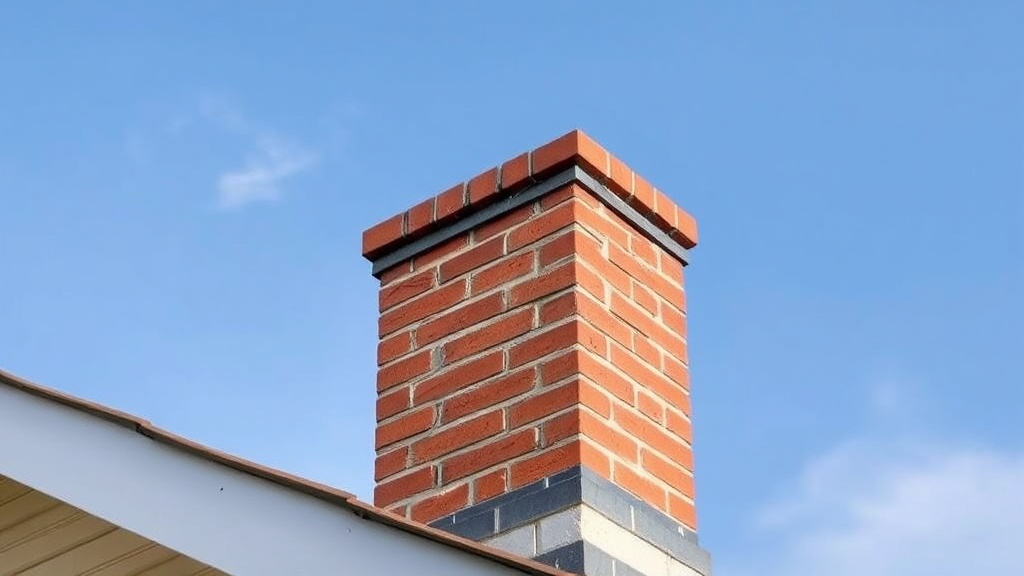
The three-day project delivered a rebuilt crown, six replacement units set and pointed, and three courses of repointed upper stack. Post-completion water testing with a garden hose directed at the crown for 15 minutes produced no moisture in the firebox.
The homeowners can now use the fireplace through the heating season without water infiltration risk.
We documented the crown dimensions and concrete mix for the homeowner’s maintenance file. The crown should be inspected every five years for hairline cracking.