The Problem
This 1962 brick ranch sits on a heavily wooded lot in Central Northfield where the mature tree canopy keeps the north and west faces shaded for most of the day from April through October. That persistent shade, combined with seasonal leaf accumulation against the foundation line, had produced heavy moss and lichen colonization on the lower four courses of both shaded elevations. The biological growth had accelerated mortar joint deterioration by retaining moisture against the joint face for extended periods.
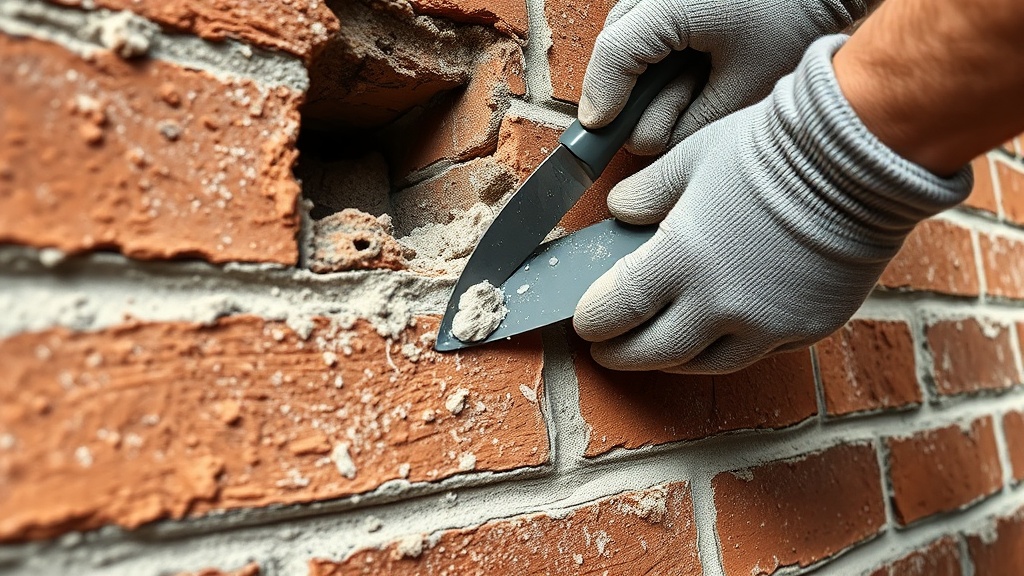
Above the vegetation line, joints on the north face were recessed an average of 5/8 inch and had developed hairline separations at the brick-mortar interface. The west face showed similar recession with two short sections where the mortar had washed out completely. The south and east elevations, which receive direct sun, were in significantly better condition but still warranted repointing to address 1/4- to 3/8-inch recession throughout.
Our Solution
Before any grinding, we treated the lower four courses on the north and west faces with a masonry biocide wash - a dilute solution applied with a stiff brush and left to dwell for 30 minutes before scrubbing and rinsing. The biocide kills the moss and lichen at the root rather than just removing the visible surface, which prevents regrowth from the same spore bed within the following season.
Once the biocide had done its work and the wall had dried overnight, we ground all four elevations to a uniform 3/4-inch depth. The north and west faces required more careful work at the lower courses where biological staining had penetrated the brick surface - we used a narrower blade profile to track the joint line without abrading the brick face.
The replacement mortar was Type N lime-based, with a natural sand selected to match the original 1962 joint color. We pulled a sample from the interior of the crawl space cleanout vent where original 1948 mortar was still intact and undisturbed. The replacement mix was adjusted to match the warm tan of that sample. Joints on the south and east elevations received a single 3/4-inch lift; joints on the north and west, where we found deeper recession in spots, received a two-lift fill with the first lift allowed to firm before the second.
All joints were tooled with a concave jointer to match the original profile.
The Result
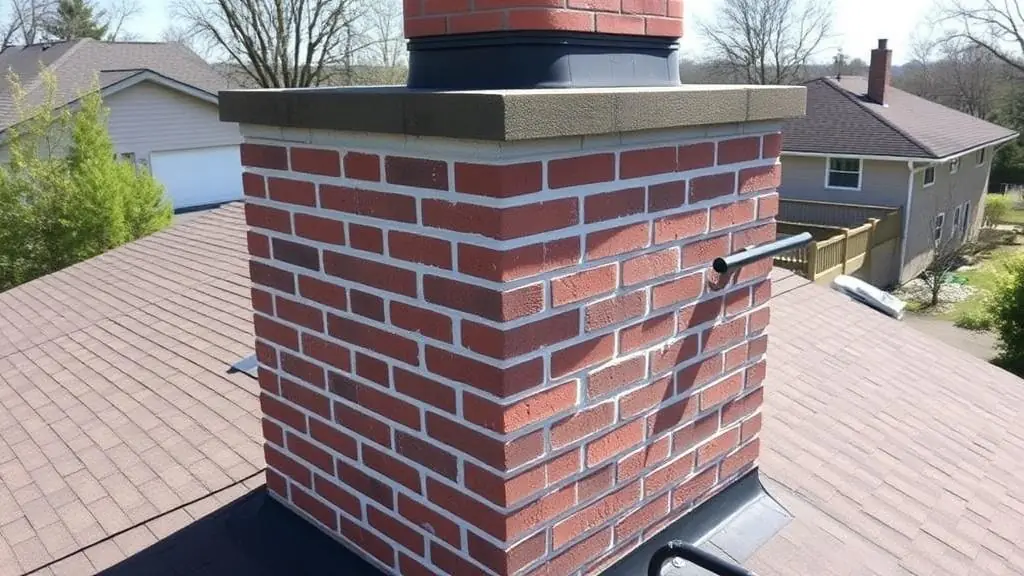
All four elevations are repointed and sealed. The biological growth on the lower north and west courses is eliminated at the root level. The color match across all four faces is consistent. The homeowner also received a recommendation to keep leaf accumulation cleared from the foundation line and to consider trimming the lowest canopy branches on the north side to allow more light to reach the wall face - two steps that will extend the service life of the new mortar on the shaded elevations.
Frequently Asked Questions
Does moss and lichen actually damage brick mortar, or is it just cosmetic? It causes real damage. Moss and lichen anchor to the mortar surface with root structures that penetrate the joint face, and they retain moisture for days after rain events while the surrounding exposed areas have dried. That prolonged moisture contact accelerates carbonation and leaching of the lime binder, which softens the joint from the surface inward. On this home, the lower north and west courses had deteriorated noticeably faster than the exposed south and east faces for exactly this reason.
What prevents the moss from coming back after treatment? The biocide we use kills existing growth to the root, which gives the new mortar a clean surface without active spores feeding on the joint. Long-term prevention comes from reducing the conditions that favor moss - shade, retained moisture, and leaf debris at the foundation. On a heavily wooded lot we cannot eliminate shade, but clearing leaf packs from the base of the wall and improving drainage away from the foundation reduces the wet-period duration enough to slow regrowth considerably.
Why does the north face always deteriorate faster than the south on Chicago-area homes? North-facing walls stay wet longer after rain and snow events because they receive little direct sun. They also see more freeze-thaw cycles per winter because temperatures on a shaded face fluctuate across the freezing threshold more often than a sun-warmed south face that stays above freezing on mild winter days. That combination of prolonged moisture and more frequent freeze-thaw cycles is why north-face mortar typically needs attention years before south-face mortar on the same home.