Call Now Free Quote
(847) 713-1648 Get Free Estimate
Tuckpointing - Rosemont, IL

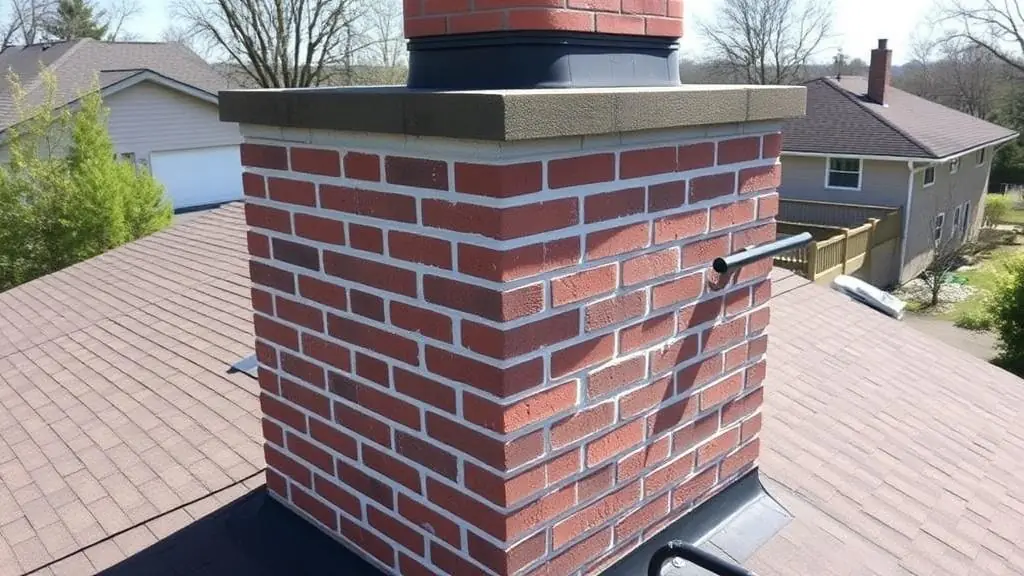
Tuckpointing - 1959 Brick Ranch, Rosemont Residential

September 28, 2025 | near Ruby Street

Before: Tuckpointing - 1959 Brick Ranch, Rosemont Residential Before
After: Tuckpointing - 1959 Brick Ranch, Rosemont Residential After
Location Rosemont, IL
Service Tuckpointing
Scope Full facade, 4 elevations, 340 linear feet
Mortar Type Type N
Duration 5 days
Building 1959 brick ranch

The Problem

The owners of a 1959 brick ranch in the Rosemont residential neighborhood had noticed water staining on the north basement wall for two winters running. The staining appeared in spring and dried out by summer, suggesting a seasonal moisture intrusion pattern tied to freeze-thaw cycles rather than plumbing or groundwater.

Exterior inspection confirmed the source. The north elevation joints were recessed more than 1/2 inch on the lower three courses - open enough that a business card fit into them without force. The east and west elevations showed similar erosion at 3/8 inch average recess. Even the south elevation, with its better solar exposure, had joints soft enough to excavate with a fingernail.

This was original mortar from 1959, approaching 66 years old without any prior maintenance. The water staining in the basement was a direct result of open joints on the lower north courses allowing water to enter and migrate down to the foundation wall.

Our Solution

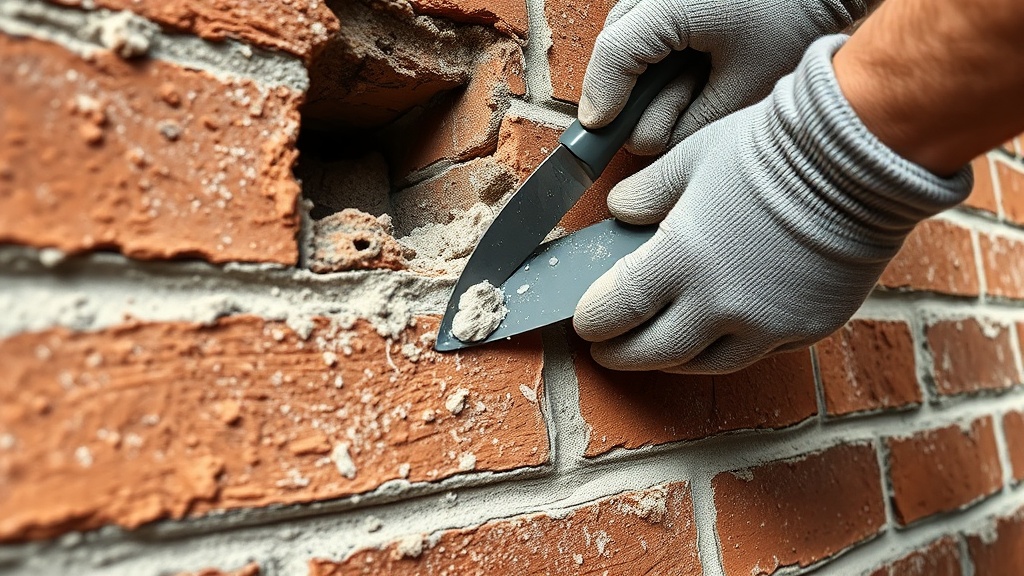
All four elevations were tuckpointed. Deteriorated mortar was removed to a uniform 3/4-inch depth using angle grinders with diamond blades set to a controlled cutting depth. The lower courses on the north elevation, which had the most severe erosion, were cleared using a combination of grinder and cold chisel to avoid any risk of overcutting the adjacent brick.

Mortar color matching was done from a protected sample pulled from the interior side of the chimney cleanout door, which had never been exposed to weathering. The replacement mortar was Type N - the correct specification for a 1959 ranch brick - blended with natural tan sand aggregate to match the original joint color.

All joints were packed in two lifts and tooled with a concave jointer matching the original profile. On the north lower courses, we also confirmed that the brick-to-foundation wall interface was solid before closing the joints above it.

The Result

All 340 linear feet of mortar joints across four elevations were restored in five days. The north lower courses are sealed against winter moisture entry. The basement staining should not recur once the wall assembly has a full dry-out season.

The homeowners received a written mortar specification record for future maintenance reference.
Related: Tuckpointing Services | Rosemont Service Area

Questions About This Project

How does joint erosion on the exterior cause water staining on interior basement walls?

When exterior mortar joints fail and recess past 1/4 inch, open gaps form that allow water to enter the wall cavity during rain. On a single-story ranch, the wall base is at or near grade. Water entering through open lower-course joints can travel horizontally through the mortar bed or vertically down the back face of the brick and reach the top of the foundation wall or the rim joist area. From there it appears as staining or efflorescence on the interior basement wall, often several feet from the actual entry point.

What depth of joint erosion requires tuckpointing versus caulk or surface patching?

Any joint recessed more than 1/4 inch needs proper tuckpointing - mortar removal to a uniform 3/4-inch depth and repacking with a matched mortar mix. Surface patching or caulking over shallow recesses produces a weak bond that typically fails within one to three freeze-thaw cycles because the patch has nothing to grip laterally. Caulk is not mortar - it does not bond to masonry under repeated thermal movement. It stretches, debonds, and allows more water in than the original open joint would have.

Why does a 1959 ranch need tuckpointing when the brick itself still looks fine?

Brick and mortar have different lifespans. The brick on a well-built 1959 ranch can last 100 years or more. The original mortar, typically a moderate lime-Portland blend, has a service life of 30 to 50 years under normal Illinois weather conditions. By the mid-2000s, most original mortar on 1950s ranches was past its maintenance window. The brick looks intact because it is intact - but the mortar holding it together has softened, recessed, and lost its water-shedding profile. Tuckpointing now prevents brick damage later.

Project Location

Loading map - 1 project in this area

Need Similar Work? Let's Fix It Right.

Free on-site inspection and written estimate - no obligation. Serving the North Shore and Chicagoland for over 39 years.

(847) 713-1648 Request Online Estimate