The Problem
The homeowner called after noticing a steady drip inside the firebox following a spring rainstorm. On the roof, the top fourteen courses of the chimney stack had deteriorated badly - mortar joints were open and recessed more than half an inch, and two of the corner bricks had spalled through enough that water was tracking down through the core of the chimney rather than shedding off the crown.
The original 1958 stack used standard modular brick with a Type N lime mortar common to postwar residential construction in Cook County. A previous owner had sealed the crown with a thick coat of hydraulic cement, which had cracked and pulled away from the flue tile, creating a channel that directed water straight into the top courses instead of away from them.
Our Solution
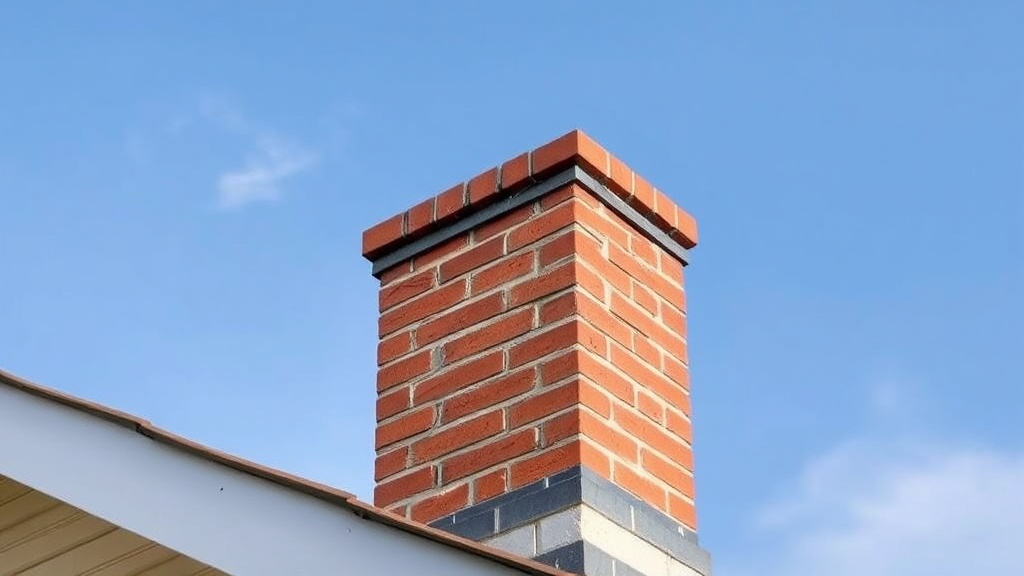
We tore down the deteriorated section from the crown to the roofline - fourteen courses total - and set new brick using a matching modular unit sourced to match the original size and color as closely as possible. The replacement mortar was Type N lime-based, which stays flexible enough in a chimney application to absorb thermal cycling without cracking the surrounding brick.
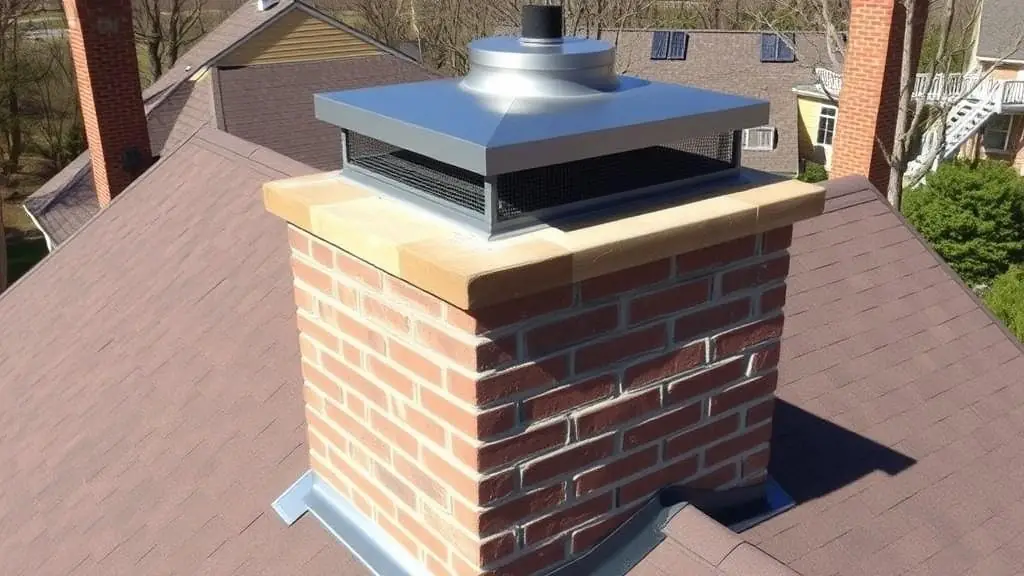
Before relaying the new courses, we inspected the flue tile at the top joint and found a 3-inch crack. We filled that crack with refractory caulk rated for continuous use at high temperature, then set a new pre-formed concrete crown with a positive drip edge sloped away from the flue opening at a 2-inch rise. Every bed joint was packed full and struck with a concave tool to match the profile on the lower undisturbed courses.
Flashing at the roof-chimney intersection was re-seated and sealed with a polyurethane-modified elastomeric flashing compound rather than standard roof tar, which breaks down within a few seasons in this climate.
The Result
The firebox stayed dry through two consecutive rainstorms the following week. The rebuilt section matches the lower courses well enough that the repair is not obvious from the ground. The homeowner now has a functional crown with a proper drip edge and correctly specified mortar, rather than a hydraulic cement cap that will need to be redone in a few years.
Frequently Asked Questions
Why did the hydraulic cement cap fail on this 1958 chimney? Hydraulic cement is rigid. Chimneys expand and contract with temperature swings of 200 degrees or more in a single day when in use. That movement cracks rigid caps within a few seasons, and once cracked, water channels directly into the joint between the cap and the flue tile. A properly formed concrete crown with a drip edge and correct bond to the flue tile holds up significantly longer.
Why Type N mortar instead of a stronger Type S on the chimney rebuild? Type S is harder and less permeable, which sounds like a benefit but works against you on older brick. The 1958 brick on this chimney is softer than modern units. A mortar that is stronger than the brick it holds will cause the brick face to spall when movement occurs. Type N flexes slightly and lets the brick survive freeze-thaw cycling intact.
How do you match replacement brick on a job this old? There is no exact match for 1958 modular brick. We look for current production brick that is close in face dimensions, surface texture, and color range. From the street, the goal is that the repair reads as a repair, not as a patchwork. Full brick-for-brick color matching on a 65-year-old chimney is not a realistic promise.