The Problem
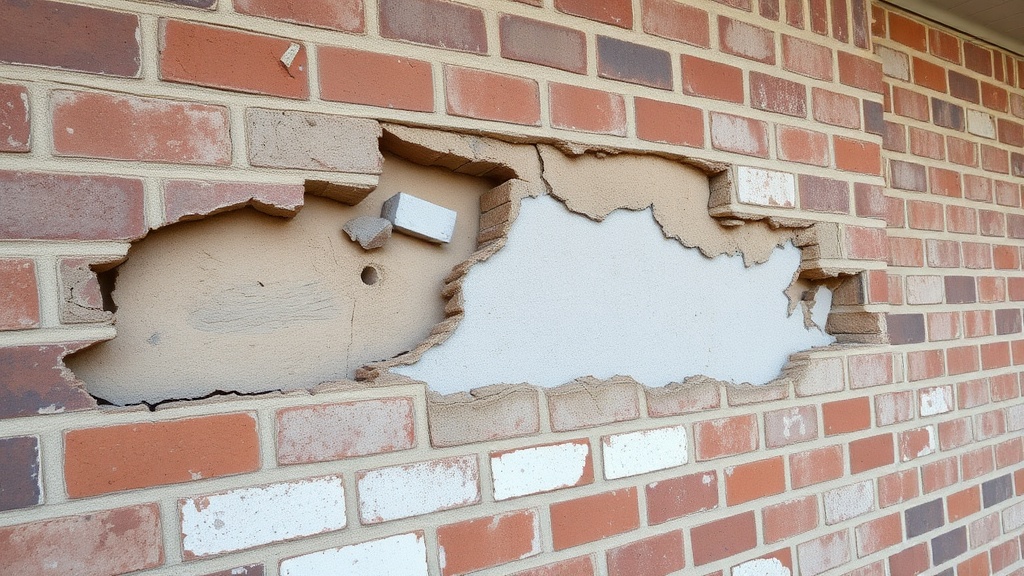
The owner of a 1947 brick bungalow in the Rosemont residential area noticed brick face material collecting in the window well along the front foundation. Seventeen bricks on the front facade had spalled - some had lost only the outer face layer, others had cracked through the full brick body. Three bricks near the front window had pieces missing large enough to expose the mortar bed underneath to direct weather.
The damage was consistent with long-term moisture accumulation inside the brick. The front facade joints were original 1947 mortar - soft, recessed, and in several places completely absent. Open joints had allowed water to enter the brick body for years. The front facade faces south and received direct afternoon sun, which accelerated freeze-thaw cycling: the brick warmed and absorbed water during the day, then cooled and froze at night during winter months. Over time, that cycling fractured the brick along natural grain lines.
Our Solution
We sourced salvage brick from a demolition supplier with inventory from 1940s Chicago-area construction. The original front facade brick is a warm red-orange common brick with a lightly textured face and a 2-1/4 inch nominal height - a specification we matched from the supplier’s stock after testing two sample batches against the existing wall in natural light.
Each of the seventeen damaged bricks was removed with a cold chisel, working the mortar bed carefully to avoid disturbing adjacent courses. The cavities were cleaned and dampened before setting replacement brick in Type N lime-blend mortar - the correct mortar type for 1940s soft common brick.
With the damaged bricks replaced, we repointed the full front facade. Leaving the surrounding deteriorated joints in place would have preserved the same moisture infiltration path that caused the original damage. All joints were removed to 3/4-inch depth and repacked in two lifts with matching mortar, then tooled to a concave profile.
The Result
The seventeen replacement bricks are indistinguishable from the original wall at normal viewing distance. The full front facade is now sealed with period-correct Type N lime-blend mortar. The moisture entry mechanism that caused 78 years of cumulative damage has been removed.