The Problem
The homeowner had a home inspection done in preparation for listing the property and received a report citing chimney mortar deterioration on all four sides of the stack above the roofline. On our inspection, the joints were consistently recessed 1/2 to 3/4 inch across the full exposed section, with localized areas on the north and west faces where joints had failed to less than 1/4 inch mortar remaining. The existing crown was cracked through in two places and no longer shedding water past the flue tiles.
This is a 1948 two-story chimney that serves a main fireplace and a furnace flue - a mass brick stack that is large in cross-section compared to single-flue chimneys of the same era. Mass stacks like this one see significant temperature differentials between the exterior face and the flue tile interior, which accelerates mortar joint cycling. The original Type N lime mortar from 1948 had reached the end of its service life across the full exposed section.
Flashing at the roofline was also lifted and unseated on the west side, which had been allowing water to run behind the counterflashing and into the wall cavity below the roofline.
Our Solution
We set up staging on the roof to access the full height of the exposed chimney section safely. All four sides were ground to 3/4 inch depth with diamond blade angle grinders, with care taken on the north and west faces where remaining mortar was thin - in those areas we hand-chiseled rather than grind to avoid vibrating adjacent brick out of position.
The replacement mortar was Type N lime-based, matched to a color sample pulled from a protected joint on the interior side of the cleanout access - the one location where original 1948 mortar had not been exposed to weather. The sample gave us the original sand color and aggregate size. The final mix was blended with natural sand to reproduce the tan-gray tone of the original joints.
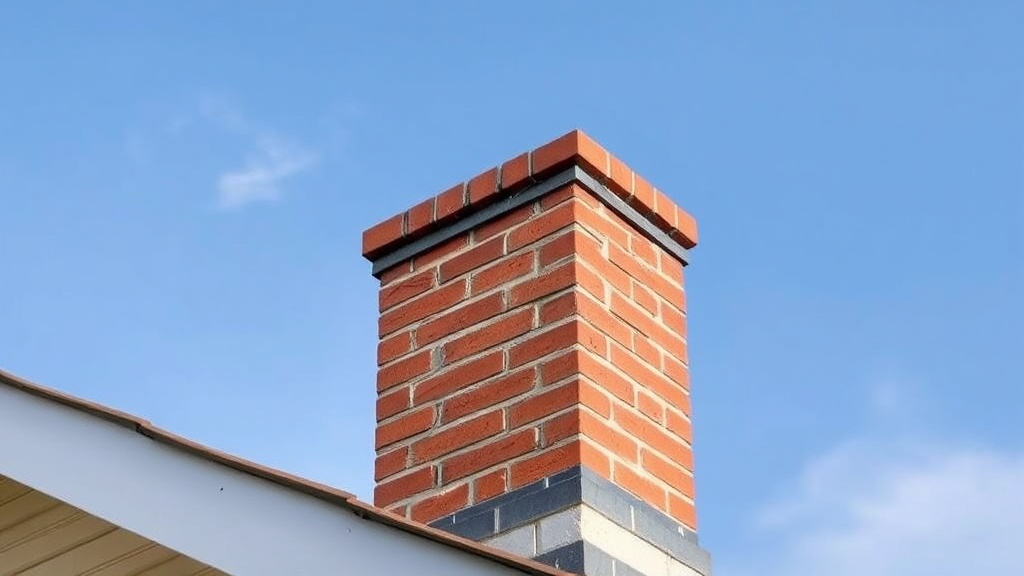
Joints were packed and tooled in a concave profile matching the original on all four faces. On the two flue chase sections, we used a slicker tool to produce a smooth-face wash between the flue tiles and the top course of brick - a detail that helps shed water off the tile cap edge rather than letting it sit in the joint.
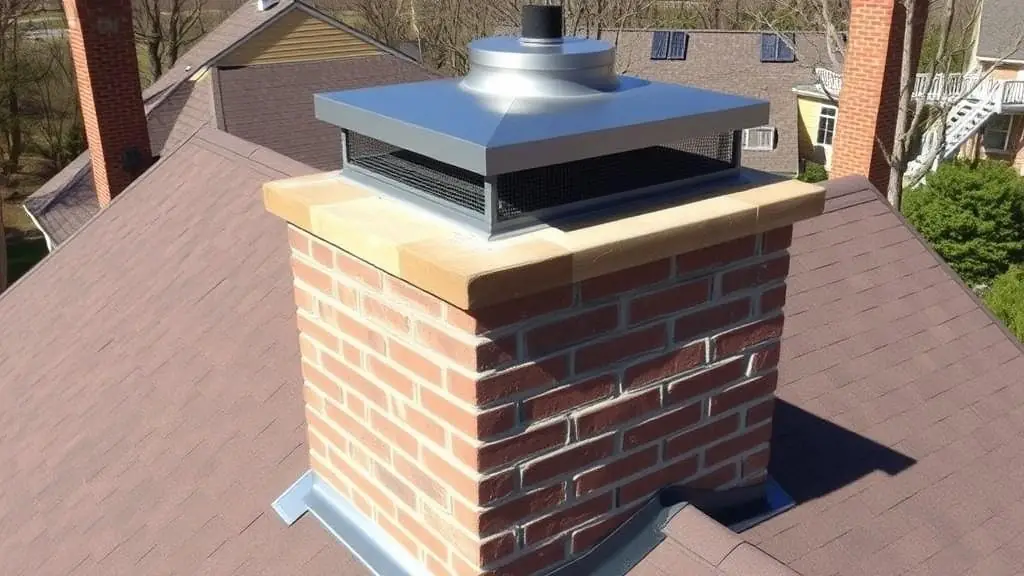
The cracked crown was demolished and replaced with a cast-in-place concrete crown with a positive 2-inch slope away from each flue opening and a formed drip edge projecting 3/4 inch beyond the brick face. Flashing on the west face was re-seated and sealed with elastomeric flashing compound.
The Result
The full exposed stack is repointed, the crown is replaced, and the west-side flashing is seated. The home inspection contingency was satisfied. Mortar color across all four faces matches the original 1948 joints in the protected areas.
Frequently Asked Questions
Why does a mass chimney stack deteriorate faster than a single-flue stack? Mass stacks serving both a fireplace and a furnace flue cycle through larger temperature swings because the two flues operate at different temperatures and on different schedules. The exterior brick face sees outdoor temperatures while the interior faces of the flue tiles can be 400 degrees or higher when the furnace is running. That differential expands and contracts the brick mass, which fatigues mortar joints more aggressively than in a single-use stack.
Is a cracked chimney crown always a full replacement, or can it be patched? A crack that runs through the full thickness of the crown - not just a surface hairline - is a replacement situation. Patching a through-crack with caulk or surface sealant closes the visible gap but does not restore structural integrity. Water still enters through the patch edges during rain events. On this chimney, the crown had two through-cracks and was no longer draining properly, so replacement was the correct scope.
How long does chimney repointing take to cure before the fireplace can be used? Type N mortar reaches initial set within 24 hours in normal temperatures but continues to cure and gain strength over 28 days. We advise homeowners to wait a minimum of 7 days before using the fireplace after repointing and to avoid high-intensity burns for the first 30 days. This allows the mortar to achieve adequate strength before it sees thermal cycling from flue heat.