The Problem
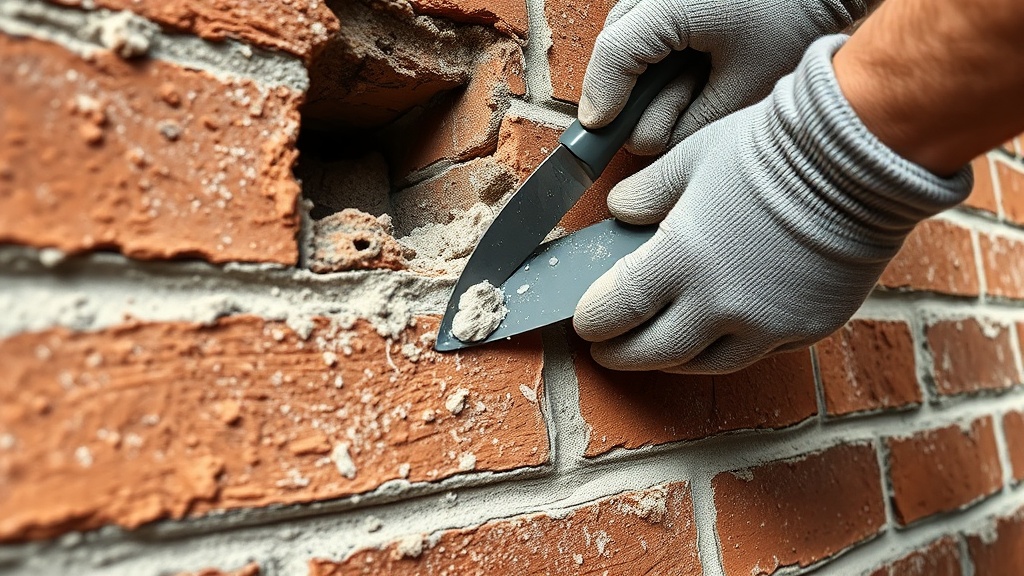
This 1942 bungalow in Central Lincolnwood had been repointed once before, sometime in the 1990s based on the color and texture of the patch mortar visible on the front elevation. The previous contractor had used what appeared to be a Portland-heavy Type S or Type M mix - far too hard for the soft brick common to Chicago-area bungalows built during and just before World War II.
The result was predictable: the hard mortar had held while the brick alongside it deteriorated. When we inspected, the brick faces adjacent to every repointed joint on the front elevation showed hairline spalling and surface pitting. The wrong mortar had redirected freeze-thaw stress into the brick rather than absorbing it in the joint as designed. The 1990s repoint also needed to come out.
On top of that, the three limestone window sills had settled slightly at their ends, opening gaps between the sill stone and the brick below. Those gaps were channeling water directly into the wall cavity.
Our Solution
We removed all mortar from the front and side elevations to a depth of 3/4 inch, including the 1990s Portland-heavy patch material, which required more careful grinding because the harder mortar was bonded tightly. We used narrow diamond blades and hand chisels along the brick-mortar interface to avoid adding further damage to the already-stressed brick faces.
The replacement mortar was a Type O lime-rich formulation - lower Portland content and higher lime than either Type N or Type S. Type O is the correct specification for pre-war Chicago bungalow brick, which was fired at lower temperatures and is softer than postwar units. The lime-rich mix remains permeable and slightly flexible, allowing moisture to pass through the joint rather than forcing it into the brick.
The three limestone sills were carefully removed, the bed joint beneath each was cleaned and repacked with Type O mortar, and the sills were reset to slope with a positive 1/8-inch drip over the brick course below. Gaps at the sill ends were filled with a lime-based pointing mortar, not sealant.
The Result
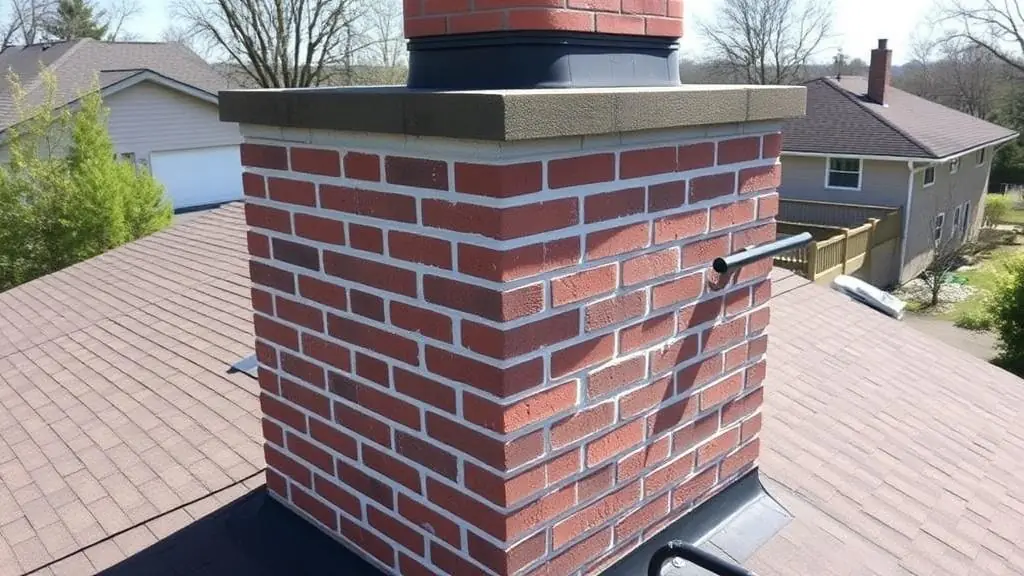
Four elevations are fully repointed with mortar that is correctly matched to the 1942 brick. The limestone sills are reset and sloped to drain. The homeowner no longer has a wall that is slowly sacrificing its brick faces to keep the wrong mortar in place.
Frequently Asked Questions
Why does mortar hardness matter so much on a 1942 bungalow? Pre-war brick was fired softer than modern units. It needs mortar that is softer than the brick itself so that any freeze-thaw movement cracks and crumbles the sacrificial mortar joint, not the irreplaceable brick face. When someone installs Type S or Type M mortar on soft old brick, the brick becomes the sacrificial element. Replacing brick faces is far more expensive and difficult than replacing mortar joints.
Why use Type O instead of the more common Type N on this bungalow? Type N is the standard for pre-war brick on homes from the late 1930s onward. For homes from the early 1940s or earlier, particularly those built with wartime-era brick that was fired quickly and at lower temperatures, Type O with a higher lime content provides better compatibility. The original mortar on this 1942 home was lime-rich, and we matched that composition.
How do you handle limestone window sills that have settled? Limestone sills are heavy and rarely move far - usually just a small settlement at the ends where the mortar under the bearing point has compressed or washed out. We remove the sill, clean the bed, repack with fresh mortar, and reset. The key is getting the slope right on the reset so water runs forward over the drip edge rather than back toward the wall.