
The Problem
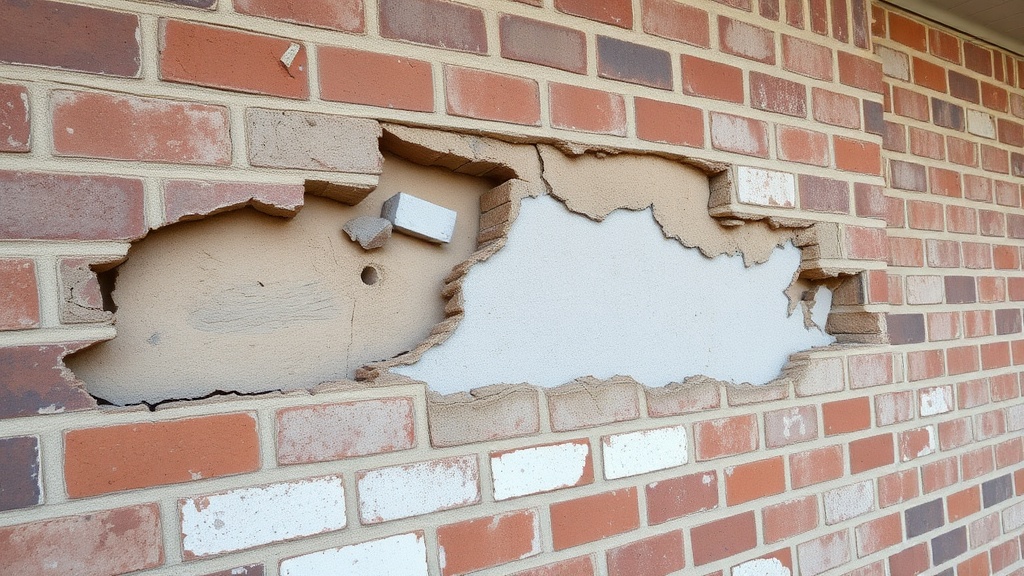
The owners of a 1986 brick Colonial in West Mundelein found chunks of brick face on the ground along the west and north elevations. The damage concentrated in two zones: a 12-foot run on the west elevation between the window bands, and a shorter section near the northwest corner.
Thirty-seven brick units had spalled faces ranging from small chips to full-face delamination. The underlying brick in every case was intact and still bonded to the wall. The surrounding joint condition explained the pattern - mortar recess averaging 5/8 inch in the affected zones. The 1986 mortar in this subdivision was Portland-heavy, which does not flex with the brick through thermal cycling and routes freeze-thaw stress into the brick face rather than the joint.
The rest of the two elevations showed joints approaching the 3/8-inch recess range where intervention avoids a larger future job.
Our Solution
We removed the 37 spalled units by cutting the surrounding bed and head joints with a diamond blade and extracting each brick without disturbing adjacent courses. Cavities were vacuumed, checked for sheathing damage behind the wythe, and dampened before setting replacements. We sourced brick from salvaged mid-1980s production stock, matching face texture, surface color, and nominal dimensions. Each replacement was set in Type N mortar with full bed coverage and solid head joints.
After the set bricks firmed up, we repointed all joints in the repair zone plus a buffer course above and below. The Type N mortar mix was batched against surviving original joints in the unaffected lower courses, which had retained their color well. Along the full west and north elevations, we raked and repointed any joint at or past 3/8-inch recess - roughly 60 additional linear feet beyond the direct brick replacement area.
The Result
The replacement bricks read as consistent with the surrounding wall at normal viewing distance. Joint color in the repaired zones matches the lower unaffected courses. No brick units in the treated elevations show active face movement at the 60-day check. Uniform joint depth across both elevations eliminates the moisture pathway that drove the original spalling.