
Call Now Free Quote
(847) 713-1648 Get Free Estimate
Chimney Repair - Vernon Hills, IL

Chimney Stack Rebuild - 1996 Brick Veneer Two-Story

October 16, 2025 | Greggs Landing neighborhood

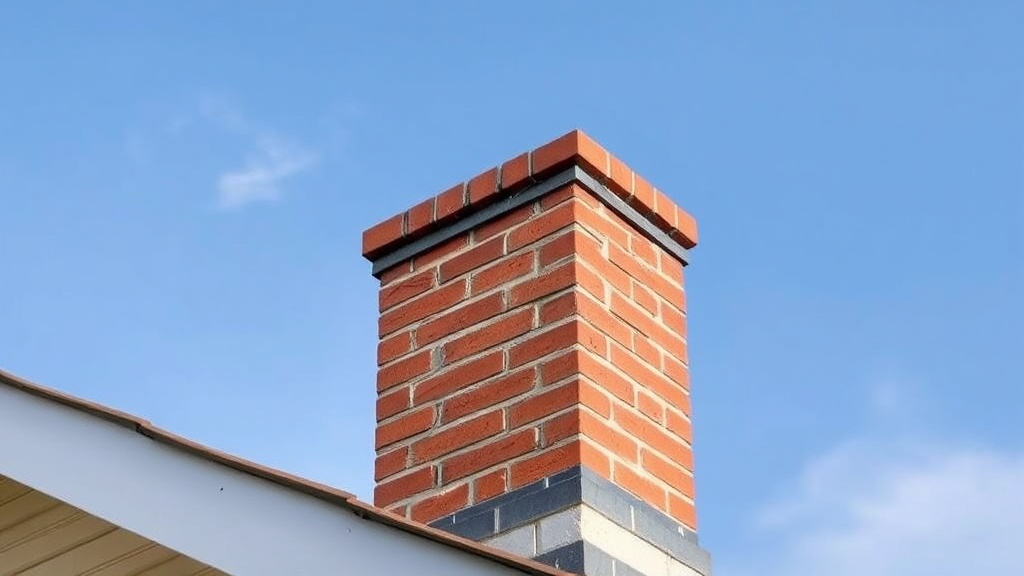
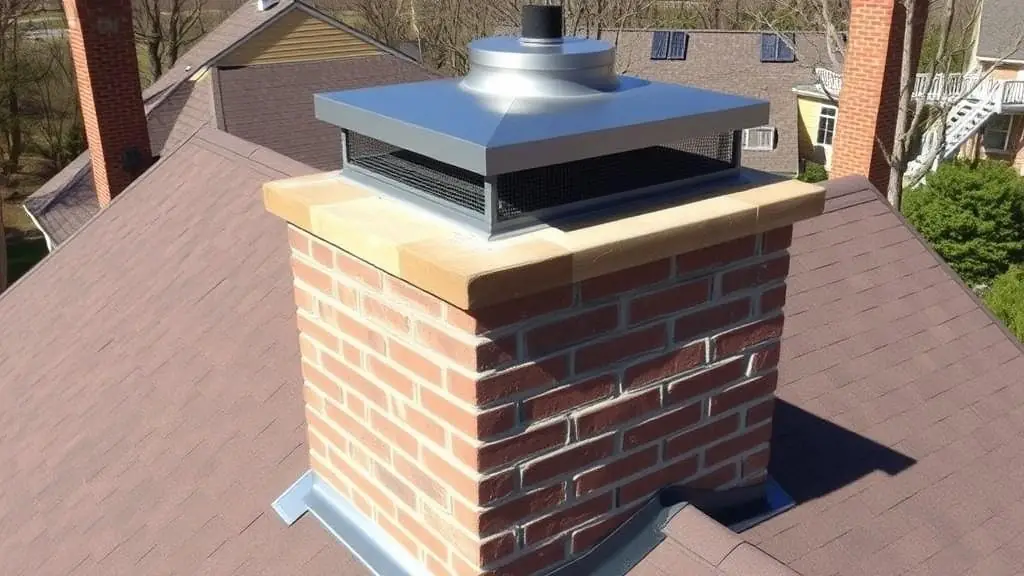
Before: Chimney Stack Rebuild - 1996 Brick Veneer Two-Story Before
After: Chimney Stack Rebuild - 1996 Brick Veneer Two-Story After
Location Vernon Hills, IL
Service Chimney Repair
Scope Crown demolition and replacement. Full repointing of stack joints above roofline. Flashing inspection and reseal. Brick veneer tie inspection at chimney base.
Mortar Type Type N
Duration 3 days
Building 1996 two-story with brick veneer chimney

The Problem

The owners of a 1996 two-story in Greggs Landing noticed staining on the ceiling near the fireplace wall after two consecutive wet winters. The chimney itself looked fine from the street, but a closer look from the roofline told a different story. The concrete crown had developed a full transverse crack running across its width, and the joint between the crown and the outermost brick course had opened roughly 3/8 inch. Water was following that gap directly into the flue seat.

Below the crown, the stack joints above the roofline showed moderate recess averaging 1/2 inch. On a veneer chimney from the mid-1990s, that recess matters more than it would on older solid masonry - the brick wythe is thinner and moisture reaching the framing chase is a more serious consequence.

Our Solution

We demolished the failed crown with hand chisels, working carefully along the crown bed to avoid disturbing the uppermost brick course. The replacement crown was formed with a slight outward pitch and poured using a fiber-reinforced mix in two lifts. Once cured, we applied an elastomeric seal coat over the full crown surface and down onto the top two brick courses to create a continuous water barrier at the most vulnerable transition point.

Repointing of all stack joints above the roofline used Type N mortar. On Greggs Landing homes from 1996, the original mortar tends toward a light gray with minimal sand variation, so we tested a small batch against a protected joint before committing to the full mix. All joints were ground to 3/4-inch depth, cleared of dust, and moistened before packing in two lifts to prevent suction-pull from the brick. We also inspected visible veneer tie locations at the chimney base where the brick meets the roof surface, finding the ties intact with no corrosion requiring action.

Flashing at the roofline was cleaned, reseated at the step courses, and sealed with a polyurethane product compatible with the existing counter-flashing and shingles.

The Result

The ceiling staining stopped after the following rain season. The replacement crown shed water cleanly at its first freeze-thaw test, and the repointed joints showed no cracking at the 30-day inspection. The mortar color matches the lower unrepaired courses well enough that the repair zone is not visible from ground level.

Related: Chimney Repair Services | Vernon Hills Service Area

Questions About This Project

What is the difference between a brick veneer chimney and a full-masonry chimney, and why does it matter for repairs?

A brick veneer chimney uses a single wythe of brick as a weather skin over a wood-framed chase, whereas a full-masonry chimney is structural brick or block all the way through. On veneer construction from the 1990s, the repair concern is not just mortar but the metal ties that anchor the veneer to the framing. We inspect exposed tie courses while the joints are open, since corroded ties can allow the veneer to separate from the chase even when the mortar looks intact.

Why did the crown crack on a chimney that is only about 30 years old?

Pre-2000 builders in suburban subdivisions frequently used thin poured concrete crowns without control joints or adequate overhang past the brick face. Freeze-thaw cycles work on those crowns year after year. By the time a home built in the mid-1990s reaches 25 to 30 years, hairline cracks have opened enough to allow water into the flue seat. The fix is demolition of the failed crown and replacement with a properly sloped, fiber-reinforced pour with an elastomeric seal coat.

Can Type N mortar be used on a chimney that sees high heat from the firebox?

Type N is appropriate for chimney stack joints above the roofline, which do not experience direct firebox heat. The heat-affected zone is inside the firebox and smoke chamber, where refractory mortar is required. Stack joints outside the structure are a weathering problem, not a heat problem, and Type N lime mortar handles freeze-thaw cycling better than harder Portland-heavy mixes.

Project Location

Loading map - 1 project in this area

Need Similar Work? Let's Fix It Right.

Free on-site inspection and written estimate - no obligation. Serving the North Shore and Chicagoland for over 39 years.

(847) 713-1648 Request Online Estimate