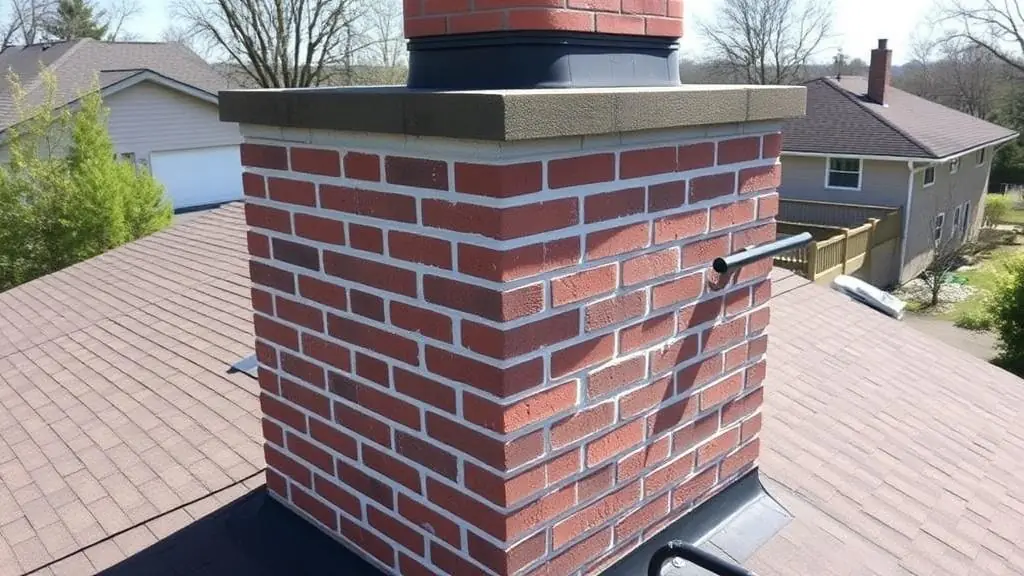
The Problem
The owners of a 1957 brick ranch in East Mundelein had a home inspector estimate that portions of the north wall had joints recessed 5/8 inch or more. A few window sill courses showed the brick face beginning to cup - early-stage spalling driven by water sitting at deteriorated sill joints.
The brick was original postwar common brick, softer than modern production and more reactive to water migration. A neighbor two streets over had faced full brick replacement on one elevation after the same problem went unaddressed. The owners wanted to act before reaching that threshold.
A previous owner had spot-patched about 20 linear feet of the east wall using a Portland-heavy mix noticeably lighter and slightly proud of the surrounding joints. Those patches were already showing hairline cracks at their edges - a sign of mortar harder than the substrate.
Our Solution
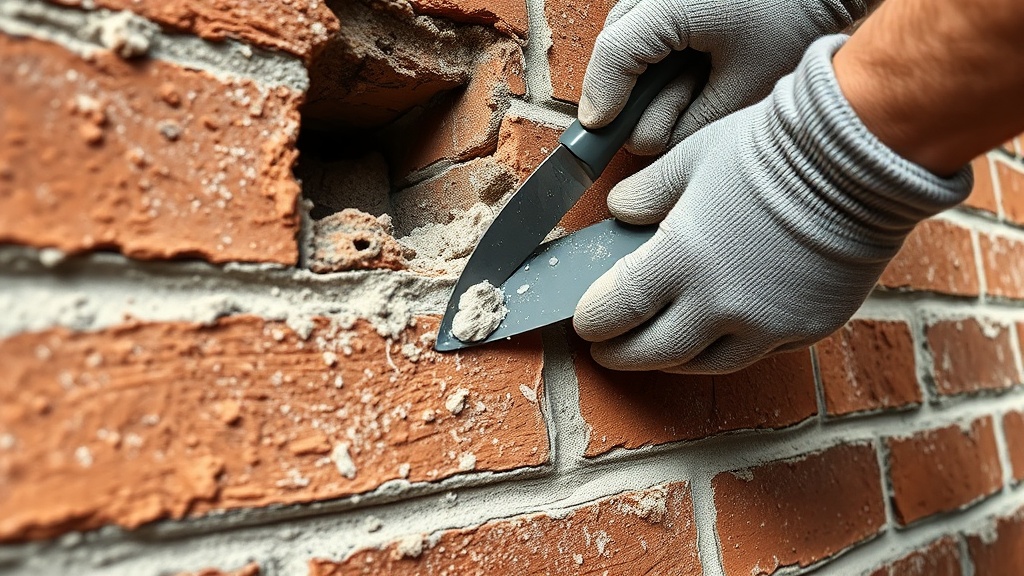
We raked all four elevations to a uniform 3/4-inch depth using angle grinders fitted with diamond blades. On this soft postwar brick, consistent grinding passes and hand tools at all corners and returns kept us from chipping the brick face.
Mortar color matching used a sample pulled from beneath the east windowsill overhang, where the original joint had stayed sheltered from UV and rain. The original mix showed a warm medium-gray tone with fine-to-medium natural sand. We batched a Type N mortar to that profile and let a test patch cure 48 hours before approving the color. Each joint was packed in two lifts and tooled to a concave profile matching the surviving original joints. The mismatched patch material on the east wall was removed and replaced with the correct Type N mix.
Three sills on the north face showed brick movement at the outside edge consistent with freeze-thaw cycling. We packed those joints with particular attention to full contact at the back of the joint, where voids carry the highest water risk.
The Result
All four elevations now have uniform joint depth at the concave finished profile. Mortar color reads consistent with the original brick across all elevations. The early spalling on the north window sills was stabilized by removing the water source at the joint level above.