The Problem
A homeowner in Central Vernon Hills brought us in after discovering water damage on an interior wall adjacent to a single-story addition that connects to the main brick Colonial. The visible damage was interior, but the source was at the roof-to-wall junction where the addition’s roof met the brick wall of the main house.
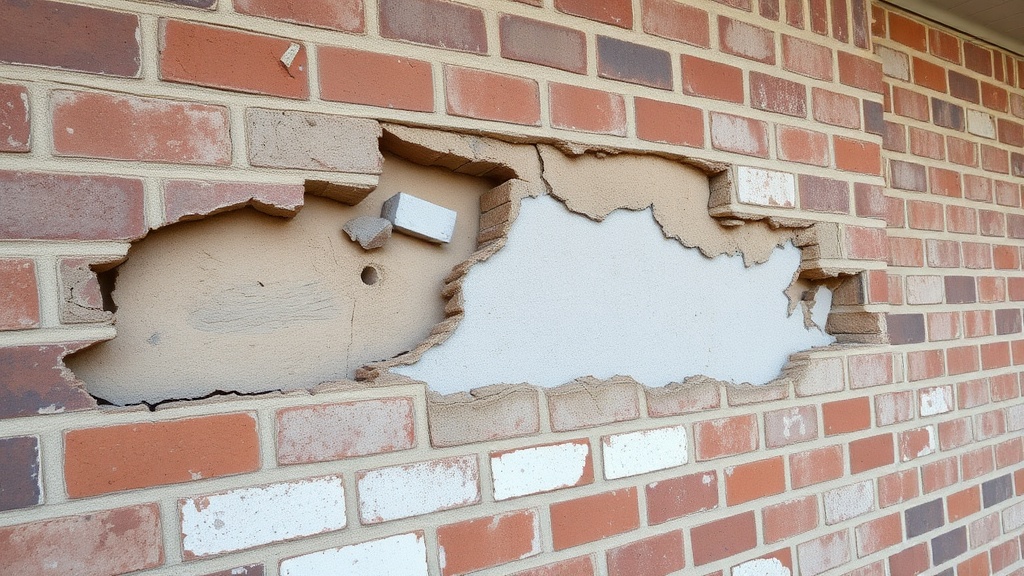
When we accessed the junction from the roof, we found that the original step flashing had corroded and lost its seal at several overlapping sections. Water was entering behind the flashing and tracking down the back of the brick veneer before eventually showing up on the interior. The prolonged moisture exposure had caused seven bricks directly above the flashing line to spall on the face and another ten in the course below to soften enough that mortar was no longer bonded to the brick surface.
The problem had been running for long enough that the flashing failure, not the brick damage, was the root cause requiring correction first.
Our Solution
We removed the damaged brick in the affected two courses, working carefully to avoid disturbing the adjacent courses that were still sound. The deteriorated step flashing sections were pulled back, the underlying wood sheathing was allowed to air out, and new aluminum step flashing was woven into the existing roof shingles course by course up the slope. Step flashing cannot be effectively repaired by surface sealing; it requires physical replacement of each piece where water has found a path behind it.
After the flashing was rebuilt and the masonry substrate had dried, we rebuilt the two damaged courses with new brick matched to the original 1989 Colonial construction. The original brick on homes in this area of Vernon Hills is a medium-red running bond unit in the standard face brick range. Seventeen replacement units were installed in fresh Type N mortar at the same 3/8-inch joint width as the surrounding coursework.
The 35 linear feet of adjacent joints that had been wetted repeatedly and had softened as a result were ground and repointed with matched Type N mortar. Joints in areas that have experienced prolonged moisture exposure lose bond strength even if they are not visibly recessed, and repointing them prevents later delamination.
The Result
The step flashing is rebuilt correctly and the brick courses above the junction are structurally intact and properly mortared. The interior wall dried out over the weeks following the repair and the homeowner completed interior remediation afterward.
We recommended that the original caulk joint at the top of the flashing where it meets the brick be inspected and renewed annually, as this is the highest-maintenance detail on any roof-to-wall junction.
Frequently Asked Questions
-
question: “What is step flashing and why does it fail?” answer: “Step flashing is a series of L-shaped metal pieces woven between roof shingles and a vertical wall. Each piece overlaps the one below it, directing water down and away from the wall. It fails when the metal corrodes through, when the laps separate, or when it was installed incorrectly from the start. It has a finite lifespan and needs periodic inspection on any roof-to-wall junction.”
-
question: “Why did bricks spall from water entry that came through the roof?” answer: “Water that enters behind the brick veneer keeps the brick saturated from the back side. Saturated brick that freezes expands and the face layer pops off. The spalling appears on the exterior face but the source of water is behind the wall. Fixing only the brick without fixing the water entry point means the new brick will spall too.”
-
question: “How long does it take interior walls to dry out after a masonry water entry issue?” answer: “It depends on how long the leak was active and the materials involved. In most cases, with the source repaired and the exterior open to air, the masonry assembly dries within four to eight weeks. The interior drywall and insulation may take longer and may require removal if mold has established. We address the masonry; a water remediation contractor handles the interior.”