The Problem
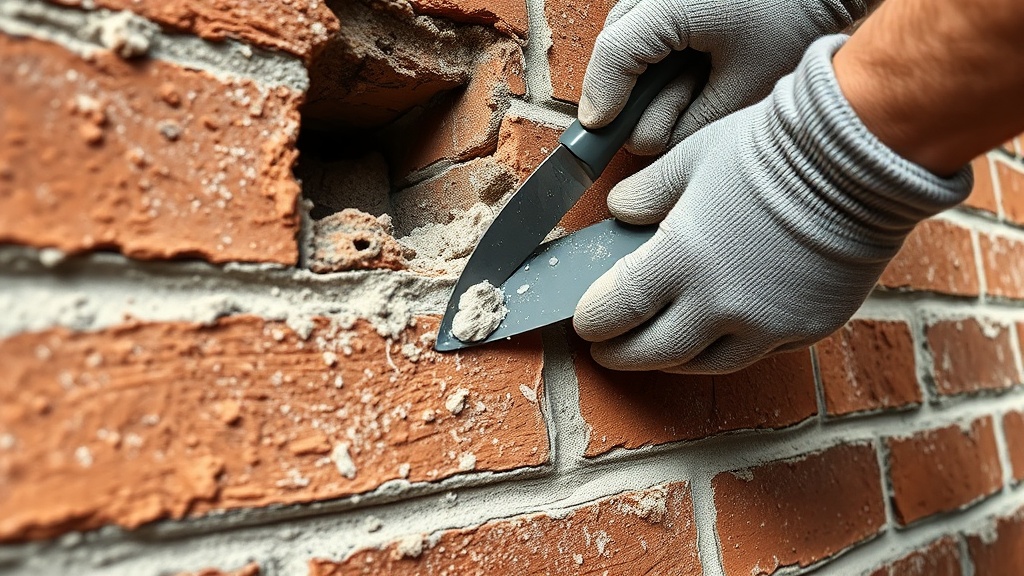
The owner of a 1994 brick estate home in Greggs Landing called us after noticing mortar residue accumulating on the brick sill below several windows. This is a specific and useful indicator: when mortar dust or small chunks appear at the base of the wall, it means the joints above are losing material and the runoff is collecting on the sill before washing off the face.
A full inspection confirmed that the mortar across the north and west facades of both the main house and the detached garage had deteriorated significantly. Joints were recessed 1/2 to 3/4 inch deep throughout, and several sections near the garage overhead door opening had lost mortar to full depth, leaving open channels behind the joint line. The south and east facades were in better shape but showed early softening that warranted repointing before deeper deterioration set in.
A previous patch near the chimney base on the main house used a clearly non-matching gray mortar, pointing to an earlier repair that was functional but never matched to the original joint color. That section needed to be addressed as part of the full-facade work.
Our Solution
We repointed all four facades of the main house and the detached garage, totaling 310 linear feet. Grinding proceeded on the north and west facades first, where deterioration was deepest, using hand grinders set to 3/4-inch depth. The south and east facades required lighter passes at 1/2-inch depth since the joints had not eroded as far.
The gray patch near the chimney base was ground out and replaced with mortar matched to the original. We pulled a mortar sample from a protected interior soffit joint on the garage to identify the original sand color and blend. The 1994 Greggs Landing homes in this area used a warm buff-tinted mortar, slightly lighter than standard gray Type N. We blended the Type N base with a sand aggregate matched to that tone.
All joints were packed in two lifts and tooled with a slicker to match the shallow concave profile original to the 1994 construction. The final pass was brushed while still green to soften the edge definition and prevent the repaired joints from reading as too sharp against the weathered brick face.
The Result
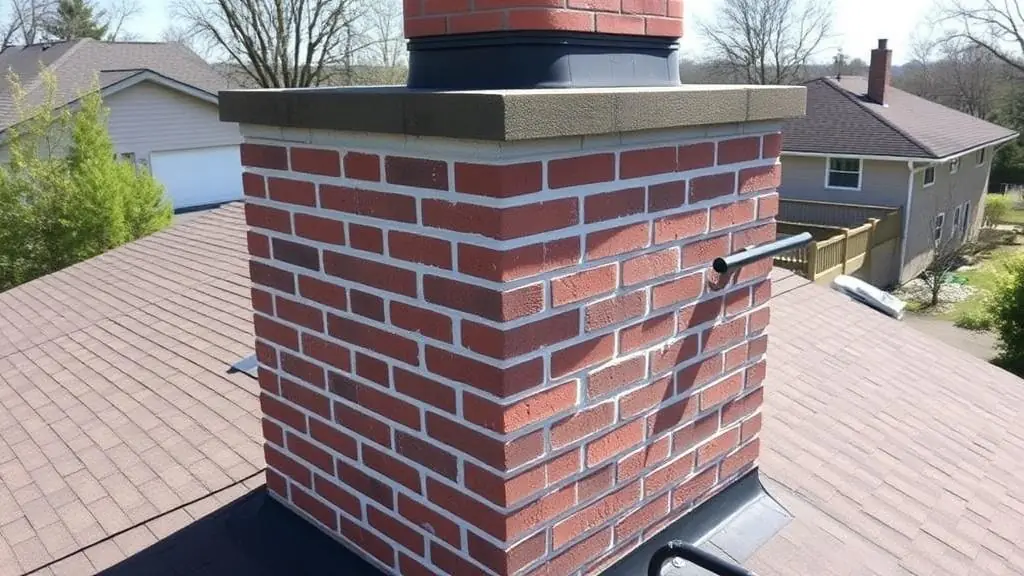
The full four-facade repoint on the main house and garage produces a consistent mortar color and joint profile across the entire property. The open joints near the garage door have been filled, stopping what was an active water pathway into the brick cavity. The non-matching chimney patch is gone and replaced with mortar that integrates with the surrounding work.
We documented the mortar formula for the homeowner’s records.
Frequently Asked Questions
-
question: “What does mortar dust at the window sill mean?” answer: “It means the joints above are losing material and the particles are washing down with rain. It is a useful early indicator because it appears before the joint is visibly recessed from street level. Catching it at this stage means less overall joint loss to repair and a cleaner grinding job.”
-
question: “Why repoint the south and east facades if they are in better shape?” answer: “Because mortar is a maintenance item, not an emergency repair. Grinding and repointing joints at 1/2-inch recess is clean, predictable work. Waiting until they reach 3/4 inch or full depth means more material to remove, more risk of nicking adjacent brick, and a longer repair cycle. Doing all four facades in one mobilization is also more cost-effective than returning for a second job in two years.”
-
question: “Can you match mortar color on a 30-year-old home?” answer: “Usually within a close range, yes. The key is pulling a sample from a protected joint, such as a soffit area or an interior corner, where the original color has not been bleached by UV or stained by water. With that reference, a custom sand blend can get within one shade of the original in most cases.”